Distilled Water Homogeneous Or Heterogeneous

You’re standing in the grocery aisle, hand hovering over a jug of distilled water. It looks so pure, like something a sci-fi scientist would sip while calibrating their ray gu...
You’re standing in the grocery aisle, hand hovering over a jug of distilled water. It looks so pure, like something a sci-fi scientist would sip while calibrating their ray gun. But then the annoying little voice in your head asks: is this stuff homogeneous or heterogeneous? It’s the kind of question that feels like a flashback to high school chemistry—but stick with me, because the answer is actually a fun, surprising little piece of everyday science.
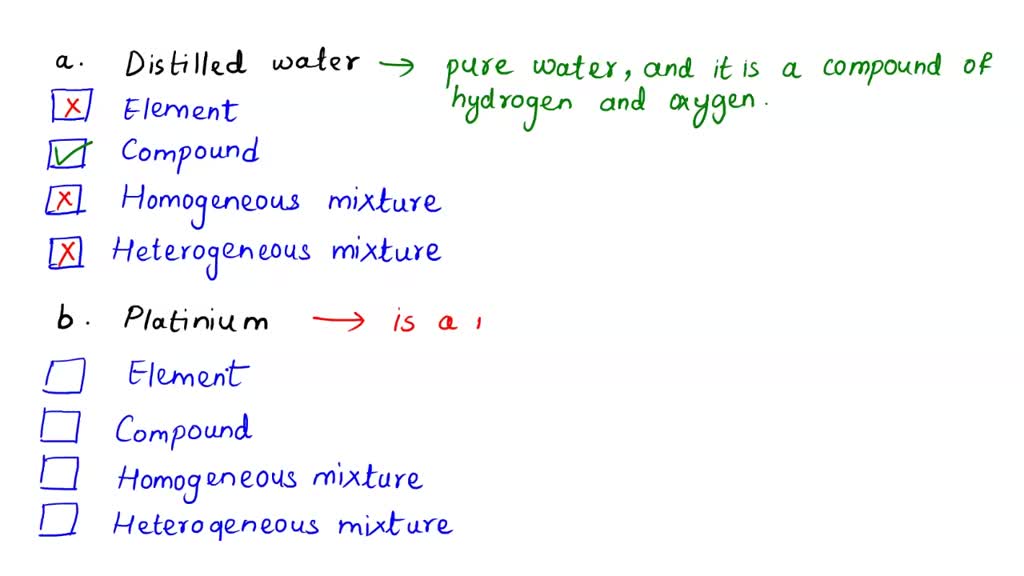
Spoiler alert: distilled water is perfectly homogeneous. In fact, it’s the poster child for it. If you zoom in on a single drop—way, way in—you won’t find any little clumps, floating minerals, or sneaky bacteria. Every molecule of H₂O is evenly spread out, like a perfectly mixed cocktail where nobody’s hogging the ice.
Think of it this way: homogeneous means “the same throughout.” Your morning cup of black coffee? That’s homogeneous too. But add some coffee grounds floating around, and boom—you’ve got a heterogeneous mess. Distilled water skips the drama. It’s been boiled into steam and then condensed back into liquid, leaving behind all the impurities that make tap water a little too interesting.
Must Read
Which brings us to a fun fact: you can literally see the difference with a simple trick. Take a glass of tap water and a glass of distilled water. Shine a laser pointer through both. The tap water will scatter the light like a disco ball because of all those suspended particles. The distilled water? It’ll be as clear as a silent, starless night. Pure homogeneity in action.
Why Should You Care? (Or: The “Vibe” of Purity)
Okay, but we’re not here to just nerd out. You and I both know that distilled water shows up in some pretty iconic places. Ever wonder why the coffee at that high-end café tastes so crisp and clean? They’re probably using distilled or purified water. It’s like giving your beans a blank canvas—no weird chlorine or mineral flavors crashing the party.
Also, consider the car world. If you’ve ever lifted the hood of a vintage Mustang or a fancy European sedan, you’ll spot a battery filled with distilled water. Mechanics swear by it because tap water’s impurities can corrode the internal plates faster than a summer thunderstorm. It’s a small, boring detail that keeps your car from having a mid-life crisis.
And let’s not forget the aquarium community. Those people are obsessed with distilled water for their bettas and shrimp. One bad tap water mineral and your fish looks like it just got ghosted. A homogeneous environment means stable pH, happy fins, and zero drama. It’s the zen master of the water world.
The “Is It Worth It?” Reality Check
Before you empty your wallet on a truckload of jugs, here’s the practical bit: distilled water is amazing for specific uses, but it’s not a universal need. Your houseplants? They might actually prefer tap water with those trace minerals. Human bodies? We need electrolytes, which is why guzzling distilled water all day can leave you feeling a little flat. It’s like eating plain oatmeal—nourishing, but missing the sprinkles.
So when should you splurge? Try it in your steam iron (those minerals in tap water can clog the vents and ruin your favorite linen shirt). Use it for your CPAP machine to avoid that weird bathroom smell. And if you’re brewing a pour-over coffee that you plan to Instagram, distilled water is your secret weapon. It’s the quiet MVP of the kitchen.
 Homogeneous and Heterogeneous Mixture where even and uneven
Fun fact from the lab: the process of distillation was likely invented by Alexander of Aphrodisias in the 2nd century AD. That dude was basically the original water influencer. He figured out that boiling water and catching the steam gives you something unnaturally pure—centuries before anyone cared about LaCroix or alkaline trends.
You might also notice that the word “homogeneous” has a beautiful cousin: homogenized. That’s what happens to milk so the cream doesn’t float to the top. Distilled water is already born homogeneous—no shaking required. It’s like that friend who shows up to brunch already calm and together, while everyone else is scrambling for coffee.
Here’s a little lifestyle tip: next time you fill your kettle for tea, use distilled water. You’ll notice less mineral buildup over time, and your tea won’t have that weird, hard-water scum on the surface. It’s a small upgrade that makes your afternoon ritual feel more intentional. Plus, it’s an excuse to buy a sleek little countertop distiller that looks like a retro spaceship.
Still doubtful? Try this quick experiment at home. Pour a glass of tap water and a glass of distilled water. Add a drop of food coloring to each. In the tap water, you might see tiny streaks and swirls as the color dances around the minerals. In the distilled water, the dye will spread out evenly, like a peaceful ink cloud. That’s homogeneity doing its quiet, beautiful thing.
In pop culture, water gets a lot of screen time. Remember the movie The Shape of Water? That whole aesthetic—clear, pure, emotionally charged—channeled the vibe of distilled water. It’s clean. It’s simple. It’s a blank slate for whatever you want to add. No judgment, no leftover flavors, no hidden drama.
At the end of the day, distilled water is a reminder that sometimes the simplest things are the most reliable. In a world full of complex lattes, messy relationships, and chaotic news feeds, a glass of perfectly homogeneous H₂O is a small, quiet act of rebellion. It’s saying, “I choose clarity.”
Reflection for daily life: You don’t have to drink it every day. But maybe, when you’re feeling scattered or overwhelmed, take a page from distilled water’s book. Strip away the noise. Keep it even. Let everything settle into a single, pure state. Homogeneous doesn’t mean boring—it means intentionally the same, which is sometimes exactly what your mind needs. So go ahead, be that drop of calm in a heterogeneous world.
