How Long For Chlorine To Dissipate From Water

You’ve just filled your glass from the tap, and that familiar, slightly sharp scent hits your nose. It smells a bit like a public pool on a summer afternoon — that’s chlorine,...
You’ve just filled your glass from the tap, and that familiar, slightly sharp scent hits your nose. It smells a bit like a public pool on a summer afternoon — that’s chlorine, the hardworking guardian of our municipal water supply. But if you’re not a fan of that chemical aftertaste, you’ve probably wondered: how long does it actually take to vanish?
The quick answer is: it depends. Chlorine is a volatile guest — it doesn’t like to stick around. In an open container at room temperature, most of it will evaporate within 24 hours, but the full dissipation can take up to 48 hours, depending on the water’s volume and surface area.
The Science of Disappearing Molecules
Think of chlorine as a shy partygoer who slowly drifts toward the exit. It leaves water through evaporation, a process that speeds up when there’s more surface area exposed to air. A wide bowl of water will lose chlorine much faster than a narrow bottle — it’s all about space to escape.
Must Read
Temperature is also a major factor. Warm water encourages chlorine to leave the building faster — like how a hot tub loses its chemical smell quicker than an ice-cold pool. A nudge to 80°F (27°C) can cut the dissipation time nearly in half.
But here’s a fun truth: if you boil the water, you’re not just making tea. Boiling for just 15 to 20 minutes will drive off most of the chlorine, making it a great hack for emergency water prep or that morning coffee when you want zero pool vibes.
pH and the Invisible Dance
Chlorine exists in two forms in water: free chlorine (the active cleanser) and combined chlorine (the less effective stuff). The pH level of your water dictates the balance — a lower pH (more acidic) makes chlorine more volatile. Think of it as the champagne of chemicals: it fizzes out faster in a tangy environment.
Most tap water sits at a neutral pH around 7, which is fine but not exactly speed-optimized. If you’re feeling science-y, a drop of lemon juice or vinegar can lower the pH and help chlorine evaporate a bit quicker — though it’s not a common kitchen hack for the faint of heart.
Fun fact: UV light is chlorine’s natural enemy. That’s why your water bottle left in the sun for an afternoon tastes noticeably less chlorinated. The sun’s rays break down the chlorine molecule, turning it into harmless chloride ions. It’s like nature’s own filtration system.
Practical Tips for Every Day
So, you want chlorine-free water for your plants, your fish tank, or just your morning glass of lemon water? Here’s your playbook. Let it sit — fill a pitcher and leave it uncovered in the fridge overnight. By morning, 90% of the chlorine will have waved goodbye.
For faster results, use a countertop aerator or simply pour water vigorously between two containers. The agitation introduces oxygen and turbocharges evaporation — it’s the same reason a fountain in a pond helps reduce chlorine. It’s playtime for molecules.
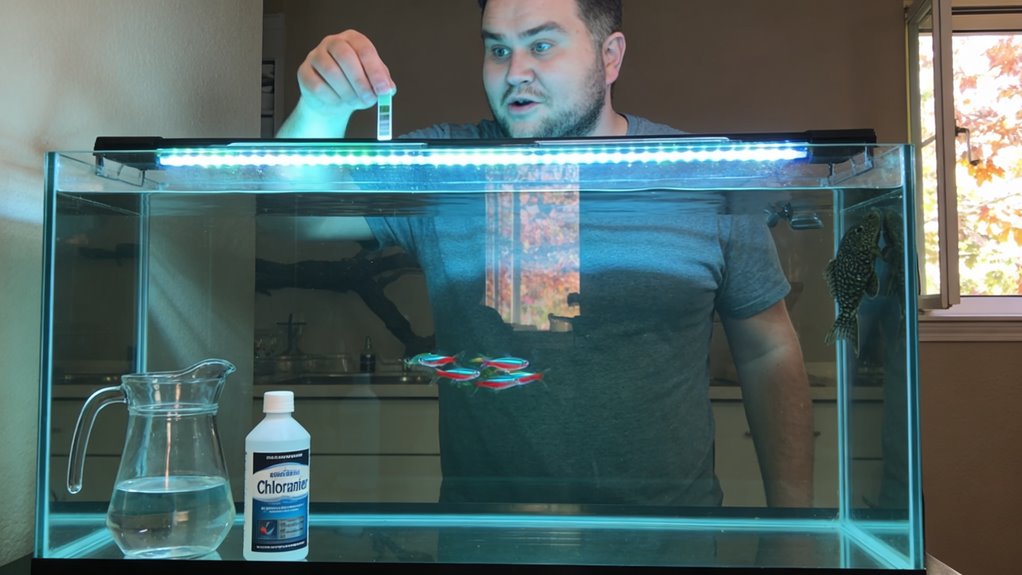 Does Chlorine to Dissipate in Tap Water Go Away?
If you’re in a hurry, a carbon filter pitcher (like Brita or Pur) is your best friend. It removes chlorine almost instantly, along with its weird metallic aftertaste. It’s the lazy-person’s gold standard — and honestly, it works beautifully.
Don’t forget: fish and reptiles are chlorine-sensitive. If you’re filling a new aquarium, never use fresh tap water without dechlorinator drops. A 24-hour sit works in a pinch, but for delicate bettas and anoles, those drops are a safer, faster choice.
Cultural Springs and Summer Nostalgia
There’s a strange romance to that chlorine smell. It’s the scent of summer camp, of sunburnt shoulders and inflatable pool toys. We love it in our memories but reject it in our drinking water — and that’s fair. The French have a saying: “l’eau qui dort” — still water. But in their taps, they often use ozone instead of chlorine, giving Parisian water a cleaner profile.
In Japan, many households use charcoal sticks (binchotan) to naturally filter water. It’s low-tech and elegant, and it absorbs chlorine over a few hours. It also makes you feel like a zen master while you wait for your hydration.
Did you know the average swimming pool has between 1 and 3 parts per million of chlorine? Your tap water typically has 0.5 to 4 ppm — so yes, you could technically swim in your kitchen sink. Please don’t.
The Big Picture Reflection
Waiting for chlorine to dissipate is a gentle reminder that patience often improves the simplest things in life. A glass of water left overnight tastes different — not because the water changed, but because we gave it time to breathe. It’s a small, almost meditative act: pour, wait, sip.
In our speed-obsessed world, that 24-hour window feels like an eternity. But isn’t it nice to have a reason to slow down? To let the chemicals settle, the flavors soften, and the stress fade — just like the chlorine. The next time you fill a pitcher for tomorrow’s breakfast, smile. You’re not just dechlorinating. You’re practicing presence.
And if you’re really in a rush? Grab a filter and move on with your day. Life’s too short to watch water sit, but too beautiful not to notice the change when you let it.
