Is Boiling Water The Same As Distilling Water

Let’s settle a kitchen debate. Is boiling water the same as distilling it? Nope. Not even close. Think of it like this: boiling is a party trick. Distilling is a full-on scien...
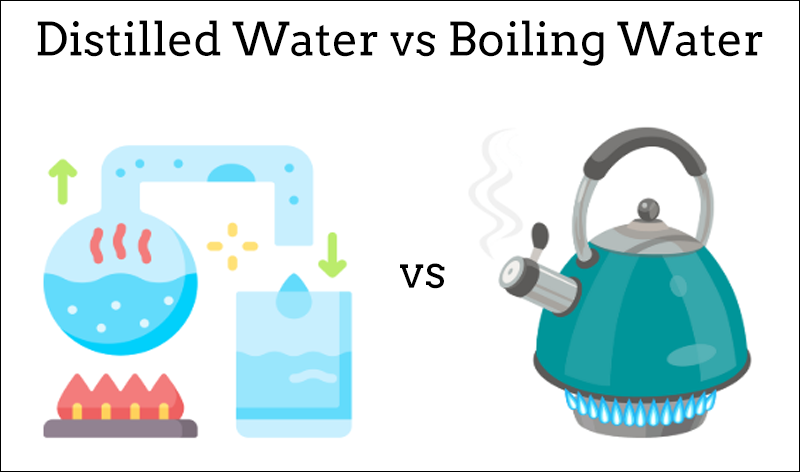
Let’s settle a kitchen debate. Is boiling water the same as distilling it? Nope. Not even close. Think of it like this: boiling is a party trick. Distilling is a full-on science experiment.
Boiling: The Loud, Bubbly Cousin
Boiling water is simple. You heat it until it violently bubbles. That’s it. You get hot water with steam escaping—like a dragon’s burp.
But here’s the kicker: boiling does kill germs. Yay! But it does not remove dirt, chemicals, or heavy metals. They stay in the pot, swimming around like unwanted party guests.
Must Read
So, boiling water is great for making tea. But for pure H₂O? Not quite. You’re just cooking the water, not purifying it.
Distilling: The Drama Queen
Distillation is boiling’s dramatic, overachieving sibling. It takes the steam—the vapor—and traps it. Then it cools that vapor back into liquid. That’s pure water, baby. No minerals, no germs, no drama.
Imagine this: you boil dirty water. The steam rises. You catch it in a cold tube. That condensed liquid? It’s like water’s ghost. Cleaner than a freshly washed window.
Here’s a quirky fact: distilling water removes 99.9% of impurities. That includes salt, lead, and even microplastics. Boiling? It just makes the microplastics wobbly. They don’t leave.
Why Do People Mix Them Up?
Probably because both involve bubbles. And bubbles are fun! But the end goal is different. Boiling is for safety (kill bad bugs). Distillation is for purity (remove everything else).
Think of boiling as a rough cleaning—like shaking a dusty rug. Distillation is like putting that rug through a high-tech washing machine, then a dryer, then a museum-grade vacuum.
Fun detail: in a distillery, the leftover water (the stuff you don’t drink) is called “stillage.” It’s thick with minerals. You can actually taste the difference. Boiled water? Tastes flat. Distilled? Tastes like nothing—literally.
The Weird Science Behind It All
Physics says: boiling happens at 100°C (at sea level). Distillation happens when you capture the gas and recondense it. That’s why a teakettle lid has drops of water. That’s tiny distillation!
But here’s the wild part: you can distill water using solar power. Put a bowl of water in the sun. Cover it with plastic wrap. Watch drops form. That’s a DIY distiller. No electricity needed.
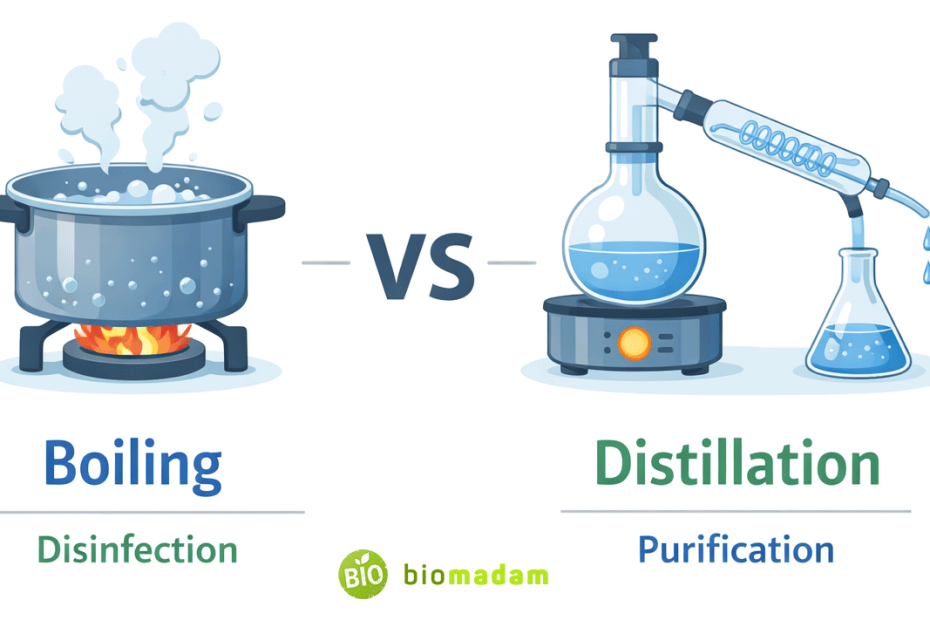 Difference Between Boiled and Distilled Water (Scientific Comparison)
Quirk alert: distilled water conducts less electricity than tap water. Why? No dissolved salts. So if you’re ever in a lightning storm, drink distilled water. (Just kidding—don’t do that.)
So, When Should You Distill?
Never? Most people don’t need to. Tap water is fine. But if you’re in a survival situation—or you want to make pristine ice cubes for your whiskey—distillation is your hero.
Boiling is for instant gratification. Distillation is for control freaks. Both are cool. But never say they’re the same. That’s like saying a blender and a juicer are identical. One turns fruit into mush; the other squeezes out pure nectar.
Let’s get playful: next time someone says, “I just boiled water, so it’s distilled,” hand them a cup of boiled tap water. Then hand them a cup of store-bought distilled water. Ask them to taste the difference. They’ll look at you like you’re a wizard.
And guess what? You are a wizard. You know the secret: boiling water is a loud, messy dance partner. Distillation is the quiet, precise chess master. Both have their moves. But only one leaves you with nothing but H₂O.
The Fun Fact You’ll Tell at Parties
Distilled water is so pure that it can absorb carbon dioxide from the air. That makes it slightly acidic. Yes, even “pure” water gets a little spicy. Boiled water doesn’t do that—it’s already full of stuff.
So, next time you see steam rising from a pot, remember: you’re watching a magic trick. Boiling is the magician’s assistant. Distillation is the magician. Both are necessary. But they’re not the same act.
Now go boil some pasta. Don’t try to distill it. That’s weird. But if you’re curious—put a glass lid on your pot. Watch the condensation drip. That’s distilled water. You just made it. Without even trying.
Science is hilarious.
