Distinguish Between Hard Water And Soft Water

Picture this: you move into a new apartment, all excited, but your soap refuses to lather, your hair feels like straw, and your coffee maker looks like it’s plotting a limesto...

Picture this: you move into a new apartment, all excited, but your soap refuses to lather, your hair feels like straw, and your coffee maker looks like it’s plotting a limestone rebellion. Congratulations, you’ve just met hard water. It’s not trying to ruin your life—it’s just packed with minerals, mostly calcium and magnesium, like a rock smoothie you never asked for.
Soft water, on the other hand, is the pampered celebrity of household liquids. It’s been stripped of those minerals, often through a salt-based process, leaving you with a silky, foamy shower experience that makes you feel like you’re bathing in clouds. But don’t get too jealous—soft water has its own weird baggage, and we’re about to spill all the tea (which, by the way, tastes different in hard water).
The Telltale Signs: Is Your Water a Bully or a Butler?
Let’s start with the most obvious clue: your soap. If you’re scrubbing like a maniac but getting a sad, translucent film instead of rich, bubbly lather, that’s hard water throwing shade. It reacts with soap to form a sticky scum—think of it as the water’s passive-aggressive way of saying, “I’m not cooperating today.”
Must Read
Soft water, however, lets soap explode into frothy joy with just a tiny squirt. You’ll find yourself using half the shampoo and wondering why everyone else complains about dry skin. The catch? Your hands might feel too slippery, like you’ve secretly been greased up by a professional prankster.
Another dead giveaway: scale buildup. Hard water leaves white, crusty deposits on faucets, showerheads, and inside your kettle—that’s the calcium and magnesium throwing a mineral rave. You’ll be scraping it off with vinegar, muttering curses at your plumbing. Soft water? It leaves no trace, like a polite ghost that cleans up after itself.
Shower Horrors vs. Shower Dreams
Taking a shower with hard water is like getting rinsed by a grumpy rock. Your hair feels rough, your skin gets all tight and itchy, and you’ll notice a weird residue—it’s actually soap scum clinging to you. I once showered at a friend’s house and came out looking like a powdered donut. Not a good look.
Soft water showers are the opposite: your hair is silky, your skin is smooth, and you feel like a million bucks—until you realize you can’t rinse the conditioner completely off because the water is too slick. It’s a first-world problem, but a real one. You’ll step out of the shower and wonder, “Did I just bathe in liquid fabric softener?” The answer is basically yes.
There’s also the temperature trick. Hard water heats up more slowly and holds heat differently, so your hot water runs cold faster. Soft water is a consistent cozy blanket. But here’s a twist: soft water can make your water heater more efficient, saving you money—unless you live in an area with naturally soft water, then you’re just lucky, and I hate you.
Truths That Will Blow Your Mind (and Your Faucet)
Here’s a shocking fact: hard water is actually better for drinking in small doses. Those calcium and magnesium minerals are essential for your bones and heart—so hard water is basically a free, tasteless multivitamin. Soft water, stripped of these minerals, can also contain higher sodium (from the softening salt), which is bad news if you have high blood pressure.
Another eyebrow-raiser: hard water can damage your clothes. The minerals bind to fabric fibers, making them look dingy and wear out faster. Soft water keeps colors bright and clothes soft—but too soft, and your jeans might lose their shape, leaving you looking like you’re wearing pajamas to work. It’s a delicate balance.
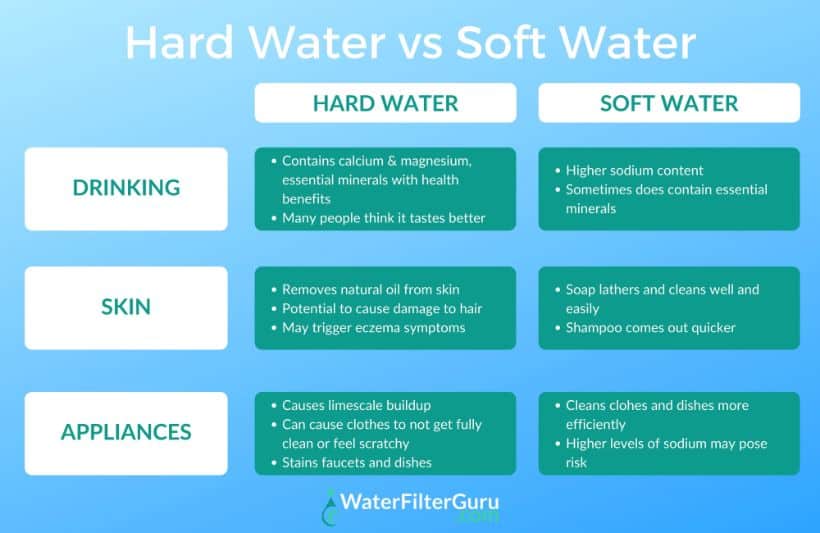 Hard Water vs Soft Water Explained: What's the Difference?
And here’s the kicker: soft water can corrode your pipes over time because it’s more acidic and aggressive. Hard water, despite its annoying scale, actually coats pipes with a protective layer—like a tough mineral shield. It’s the “go to the gym or eat junk food” dilemma, except your plumbing is making the choice for you.
How to Test Without a Science Degree
Want to know what you’re dealing with without calling a lab? Fill a clear bottle with tap water, add a splash of dish soap, and shake it like a Polaroid picture. If it turns into a foamy cloud of joy, you’ve got soft water. If it looks like a murky, suds-free mess with a layer of scum on top, that’s hard water waving hello.
Another low-tech test: look at your shower glass door. If it’s covered in white spots that won’t wipe off even after you threaten it, that’s hard water etching the glass. Soft water leaves glass sparkling—but it might also leave your hands feeling like you’ve been dunked in mayonnaise. Choose your battles.
The final, most fun test: taste it. Hard water has a distinct, minerally “earthiness” that some people love—think of it as the kombucha of tap water. Soft water tastes flat and slightly salty, like someone forgot to season your drink. One is a mountain stream, the other is a swimming pool. Guess which one wins for cooking pasta? (Spoiler: hard water makes pasta firmer, but you’ll need more salt.)
The Verdict: Which One’s the Villain?
Here’s the honest truth: neither is purely evil. Hard water is a high-maintenance diva that leaves deposits and ruins appliances, but it’s also giving you calcium and protecting your pipes. Soft water is a gentle, needy friend that makes your skin feel great but can corrode your plumbing and taste like a salt lick.
Most people hate hard water until they move to a soft-water town and miss the “character” of a good mineral buildup. Personally, I’d rather deal with soft water and install a reverse osmosis filter for drinking—but that’s just me being a fancy pants. The real lesson? Water is never just water. It’s either a rock’s revenge or a chemist’s prank, and you’ve got to pick your poison.
Now go shake that bottle. Your soap, your hair, and your coffee maker are all waiting for answers. And if you see white crust, don’t panic—just remember, at least your bones are happy. Probably.
