Difference Between Spring Water Purified Water

Let’s be honest: standing in the water aisle at the grocery store is a modern-day existential crisis. You’ve got bottles screaming “glacial spring!” next to others boasting “u...
Let’s be honest: standing in the water aisle at the grocery store is a modern-day existential crisis. You’ve got bottles screaming “glacial spring!” next to others boasting “ultra-purified!” and you’re just trying not to die of thirst before you finish reading the labels. It feels like choosing between a spa day and a science lab, doesn’t it?
The Great Water Debate: Spring vs. Purified
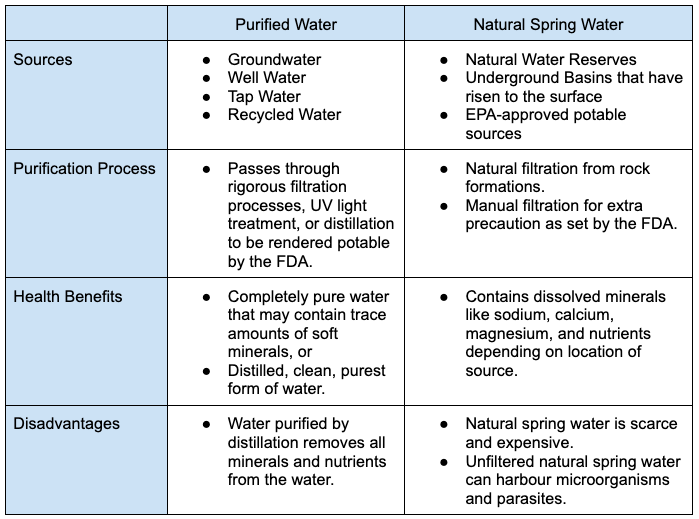
First, a quick reality check: all water is basically H₂O, but the source and the processing are where the drama begins. Spring water is the wilderness hipster of the hydration world—it comes from a natural underground source and is bottled at the source. Think of it as water that saw a mountain once and wrote a memoir about it.
Purified water, on the other hand, is the clean-freak cousin who showers three times a day. It starts from any source (tap, river, or your neighbor’s garden hose) and then gets zapped, filtered, and sterilized until it’s essentially a blank slate. It’s water that has forgotten its past and is ready for a fresh start.
Must Read
Spring Water: The Natural Celebrity
Spring water is legally required to come from a specific, protected underground aquifer. That means it’s not just rainwater that took a wrong turn—it’s water that filtered through rocks and minerals, picking up cool little souvenirs like calcium and magnesium. That’s right, it comes with free minerals. You’re basically paying for the water’s origin story and a side of electrolytes.
But here’s the kicker: spring water is not necessarily cleaner than tap water. It’s just... more romantic. The FDA allows some natural bacteria in spring water because, hey, it’s natural. Not harmful bacteria, mind you—just the kind that makes you feel like you’re in a commercial with a deer and a waterfall.
Fun fact: Some spring water brands have been caught selling ordinary groundwater from a well near a factory, not some magical alpine source. So, that “Alpine Peak” label? Might be from a well behind a strip mall in Ohio. Oops.
Purified Water: The Overachiever
Purified water is the control freak of the liquid world. It has been processed by reverse osmosis, distillation, deionization, or a zapping machine until it’s 99.9% free of impurities. That includes minerals, chemicals, bacteria, and your childhood disappointments. Probably.
This water is so clean that some scientists use it in labs for experiments. If you drink it, you’re drinking something that could theoretically dissolve a tiny piece of metal over centuries. It’s the Marie Kondo of water—it sparks no joy, but it spotless.
Here’s a wild surprise: drinking too much purified water can actually be bad for you if it’s your only source. Without minerals, it can leach small amounts of electrolytes from your body. You’d have to drink gallons a day for that to happen, but hey, now you have a great excuse to chug Gatorade after your third bottle.
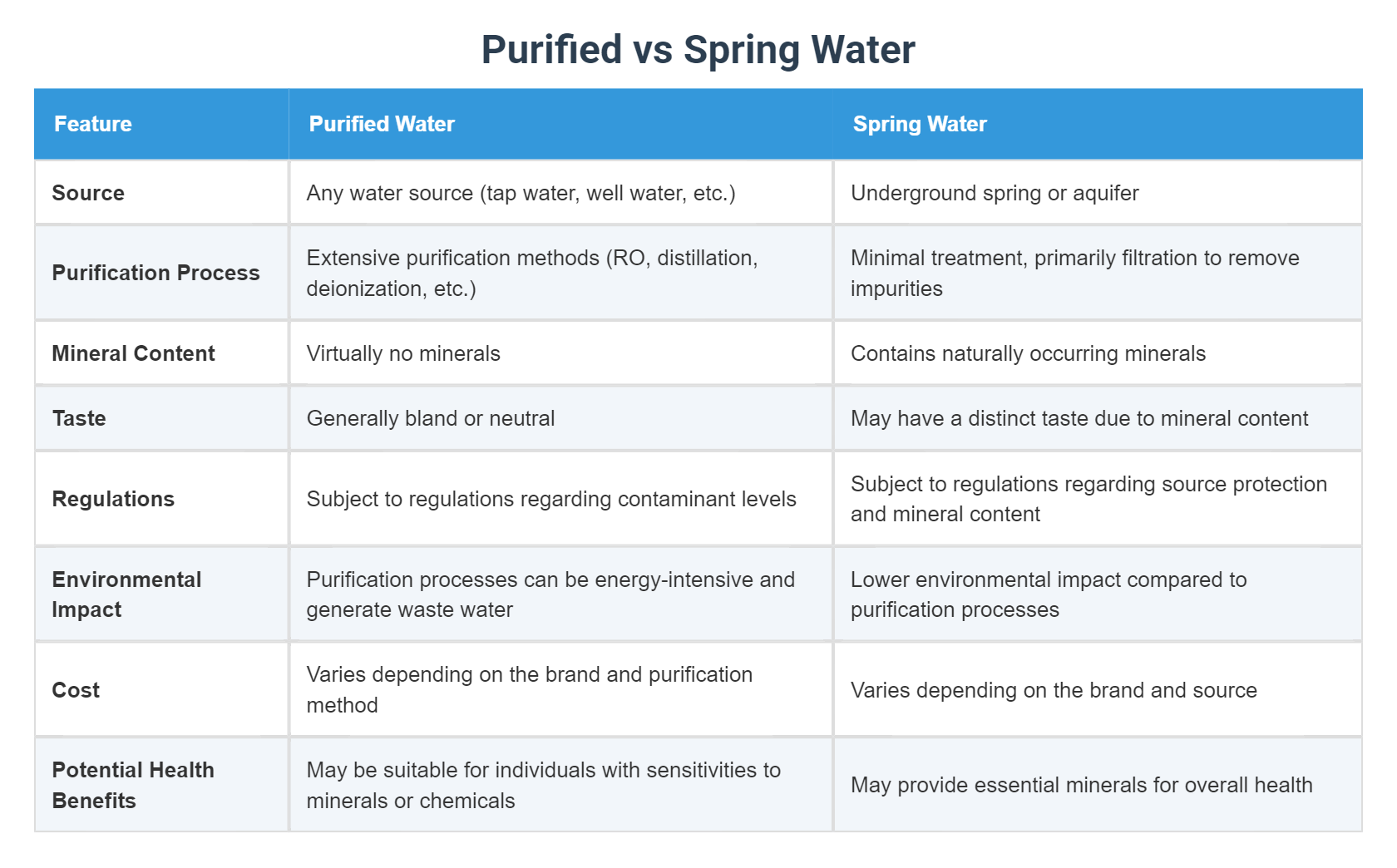 Purified vs Spring Water
Which One Should You Choose?
If you want to feel fancy and pretend you’re sipping from a stream in the Swiss Alps, spring water is your guy. It has a taste—a subtle, mineral-y terroir that sommeliers claim they can detect. (Spoiler: they can’t, but it’s fun to pretend.)
If you’re a control freak who wants the most predictable, boring, but reliably clean water possible, go with purified. It’s the beige cardigan of hydration. It won’t impress anyone, but it will never let you down.
And here’s the ultimate punchline: both are perfectly safe, both are basically water, and neither will turn you into a superhero or a frog. The biggest difference? The price tag. Spring water often costs twice as much because you’re paying for the story and the pretty label with a mountain on it.
Surprising Facts to Drop at Your Next Dinner Party
Did you know that the word “spring water” doesn’t mean it bubbles up from the ground? It can be pumped out with a machine. So much for nature’s magic. Also, most purified water on the market is actually just treated tap water from the city you live in. You’re buying your own tap water back after it’s been to a fancy spa.
Finally, a test you can do: try both side by side blindfolded. I bet you’ll not be able to tell them apart if they’re cold. But once you know which is which, your brain will swear the spring water tastes “smoother.” That’s called the placebo effect, and it’s delicious.
So, next time you’re in that aisle, just grab whichever bottle makes you laugh or matches your mood. Want a story and a mineral boost? Go spring. Want a blank, sterilized slate that won’t surprise you? Go purified. Or, you know, turn on the tap and save yourself $1.50. Your wallet will thank you, and your body won’t know the difference—unless you’re drinking from a garden hose. And we all know that’s a different article entirely.
