How Often Should You Regen Your Water Softener

Alright, let’s talk about your water softener. It’s that tall, quiet metal tank in your garage or basement, working 24/7 to give you silky hair and spotless dishes. But every...

Alright, let’s talk about your water softener. It’s that tall, quiet metal tank in your garage or basement, working 24/7 to give you silky hair and spotless dishes. But every so often, it needs a little “me time” to flush out all that salt and hard water gunk. That’s called a regen, short for regeneration.
You might be wondering, “How often should I actually do this?” Grab a coffee (or tea, I don’t judge), and let’s figure it out together. Spoiler: It’s not as complicated as your dishwasher’s settings.
The Short Answer: It Depends (Doesn’t Everything?)
Most modern water softeners are smarty-pants machines. They automatically regen based on how much water you use. If you have a basic model, it might be on a timer, regening every three to seven days.
Must Read
But here’s the truth: One size doesn’t fit all. A family of four with four showers, two laundry loads, and a dishwashing obsession will need more regens than a single person who lives on takeout. You are the boss of your brine tank.
Factor #1: Your Water Usage
The average home uses about 80–100 gallons of water per person per day. Hard water eats up your softener’s resin beads faster than a toddler eats goldfish crackers. If you notice your water suddenly feels slippery again (in a bad way), or your dishes look cloudy, your system is begging for a regen.
Pro tip: Check your water bill. If it’s spiking, you might be flushing away money—and your softener’s efficiency. Nobody likes a wasteful water bill.
Factor #2: Your Water’s Hardness Level
Is your water “sorta hard” or “crusty-faucet hard”? The grittier your water (measured in grains per gallon), the more often your softener needs to recharge. Think of it like a workout: A light jog needs less hydration than a CrossFit marathon.
You can buy a simple hardness test kit at any hardware store for about ten bucks. Or, you know, just notice if your soap suddenly stops lathering. Science!
The Golden Rule: Let Your Softener Tell You
Here’s the fun part: Many modern softeners have a “demand-initiated” regen. They track your water flow and only regenerate when the resin beads are actually tired. It’s like having a personal trainer for your pipes.
If you have an older, timed model, a good starting point is every three days for a family, or once a week for a couple. Adjust based on how your water feels. Yes, you have to trust your senses—like a wine taster for H₂O.
Also, don’t stress about “wasting” salt. Running a regen too often is like taking your car for an oil change every week—unnecessary. But waiting too long is like ignoring a check engine light. Your faucets will hate you.
The “Bridging” Nightmare (And How to Avoid It)
Imagine this: You go to check your salt tank, and the salt has turned into a solid, crusty blob. That’s called bridging. It happens when humidity clumps your salt together, and suddenly your softener can’t regen properly. Pretty gross, right?
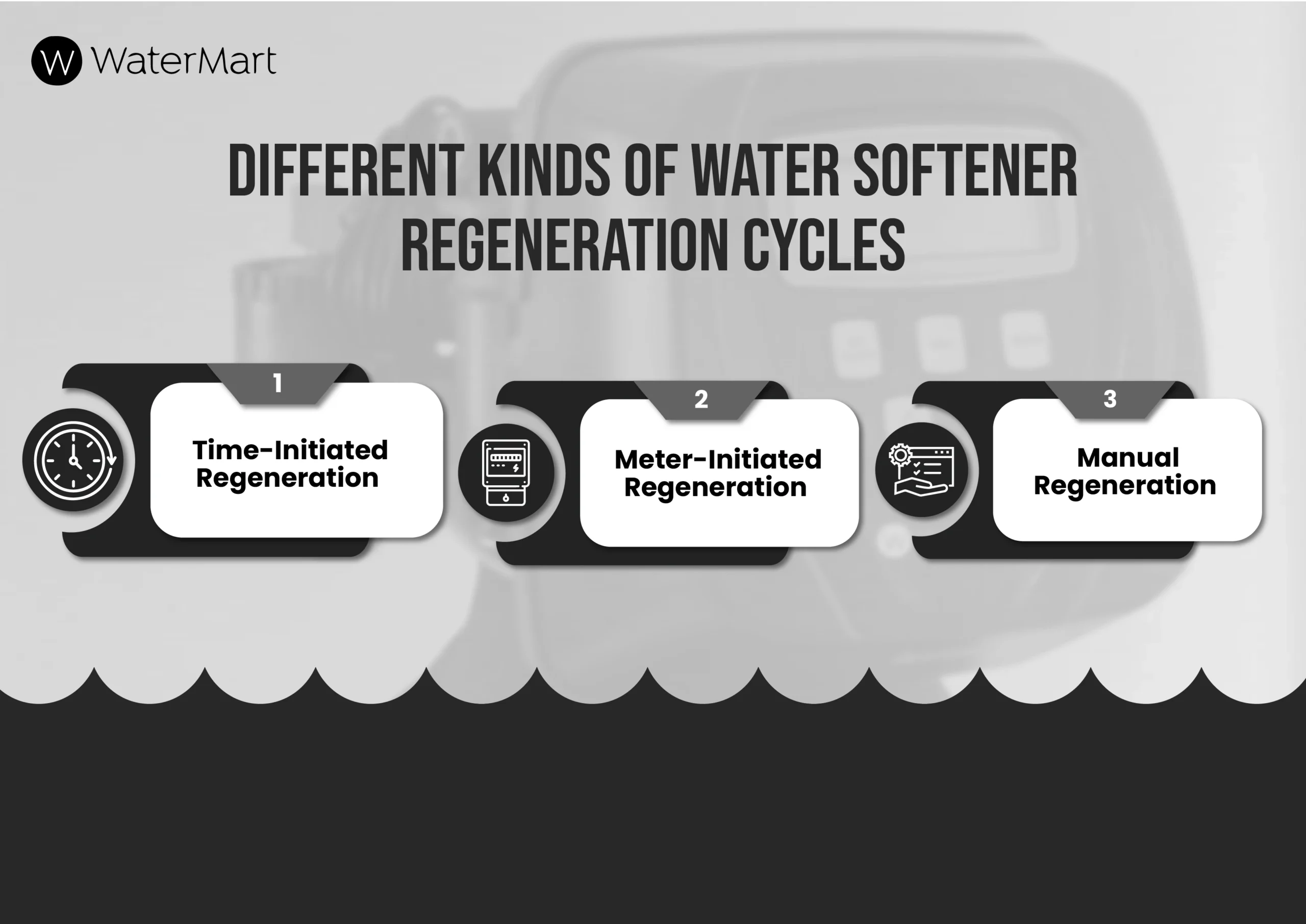 What Is Water Softener Regeneration - Process And Its Types
The fix? Break it up with a broom handle (no, really, it’s a thing). To prevent it, never let your salt level drop below half full. And use high-purity salt if your water is super hard. Your softener will thank you with silent, bubbly whispers.
A Lazy Person’s Checklist
Still confused? Here’s a cheat sheet: If your water feels “slimy” or your dishes have spots, regen immediately. If your schedule is chaotic, set your softener to regen in the middle of the night—everyone’s asleep, so nobody misses any water.
If you’re on vacation, skip the regen. Your softener is fine taking a nap while you sip margaritas on a beach. Just turn the bypass valve if you’re gone more than two weeks. No one wants a salty surprise when they return.
The “One-Week Test”
Try this: Set your regen to once a week. After seven days, check your water. If it feels great, you’re golden. If it’s meh, increase to every five days. Think of it as tuning a guitar—tiny adjustments make beautiful music.
And for the love of clean laundry, don’t overshoot. Over-regening wastes salt, water, and your hard-earned cash. You’re not running a desalination plant in your basement.
When in Doubt, Ask the Machine
Your water softener likely has a little panel with buttons. Push them! Look for a “regen” or “manual cycle” option. Read the manual—yes, that dusty booklet in the drawer. It won’t bite.
If all else fails, Google your model number. Somewhere, a plumbing nerd has posted a video titled “How to Fix Your Water Softener While Eating a Sandwich.” Bless the internet.
An Uplifting Conclusion (You Knew This Was Coming)
So, how often should you regen? The short answer: As often as your water needs it. The long answer: You’re doing great. Seriously. You’re already thinking about it, which means you care about your home, your water, and your sanity. That’s more than half the battle.
Remember, a happy water softener means soft skin, shiny hair, and a coffee maker that doesn’t calcify into a brick after six months. And you know what? That’s a small victory worth celebrating. So go ahead, pat your softener on its metal side. Tell it you love it. Maybe buy it a bag of salt as a treat.
You’ve got this. Your water will be soft, your dishes will sparkle, and your showers will feel like a hug from a cloud. Cheers to that, my friend.
