Industrial Water Treatment Disinfection System

Ever wonder what happens to the water from a factory before it goes down the drain? It’s not just a magical disappearing act. There’s a whole world of high-tech cleaning happe...

Ever wonder what happens to the water from a factory before it goes down the drain? It’s not just a magical disappearing act. There’s a whole world of high-tech cleaning happening that you never see.
We’re talking about industrial water treatment disinfection systems. These are the unsung heroes of manufacturing, keeping our rivers and lakes safe from nasty stuff. It sounds super technical, but it’s actually pretty clever.
Think of it like a super-powered washing machine for the planet. Except instead of getting out a ketchup stain, it’s zapping away bacteria, viruses, and chemicals. How cool is that?
Must Read
Why does industry even need to treat water?
Good question! Imagine a brewery. They use tons of water to make beer. That dirty water has leftover yeast, sugar, and cleaning agents in it.
You can’t just dump that into a river. It would mess up the ecosystem, killing fish or creating massive algae blooms. That’s why disinfection systems exist—to make that water safe to return to the environment.
Plus, factories often reuse their own water. It saves money and resources. So, disinfection isn’t just about being nice to nature; it’s smart business, too.
The usual suspects: Chlorine, UV light, and Ozone
These aren’t the only methods, but they are the rock stars of the disinfection world. Each one has a unique superpower.
First up is chlorine. You know that smell from a swimming pool? Yep, that’s the guy. It’s cheap and it’s been used for over a century.
But chlorine can form weird chemical byproducts if you’re not careful. That’s why many industries are switching to cooler, cleaner tools. Have you seen a tanning bed for water?
Ultraviolet (UV) light
Think of UV disinfection as a sunburn for germs. Water flows past powerful UV lamps, and the radiation scrambles the DNA of bacteria and viruses.
No chemicals are added. It’s fast, clean, and the bugs can’t become “immune” to it. It’s like giving the water a quick, gentle blast of pure light magic.
The only catch? The water has to be pretty clear, so UV can actually reach the germs. But when it works, it’s almost zero waste.
Ozone gas
Now this one is a bit of a rockstar. Ozone is a super-reactive form of oxygen. It’s like oxygen on steroids.
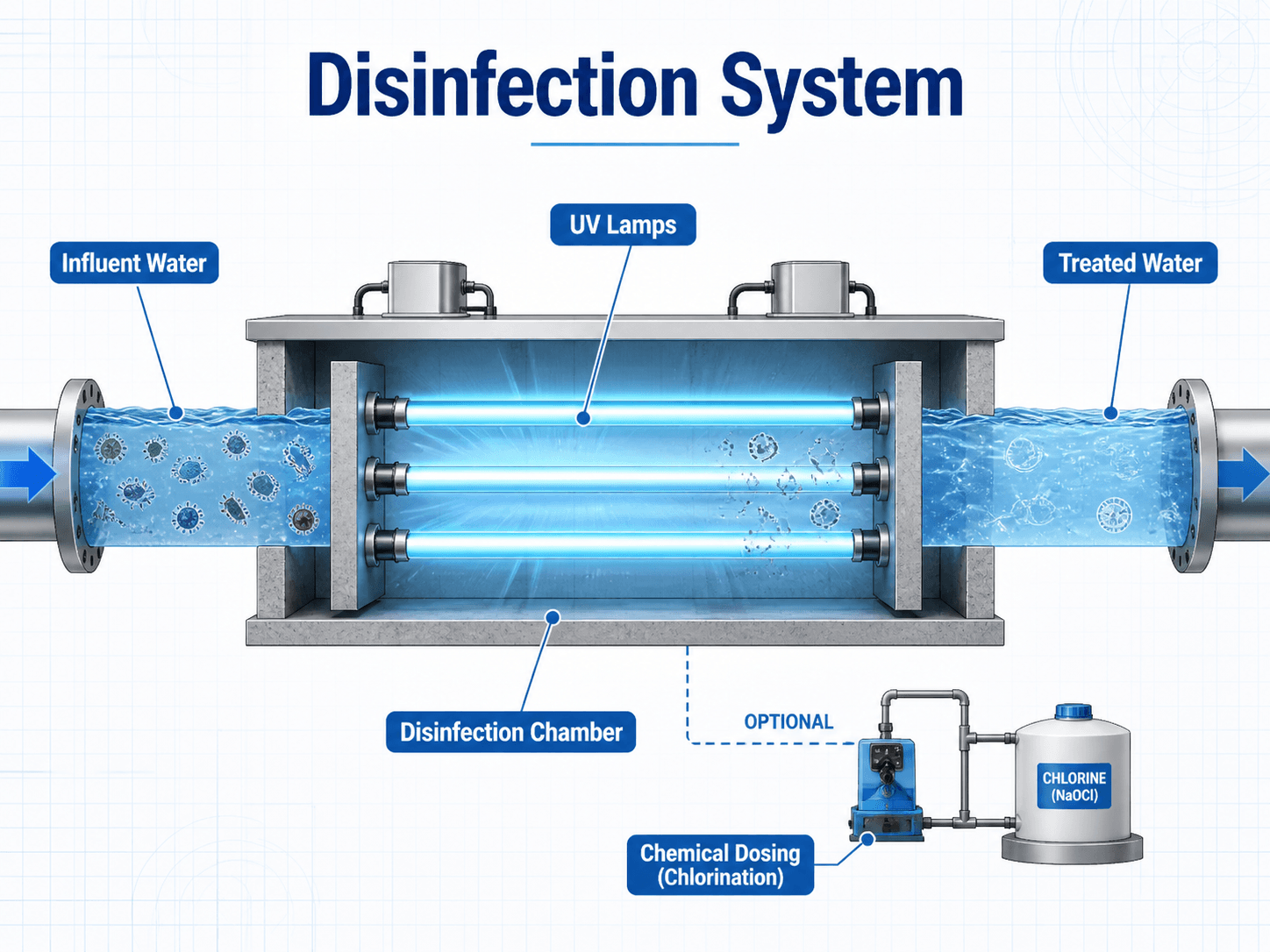 Water Treatment Plant Components Explained
When ozone is bubbled into water, it instantly attacks and destroys anything organic—bacteria, viruses, even some tough chemicals. It’s one of the most powerful disinfectants we have.
The coolest part? After it does its job, ozone breaks back down into regular oxygen. No leftover chemical taste or smell. It’s like a ninja that cleans up and vanishes.
Wait, so which one is the best?
That’s the fun part—it depends on the water! A factory that makes soda has dirty water full of sugar. A steel mill has water full of heavy metals and grease.
Most industrial systems use a combination of these methods. Maybe UV handles the easy germs, then ozone polishes off the tough stuff. They work like a tag team.
You might even find sand filters, carbon filters, or membranes that act like a sieve. The whole setup is like a smart, automated orchestra cleaning water note by note.
Why should you care?
Because this technology is what lets you enjoy clean rivers, lakes, and beaches. Next time you see a pipe near a factory, it’s probably dumping water that’s cleaner than tap water.
Isn’t that wild? The water that washes a car engine might be more purified than the water you drink. That’s the level of care involved.
And as industries get greener, these systems get more efficient. They use less energy and fewer chemicals than ever before. It’s a quiet revolution happening under our feet.
A final thought
So, the next time you chug a soda or flush a toilet, take a second. Think about the journey that water took to get back to the wild.
It’s not just a pipe and a filter. It’s a carefully designed system of light, gas, and chemistry. And it’s making sure our blue planet stays blue.
Pretty chill, right?
