Is Distilled Water The Same As Deionized Water

So, you’re staring at two bottles in the store—distilled water and deionized water. They look identical, and the labels sound like science jargon. Are they secretly the same t...
So, you’re staring at two bottles in the store—distilled water and deionized water. They look identical, and the labels sound like science jargon. Are they secretly the same thing?
Nope. They are not the same, even though both are super “pure” in their own ways. Think of them as cousins with different superpowers.
Let’s break it down without any lab coats. You’ll be the coolest person at your next trivia night. Ready?
Must Read
What’s the Big Idea?
Both waters start life as normal tap water. Then, each takes a very different “spa treatment.”
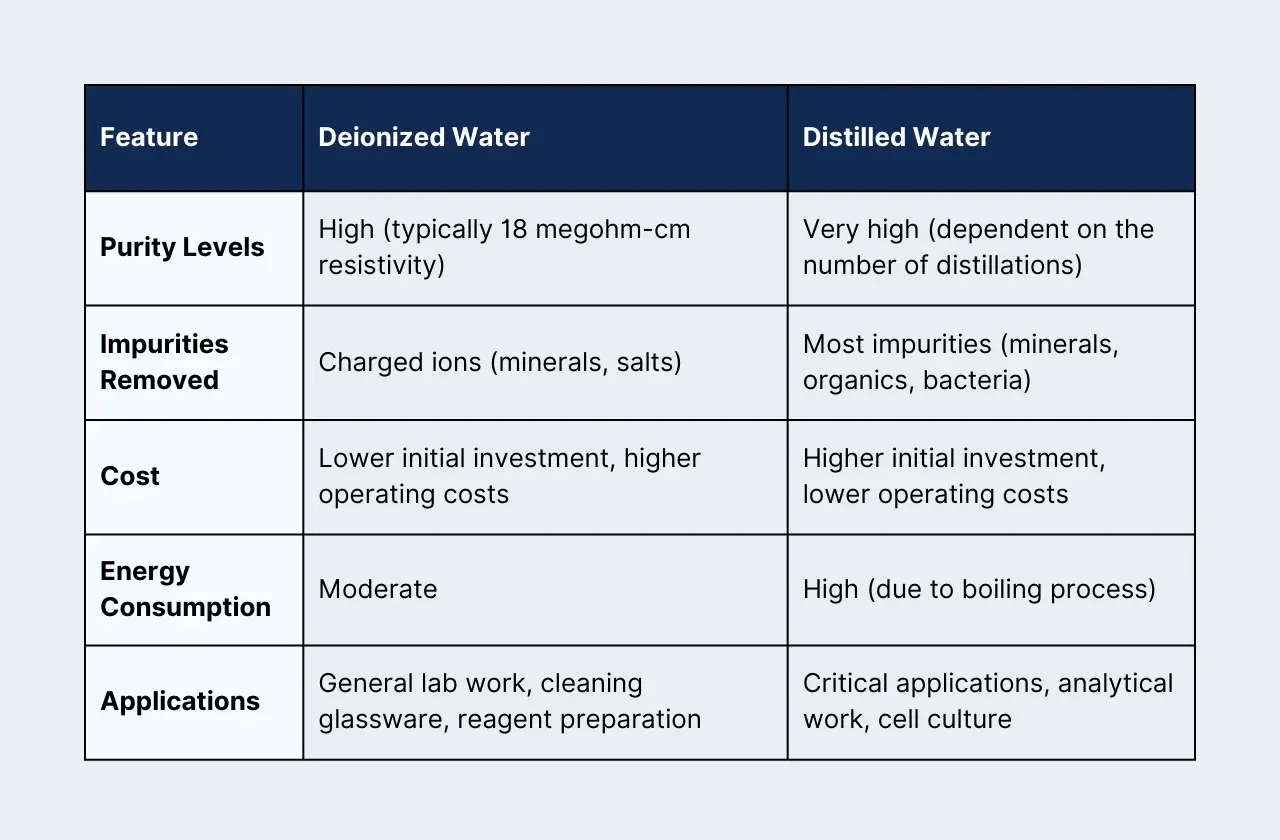
Distilled water gets boiled into steam, and that steam is collected and cooled back into liquid. It’s like a water sauna—only the purest H₂O vapors make the cut, leaving minerals and most impurities behind.
Deionized water goes through a process where ions—those tiny charged particles like calcium, magnesium, and salt—get zapped away. Imagine a bouncer at a club: “Sorry, ions, you’re not on the list.”
So, distilled is a physical separation, while deionized is a chemical one. Different dance moves, same goal: get clean.
Wait, Which One is “Purer”?
Ah, the million-dollar question. Ready? Deionized water is usually purer for most uses. It removes more dissolved salts than distillation can.
But here’s the twist: deionized water can still contain tiny germs or organic stuff. Distillation? Boiling kills bacteria and viruses like a boss.
So, if you’re worried about microbes, distilled wins. If you need ultrapure chemistry water, deionized takes the crown. It’s basically Rock vs. Scissors.
Why Should You Even Care?
Because this isn’t just lab nerd stuff—it affects your everyday life. Ever used a steam iron? It begs for distilled water to avoid mineral gunk.
Car batteries and fish tanks? Deionized water is their best friend for preventing scale and keeping critters safe. Tap water can kill your goldfish with chlorine—yikes!
And coffee lovers: some fancy espresso machines hate mineral buildup. Distilled or deionized can keep them happy, but a pinch of mineral back might taste better. Balance, people.
 Distilled Water Vs. Deionized Water — Microbe Online
The “Is It Safe to Drink?” Reality Check
Let’s get real: drinking either one long-term isn’t great. Why? They lack the natural minerals your body needs, like calcium and magnesium.
Think of it as drinking a workout drink with zero electrolytes—you’d get cramps. Your body craves those ions.
So, for an occasional sip or a car battery, go ahead. But don’t ditch your mineral water for a lifetime. Your teeth and bones might throw a tantrum.
Fun Comparisons to Remember
Distilled water is like a boiled egg—you’ve killed everything, but some salts might cling to the shell. Deionized water is like a magnet party—you’ve pulled all the charged bits away, but bacteria can still crash.
Or imagine this: distilled water is a steam room for your water. Deionized is a super-powered filter that says “No ions allowed.” Both get clean, but they have different exit strategies.
Real-Life Head Scratchers
Why does your lab order deionized water for experiments? Because those stray ions can mess up a chemical reaction. Distilled might still have tiny amounts that ruin a scientist’s day.
Why do pharmacies use distilled for mixing medicines? Sterility matters. Deionized might have invisible microbes, which is a no-go for injections.
So, it’s not about “better”—it’s about fitness for purpose. Like choosing a wrench or a hammer.
The Final Chill Take
Next time someone says “All purified water is the same,” you can drop some knowledge. Distilled ≠ deionized, and that’s actually pretty cool.
One is a boiled ghost, the other is a magnetic cleanup crew. Both are fascinating tools in the toolbox of life.
So, grab whichever one you need. Just don’t forget to drink some good old tap or mineral water now and then. Your body says thanks.
