Is Deionized Water And Distilled Water The Same

So, you’re standing in the water aisle at the grocery store, staring at two fancy bottles. One says “Distilled,” the other says “Deionized.” Your brain whispers, “Aren’t they…...
So, you’re standing in the water aisle at the grocery store, staring at two fancy bottles. One says “Distilled,” the other says “Deionized.” Your brain whispers, “Aren’t they… the same thing?”
It’s a totally fair question, and the answer is a fun little chemistry puzzle. Let’s dive in, shall we? Grab a comfy chair and maybe a snack—this is going to be surprisingly interesting.
The Simple, Slightly Cheeky Answer
No, they are not exactly the same, but they are cousins. Think of them as two different paths to the same goal: making water super pure.
Must Read
Distilled water got its start by being a drama queen—it threw a fit, turned into steam, and left all its impurities behind. Deionized water, on the other hand, is more of a bouncer at a club, kicking out all the charged particles.
How Distilled Water Gets Its Groove
Distillation is the oldest trick in the book. You boil water until it turns into steam, then you cool that steam back into liquid water. Everything that doesn’t evaporate—like minerals, salts, and even bacteria—gets left behind in the boiling pot.
It’s like giving water a total makeover. “Bye-bye, calcium! See ya later, chlorine!” The result is water so pure it’s practically a blank slate.
Fun fact: This is the same process used to make whiskey and perfume. So, distilled water has some very glamorous cousins.
The Quirks of Distilled Water
Distilled water is great for things like steam irons and car batteries because it won’t leave mineral deposits. But it can taste a little flat—like it’s missing its personality.
That’s because the “flavor” in tap water comes from those tiny minerals. Take them away, and you’re left with the water equivalent of a blank stare.
How Deionized Water Gets Its Swagger
Deionization uses a different kind of magic. It passes water through special resins that act like tiny magnets. These resins grab onto ions—those are atoms or molecules with an electric charge, like calcium, magnesium, and sodium.
So, while distillation uses heat and steam, deionization uses science and a little bit of “get out of here” attitude. It’s like having a bouncer at the molecular level.
Playful aside: The water has to be pretty clean before it gets deionized, or the resins get tired out. It’s like asking a bouncer to kick out one drunk person versus a whole rowdy crowd.
The Quirks of Deionized Water
Deionized water is aggressively pure. It’s so eager to grab ions that it will actually steal them from you if you drink too much. No kidding—it can leach minerals from your teeth and bones.
That’s why you don’t see giant bottles of deionized water in the grocery store for drinking. It’s more of a lab rat—used in science experiments, lab equipment, and car detailing.
 Distilled Water Vs. Deionized Water — Microbe Online
The Big Difference: The “Uninvited Guest”
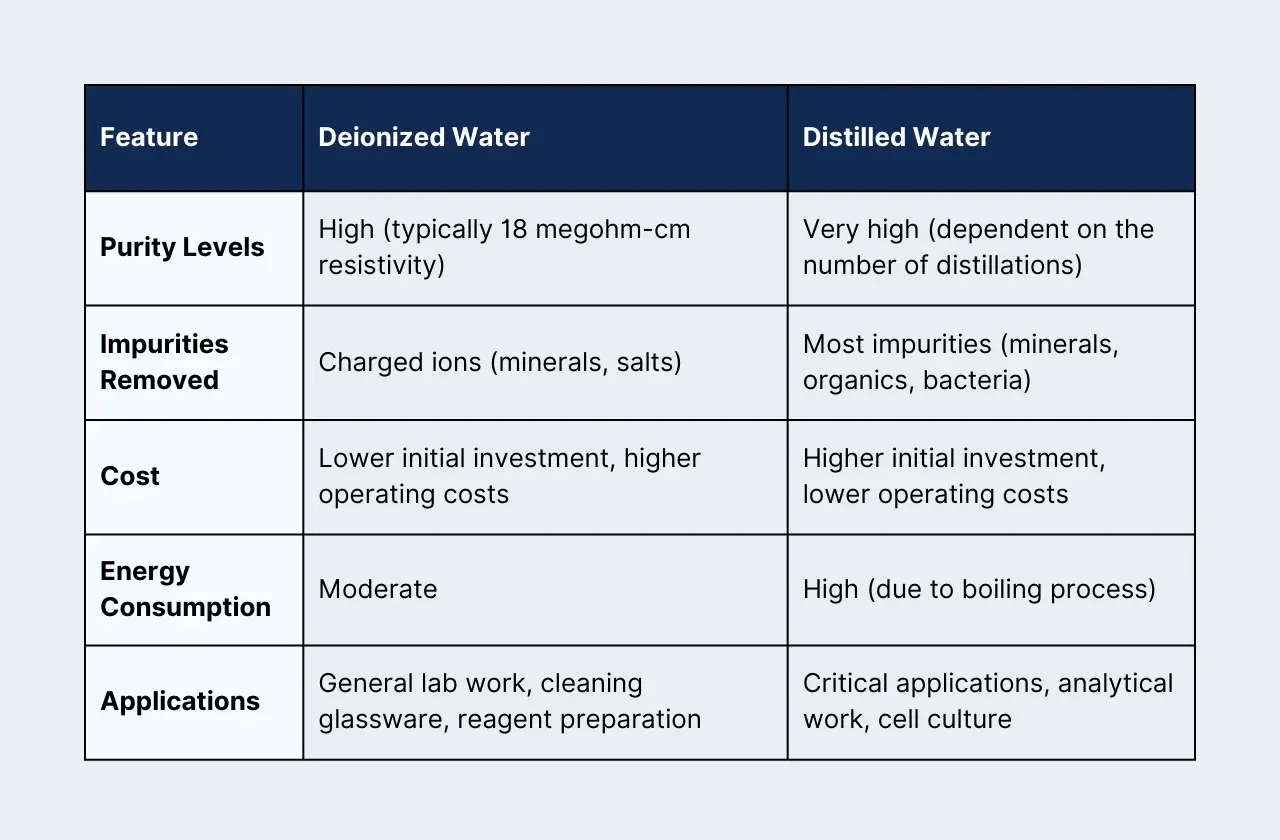
Here’s the key: Distillation removes almost everything, including bacteria and viruses. Deionization only removes charged ions, so it can leave behind neutral particles like viruses or dissolved organic stuff.
Think of it this way: Distillation is a full-body scanner at the airport. Deionization is a speed-check for bad guys wearing metal. They catch different things.
So, distilled water is usually more pure than deionized water when it comes to living things. But deionized water is often more pure when it comes to dissolved salts.
Can You Use Them the Same Way?
In some cases, yes! For a steam iron or a fish tank, either one works fine. But for a car battery or lab work, you might want distilled water specifically.
And if you’re brewing coffee? Please, please don’t use deionized water. It will make your coffee taste like a sad, hollow ghost of a morning. Use distilled or spring water.
Bottom line: They are not twins, but they are best friends in the world of purified water. They just got to the party by different modes of transportation.
So, Which One Should You Buy?
If you’re drinking it, stick to distilled water. It’s safer, tastes better (kinda), and won’t mess with your body’s mineral vibes.
If you’re using it for a science project, a humidifier, or a car battery, either will do the trick. Just check the label and laugh at how fancy it sounds.
One last joke: What did the deionized water say to the distilled water? “You’re so hot… literally.” …Okay, I’ll show myself out.
The Uplifting Conclusion (I Promised!)
Here’s the beautiful truth: Whether you boil water into steam or zap its ions away, you’re giving water a second chance. You’re saying, “Hey, you can be better. You can be purer.”
And isn’t that a lovely thought? We all have a little bit of distilled or deionized spirit in us—the ability to let go of the impurities, to rise above the gunk, and to start fresh. So the next time you see that fancy bottle, smile. You now know the difference, and more importantly, you know that pure things are worth the effort.
Now go hydrate—with whichever water makes your heart sing. Cheers, friend! 🥤
