What Kind Of Water Should You Use In A Humidifier

You’ve finally caved and bought that sleek, whisper-quiet humidifier. It’s humming away on your nightstand, a little cloud-maker promising dewy skin and easier breathing. But...
You’ve finally caved and bought that sleek, whisper-quiet humidifier. It’s humming away on your nightstand, a little cloud-maker promising dewy skin and easier breathing. But then, the manual gives you a vague warning: “Use clean water.” Thanks for the clarity, appliance gods.
Here’s the truth: your humidifier is basically a picky houseplant with a mechanical heart. Feed it the wrong water, and it will sulk, spit white dust, or even grow a science experiment. Let’s decode the liquid love language of your machine, mixing a little science with a lot of style.
The Big No-No: Tap Water
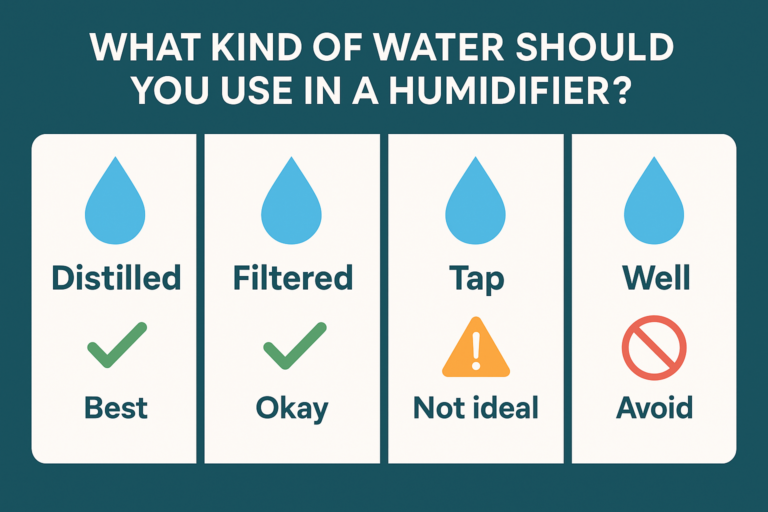
Pouring straight tap water into your humidifier feels efficient, like using the same coffee mug all day. But tap water is a mineral cocktail, especially if you live in an area with hard water. Those calcium and magnesium ions don’t evaporate; they turn into that fine white dust that coats your furniture and makes your lungs feel scratchy.
Must Read
Think of it as the uninvited guest at a pool party. It leaves a chalky ring around the tub and annoys everyone. Plus, if you own an ultrasonic humidifier (the ones that make a cool mist), that dust is essentially tiny, airborne rock particles. Not exactly the spa experience you signed up for.
Fun fact: The term “hard water” comes from how difficult it is to lather soap. Your humidifier feels the same struggle.
The Gold Standard: Distilled Water
If your humidifier had a secret Instagram account, its aesthetic would be 100% distilled water. This is the H2O equivalent of a cashmere sweater—pure, gentle, and free of impurities. The boiling and condensing process strips away minerals, bacteria, and anything else that might cause trouble.
Using distilled water means zero white dust, a longer lifespan for your humidifier’s filter (if it has one), and a cleaner mist. It costs a dollar or two per gallon at the grocery store, but think of it as a tiny insurance policy. Your humidifier’s manual probably whispers “distilled” like a secret password.
Practical tip: If a gallon of distilled water feels wasteful to your wallet or the planet, you can buy a countertop distiller. It’s a small, sci-fi looking gadget that makes your own pure water while sounding like a kettle having a deep thought.
The Daily Hero: Filtered or Purified Water
Not ready to commit to distilled water? Enter filtered water—the reliable friend who shows up with a casserole. A quality pitcher filter (think Brita or ZeroWater) or a faucet-mounted system removes most of the chlorine, sediment, and heavy minerals. It’s not perfect, but it’s dramatically better than tap.
The catch? Some filters don’t remove all minerals, especially if your water is super hard. You might still get a faint dusting, but it’s a vast improvement. Think of it as the denim jacket of water: casual, functional, and never high-maintenance.
Fun fact: In old Hollywood, actors used humidifiers filled with rose water for their skin. Today, we’re just trying not to breathe chalk.
When to Use Tap Water (And Not Feel Guilty)
There’s one exception to the “no tap water” rule: evaporative humidifiers. These work by blowing air through a wet wick, and they are much more forgiving of mineral content. The minerals get trapped in the wick, which you replace every few months anyway.
Still, hard tap water will eventually gunk up the wick, making it less effective and smelling a bit like a damp basement. Use tap water here with a shrug, but swap the wick on schedule. It’s the humidifier equivalent of wearing jeans to a nice dinner—it works, but you know you could do better.
 The ideal type of water for your dehumidifier
Quick guide: Ultrasonic = distilled or filtered. Evaporative = tap is okay, but filtered is nicer. Steam vaporizers (the boiling kind) use tap easily because minerals don’t float, but they can leave a crusty heating element.
Cool, But What About Flavoring or Oils?
Let’s kill this common myth right now: never put essential oils, cologne, or lavender spray in your humidifier—unless you want a melted plastic smell and a voided warranty. The plastic and seals are not designed for oil-based liquids; they degrade, crack, and create a sticky mess.
If you want scented air, buy a separate diffuser. Mixing oils and water is like inviting a cat to a dog show—technically possible, but everyone ends up unhappy. Your humidifier’s job is moisture, not aromatherapy.
Cultural reference: Remember that Friends episode where Phoebe puts incense in the air conditioner? Same chaotic energy.
The Science of Clean: How Often to Change It
Even with perfect water, your humidifier tank is a petri dish waiting to happen. Stagnant water grows mold and bacteria within 48 to 72 hours. That research is from the EPA, not a gloomy TikTok wellness influencer.
Empty and dry the tank every night if you’re paranoid (the way you’d wash a water glass). If you’re human, aim for every two to three days. A weekly deep clean with white vinegar or hydrogen peroxide is non-negotiable. Treat it like you’re prepping a fancy salad bowl—rinse, dry, and never let it sit wet for a week.
Fun fact: In the 1800s, humidifiers were literal wet blankets hung over radiators. We’ve come a long way, baby. Don’t regress to “wet blanket” hygiene levels.
A Final Splash of Reflection
Choosing the right water for your humidifier isn’t about being precious—it’s about being kind to yourself. That $2 gallon of distilled water is an investment in a good night’s sleep, less coughing, and a machine that lasts longer than your last phone case.
In a world where we choose oat milk for our coffee and premium gas for our cars, why not give the same loving consideration to the air you breathe? Your humidifier is a silent collaborator in your daily comfort. Feed it wisely, and it will repay you with mist that feels like a soft hug from the universe itself.
So next time you fill that tank, pause. Take joy in the simple act of pouring pure water. It’s a tiny ritual of care, a quiet nod to the fact that you deserve surroundings that feel as easy as a Sunday morning. Now go mist on.
