How Often Should You Change The Filter In A Keurig

Let’s be honest: your Keurig is probably the most loyal relationship you’ve got going. It wakes up before you do, never complains, and delivers that life-giving elixir with a...

Let’s be honest: your Keurig is probably the most loyal relationship you’ve got going. It wakes up before you do, never complains, and delivers that life-giving elixir with a satisfying hum. But even the best friends need a little maintenance, and for your coffee maker, that means the filter. So, how often should you actually change it?
The short answer, straight from the pod-people themselves, is every two months or after 60 tank refills. Think of it like an oil change for your morning routine—easy to forget, but terrible to ignore. That little white or charcoal cylinder is the only thing standing between your cup and a mouthful of mineral deposits from yesterday’s tap water.
Ignore that schedule, and you’re basically brewing with yesterday’s jam. The machine starts to chug like a teenager waking up for school, the water flow slows to a trickle, and that bold roast starts tasting… sad. You deserve better than sad coffee. It’s not just taste; it’s the principle of a good morning.
Must Read
Why Your Filter is the Unsung Hero
We obsess over beans, grind size, and water temperature, but we treat the filter like an afterthought. Big mistake. Your Keurig’s charcoal filter is like the bouncer at a cool club—it keeps the bad stuff (chlorine, sediment, weird tap-water flavors) out so the good stuff (caffeine, vibes) can flow freely.
Without it, those minerals build up inside your machine like plaque on unbrushed teeth. This not only alters the flavor profile of your coffee but can also shorten the lifespan of your beloved brewer. A $15 filter replacement is a lot cheaper than a $150 new machine—and a lot less heartbreaking.
Fun fact: The carbon in those filters is activated, meaning it’s been treated with oxygen to open up millions of tiny pores. Those pores trap impurities like a sponge traps glitter. One gram of activated carbon has a surface area the size of a football field. Your morning latte is literally being filtered through a microscopic sports arena.
The "When to Change" Checklist
Still not convinced? Look for these three signs, and you’ll know it’s time to swap. First, your coffee tastes flat or has a slight metallic aftertaste—this is the filter screaming for retirement. Second, your brew cycle takes noticeably longer than when you first bought the machine. Third, you notice white, chalky scale buildup around the water reservoir.
If you live in an area with hard water, you might need to change it even sooner—every month, no joke. Hard water is the enemy of all appliances, and your Keurig is a delicate diva who prefers soft, filtered affection. Check your city’s water report online for a quick reality check. It’s free, and it might save your coffee.
And here’s a pro-tip: Soak the new filter in fresh water for five minutes before popping it in. This activates the charcoal and primes it for duty. Skipping this step is like putting on a dry swimsuit—it works, but it’s not nearly as pleasant.
The Cultural Context (or, Why We Care So Much)
We live in an era of instant gratification. We want our coffee now, our Wi-Fi fast, and our life hacks simple. The Keurig embodies this perfectly—it’s the espresso machine for people who also have to walk the dog, answer emails, and find matching socks. But that convenience comes with a hidden cost: maintenance amnesia.
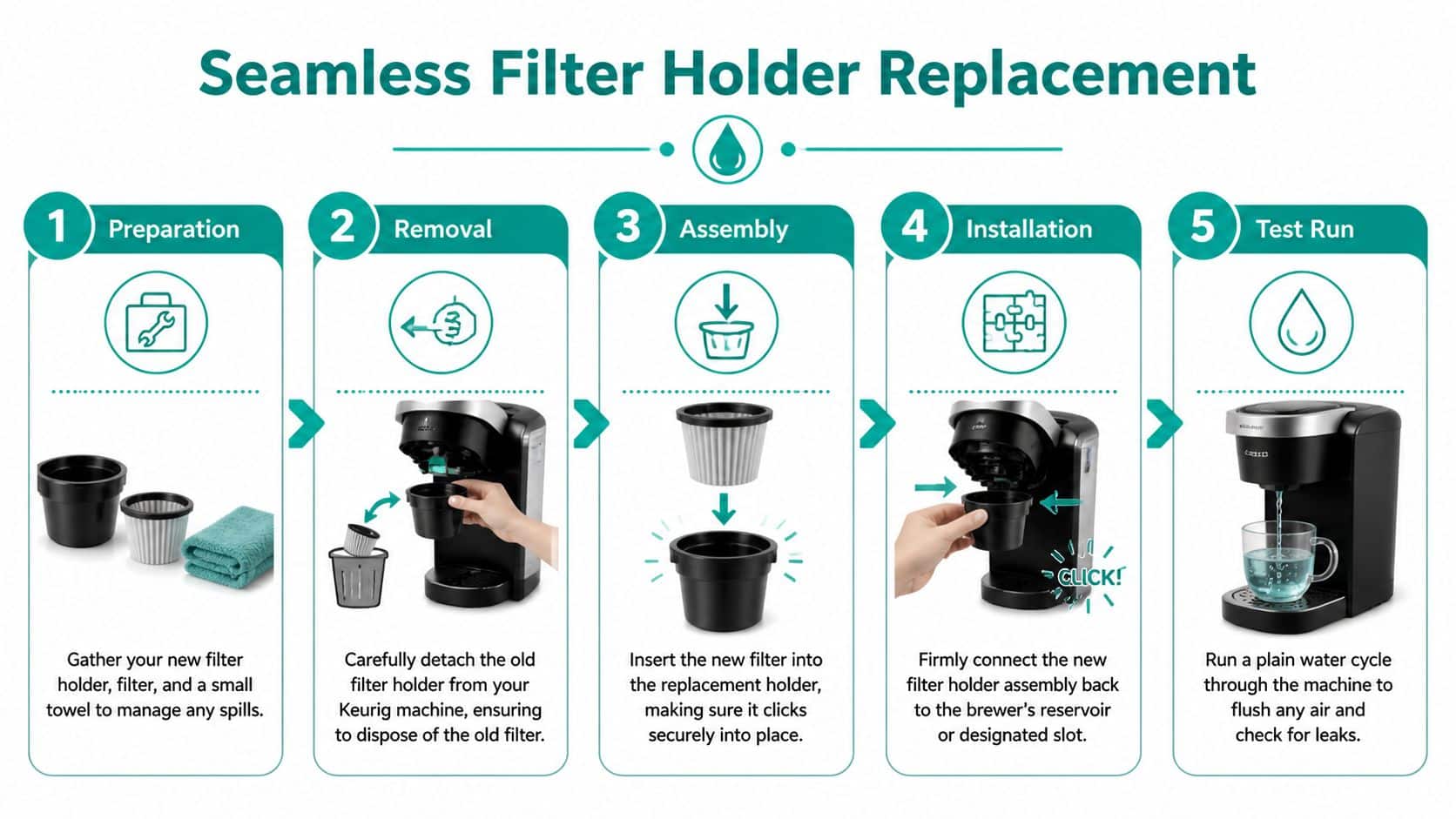 Keurig Water Filter Holder Replacement Made Easy
Remember when everyone was obsessed with tidying up with Marie Kondo? Applying her logic to your coffee maker means: if the filter doesn’t spark joy, replace it. A neglected filter does the opposite of sparking joy—it sparks bitterness, slowness, and a faint whiff of regret. You don’t need that energy before 8 AM.
Even pop culture gets it. In an episode of The Office, Michael Scott would have definitely ignored his Keurig filter and blamed the coffee shop. Don’t be a Michael Scott. Be a Pam—organized, understated, and always brewing something that actually tastes good.
How to Actually Remember
Set a recurring reminder on your phone called “Keurig filter swap” for every 60 days. Tie it to a visual cue, like the first day of each season or when you change your clock for daylight saving time. Spring forward, change the filter. Fall back, change the filter. It’s that easy.
You can also buy a pack of six filters online for about the price of two fancy lattes. Stash them next to your coffee pods. When you run out of pods, you’ll see the filters and think, “Oh right, that’s a thing.” This is called passive memory—your future self will high-five you.
If you use a Keurig at the office, nominate one person to be the “Filter Fairy.” Rotate the responsibility every two months. Office coffee is already a gamble; don’t let a clogged filter make it a tragedy. Your coworkers will silently thank you with every sip.
A Small Reflection for Your Daily Life
Here’s the beautiful part: changing a filter isn’t about the coffee. It’s about a quiet, intentional act of care for something that cares for you every single morning. That two-minute swap is a small ritual that says, “I respect the process.” In a world that moves too fast, slowing down to maintain a simple machine feels almost radical.
We often think about what we take from our routines—caffeine, comfort, a moment of peace. But we rarely think about what we give back. A fresh filter is a gift to your machine, your taste buds, and your sanity. It’s the difference between surviving your morning and actually enjoying it.
So go ahead. Check your filter right now. If it’s been more than two months, treat yourself to a fresh one. Your coffee will taste brighter, your machine will run smoother, and you’ll start your day with one tiny, perfect act of self-respect. That’s a good morning.
