What Do Refrigerator Filters Remove From The Water

Alright, pull up a chair. Let’s talk about that mysterious, expensive little cylinder hiding in your fridge. You know the one: the refrigerator filter. You replace it every si...

Alright, pull up a chair. Let’s talk about that mysterious, expensive little cylinder hiding in your fridge. You know the one: the refrigerator filter. You replace it every six months, grumbling about the cost, while secretly hoping it’s doing something magical. Spoiler alert: it actually is, but the magic is less wizard and more like a cranky bouncer at a water molecule nightclub.
What Grossness Is This Thing Pulling Out?
Your tap water isn’t just H2O. It’s a traveling circus of minerals, chemicals, and microscopic party crashers. That filter is the velvet rope, and only the good stuff gets in. The bad stuff? Thrown out onto the curb.
First up, let’s talk about chlorine. Yes, the same stuff that makes swimming pools smell like a chemical hug. It’s added to kill bacteria before it reaches you, but it also makes your ice cubes taste like a public pool. Your filter grabs that chlorine and yanks it out, leaving water that doesn’t make you grimace while you’re trying to hydrate.
Must Read
Then there’s lead. Nobody invited lead. It’s a heavy metal that can sneak in from old pipes, and it’s terrible for your brain and your kids’ brains. A good fridge filter reduces lead by more than 90%—which is great, because you don’t want your tap water to double as a battery ingredient.
The Usual Suspects: Sediment, Rust, and the “What Is That Brown Stuff?”
Ever fill a glass and see little floaty bits? That’s sediment—sand, dirt, and rust particles that hitched a ride from the municipal water system. Your filter catches those like a goalie at a mudball match. It’s not glamorous, but someone has to do it.
Surprising fact: your filter also removes mercury. Yes, that mercury. The stuff from old thermometers and broken CFL bulbs. You’re not drinking it, but you’re glad it’s gone. There’s also something called volatile organic compounds (VOCs), which sound like a punk band from the 80s but are actually gassy chemicals from pesticides and industrial runoff. The filter says, “Not in my house.”
And do not forget asbestos. If that word makes you shiver, good. Your filter can remove some of it. That’s like finding out your fridge has a tiny hazmat team inside. High-five your appliance.
The Surprising Stuff That Stays In
Here’s the kicker: your fridge filter doesn’t remove everything. It’s not a totalitarian dictatorship. It lets fluoride pass right through—because many cities add it for tooth health. It also leaves behind calcium and magnesium (the minerals that make water taste crisp), so you don’t end up drinking watery ghost tears.
But it won’t catch bacteria or viruses. That’s right—your filter is not a water purifier. If you have a well with E. coli, your fridge filter is just giving those bacteria a comfortable ride to your glass. You need a UV system for that. So, don’t go camping and fill your water bottle from a stream and then run it through the fridge. I tried it. It did not work. My stomach sent a strongly worded letter.
Another surprise: it won’t remove most pharmaceuticals. Tiny traces of caffeine, ibuprofen, or hormones? Those slip through. The filter is not a pharmacist. It’s just a bouncer who’s rusty on chemistry.
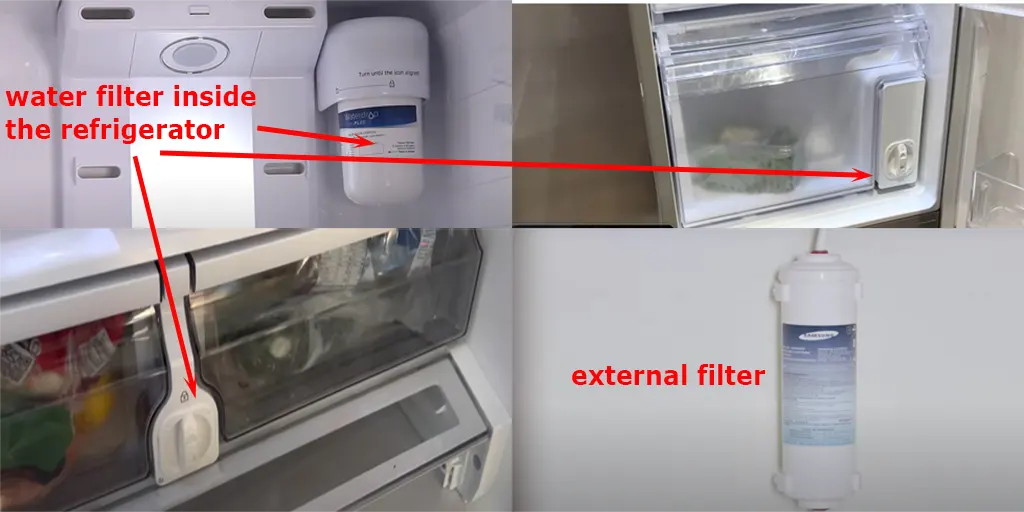 How to change and reset the Samsung refrigerator water filter | Tab-TV
Why Does It Taste So Much Better?
Think about it: without chlorine, lead, and rust, your water tastes like water again. Pure, crisp, and without that metallic “I’m drinking from a garden hose” aftertaste. Your ice cubes stop smelling like last night’s fish because the filter caught the odor-causing compounds. That’s a win for your whiskey and your sanity.
One funny thing: some people think the filter adds “healthy minerals.” Nope. It’s subtractive, not additive. It’s Marie Kondo for your water—removing everything that doesn’t spark joy. The result is cleaner, clearer, and tastier, but it’s not a multivitamin. So don’t expect it to give you superpowers. Although I swear my water made my hair shinier. Probably placebo, but I’m keeping the story.
The Crucial, Boring Warning
You have to change the filter every six months. Ignoring it makes the filter become a breeding ground for mold and bacteria. Yes, the thing that cleans water starts to make it dirty. It’s like having a janitor who eventually starts leaving trash everywhere. Your manual says to replace it, and it’s not lying to upsell you. I learned this after my fourth glass of vaguely musty water.
Pro tip: When you install a new filter, run a few gallons through it first. The first glass often tastes like plastic and lies. That black dust in the initial flush is just loose carbon. Drink it? Do not drink it. Unless you like the flavor of a new sneaker.
The Final Verdict: Is It Worth It?
Yes, but with side-eye. It’s better than drinking from a garden hose or a public water fountain that hasn’t been cleaned since the 80s. It removes the big, scary stuff: lead, mercury, chlorine, and rust. It leaves the good stuff: minerals and fluoride. But it won’t make your water sterile, and it won’t fix your broken love life. Sorry.
So, next time you twist that filter into place, give it a little nod. It’s a hardworking bouncer, kicking out the riff-raff while letting the party keep going. And if you forget to change it? Your water will remind you with a smell that says, “I’m about to grow legs.” Don’t let that happen. Your glass deserves better.
Now go drink some water. Preferably through a fresh filter. Cheers.
