Professional-grade Deionized Filters For Healthcare

Let’s be real: when you think “healthcare tech,” your brain probably jumps to MRI machines or robotic surgery arms—not a humble cylinder of water. But here’s the plot twist: t...
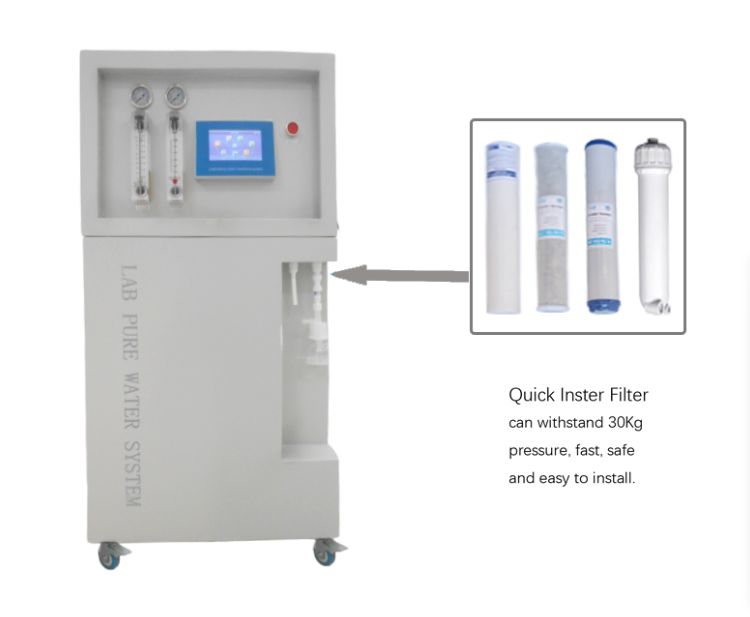
Let’s be real: when you think “healthcare tech,” your brain probably jumps to MRI machines or robotic surgery arms—not a humble cylinder of water. But here’s the plot twist: the most critical tool in many hospitals isn’t a gadget. It’s professional-grade deionized water.
We’re not talking about the stuff you pour into a Keurig. This is ultra-pure H₂O, stripped of every charged mineral, ready to play a supporting role in everything from dialysis to sterilizing surgical tools. And the unsung hero behind it? The deionized filter.
Think of it as the VIP bouncer of the water world. It removes ions—calcium, magnesium, sodium—leaving water so pure it practically has a personality crisis. For healthcare, this isn’t a luxury; it’s a non-negotiable lifeline.
Must Read
Why Your Hospital’s Water Can’t Just Be “Regular”
Picture this: you’re about to get a saline IV. If that water still had trace minerals, you’d be getting an unpredictable chemical cocktail. That’s a hard pass. Deionized water ensures consistency for medications, lab tests, and patient safety.
It’s also the secret sauce for steam sterilization. Autoclaves use superheated steam to kill bacteria—but regular tap water leaves mineral scale that destroys the machine. Deionized water? Clean steam, no deposits, happy equipment.
Fun fact: the average hospital uses tens of thousands of gallons of deionized water daily. That’s enough to fill a backyard swimming pool every two days—just for clean scalpels and accurate blood tests.
The Aesthetic of Purity
Have you ever seen a glass of deionized water? It looks too clean. No bubbles, no cloudiness—just a clinical, almost alien clarity. It’s the visual equivalent of a minimalist Instagram feed or a perfectly lit museum gallery.
That’s because deionization isn’t just functional; it’s meditative. In a chaotic ER, a machine producing nothing but pure H₂O feels like a quiet, reliable anchor. It’s the zen garden of medical infrastructure.
Pop culture nod: remember the “pure water” in The Matrix that Neo drinks? That’s basically medical-grade DI water. Except this one doesn’t come from a dystopian power plant—just a sleek filter in a corner of the lab.
Practical Tips for the Curious
If you’re a healthcare manager or a DIY health enthusiast, here’s the cheat sheet: monitor resistivity. Deionized water should read 18.2 megaohms per centimeter—the gold standard. Anything less? Your filter might be crying for a change.
Don’t let the word “professional-grade” intimidate you. Many compact DI systems now fit under a sink or mount on a wall. Some even have digital displays that look like something from a Tesla dashboard. Instant status upgrade for your clinic.
Quick hack: use a DI filter for your home humidifier in winter. No white dust, no mineral buildup in your lungs—just soft, silent air. It’s the same tech your hospital uses, now in your bedroom. Fancy, right?
 11 Best Portable Deionized Water Systems for High Purity Water
Cultural Touches You Didn’t Expect
In Japan, deionized water is used for traditional washoku (fine cuisine) to preserve the subtle taste of ingredients. It’s also a favorite of high-end espresso bars in Portland, where baristas claim it “unlocks” coffee’s true flavor profile.
For a cultural contrast: in a bustling Mumbai hospital, the same technology might be cooling a CT scanner while outside, monsoon rain floods the streets. Pure water is a universal language, even when the context couldn’t be more different.
And let’s not forget the cool factor. Deionization uses ion-exchange resins—tiny beads that act like microscopic magnets. It’s basically a chemistry magic trick happening inside a plastic tube. Science is always more fun when it involves tiny beads.
The Hidden Workhorses
Most patients will never see a DI filter. But they feel its effect. A clean dialysis session. A sterile wound dressing. A blood test that doesn’t need a redo because the water was off by a microgram.
These filters are like the roadies of a rock concert: under the stage, in the shadows, but absolutely essential for the show to go on. Without them? The whole medical symphony falls apart.
Did you know that a single DI filter can treat up to 100,000 gallons of water before needing replacement? That’s enough for 125,000 hospital-surgery hand washes, or 400,000 gentle face rinses. These things put in work.
Reflection: A Glass of Water in a Noisy World
So the next time you sip a glass of tap water at home, pause for a second. It’s lovely, but it’s a crowded party of minerals and microbes. The water in a hospital? That’s a silent, solitary monk meditating in a mountain temple.
We live in a world that’s constantly messy—filled with impurities, literal and metaphorical. The deionized filter doesn’t fight that mess. It simply removes it, offering a clean slate. That’s not just technology; that’s a philosophy.
Maybe we can borrow that lesson. In our own daily lives, when chaos swirls, we don’t need to add more noise. Sometimes, we just need to filter out the unnecessary—until what’s left is pure enough to heal.
