After How Many Gallons Should A Water Softener Regenerate

You know that moment when you step out of the shower and feel like you’re wrapped in a scratchy blanket, even though you just conditioned your hair? That’s your water softener...
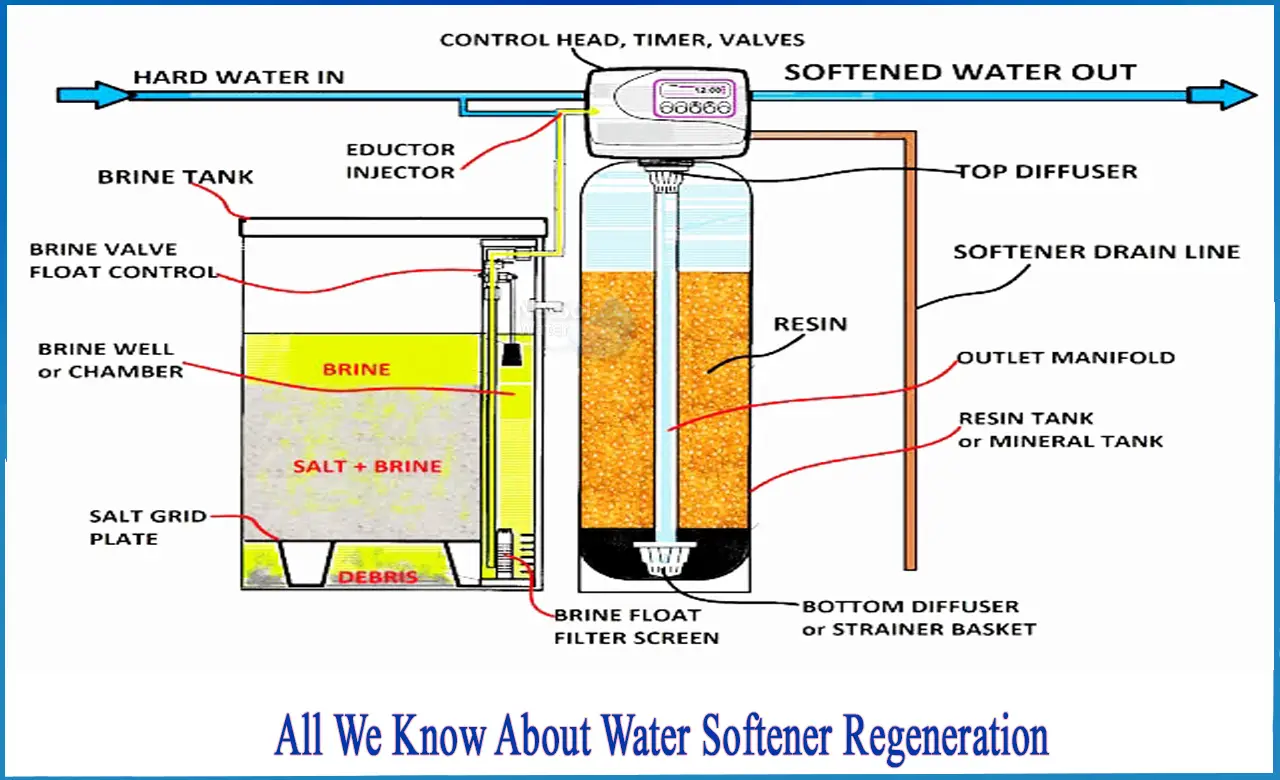
You know that moment when you step out of the shower and feel like you’re wrapped in a scratchy blanket, even though you just conditioned your hair? That’s your water softener waving a tiny white flag. It’s screaming, “I’m full of calcium and magnesium junk! Let me regenerate!”
But the real question isn’t if it should regenerate. It’s after how many gallons should it kick into action? Getting this wrong is like trusting a gas gauge that only moves when you’re already on the shoulder of the highway. You want to avoid that.
What Your Water Softener Actually Does (The Simple Version)
Think of your softener like a bouncer at a club. It lets the good, soft water through, but it stops the hard mineral “troublemakers” at the door. Over time, that bouncer gets tired—his arms are full of rock-hard mineral guests.
Must Read
Regeneration is when the bouncer takes a coffee break and flushes those troublemakers down the drain with a salty brine. This resets him so he can work his magic again. But if you wait too long, your water goes back to being as hard as a brick.
Your softener doesn’t go by time alone. It goes by gallons used. That’s the secret sauce. Setting it right means you only regenerate when the tank is actually full, not just because the clock says so.
The Magic Number: It Depends (Yes, That’s Annoying)
I know, you want a solid number like “every 1,200 gallons.” But your life isn’t a factory schedule. A family of four with two teenagers who take 30-minute showers will hit 1,500 gallons way faster than a couple with a tiny apartment.
Most softeners come pre-set to regenerate every 1,000 to 1,200 gallons. But here’s the thing: your water hardness level changes everything. If your water is harder than a physics exam, your softener’s capacity empties faster.
It’s like having a coffee mug that holds 12 ounces, but you keep filling it with espresso shots. The mug can’t handle the same volume if what’s inside is super concentrated. Get a water test kit—it’s cheaper than guessing wrong and ruining your washing machine.
The “Too Often” Problem (Wasting Salt and Money)
If you set your softener to regenerate every 400 gallons, it’s like taking a shower every time you walk past the bathroom. You’ll use way too much salt and dump a lot of water down the drain for no reason. Your water bill will start side-eyeing you.
Worse, you might end up with hard water spots because the brine rinse didn’t sit long enough. It’s like rushing through a haircut—you end up with a mullet instead of a clean fade. Nobody wants a “salty mullet” on their dishes.
Your softener isn’t a marathon runner. It doesn’t need to “flush” every day. Let it fill up properly, like a slow-cooker meal. It’s more efficient and your wallet will thank you.
 How Often Should A Water Softener Recharge | Detroit Chinatown
The “Too Late” Disaster (Hard Water Suds Hell)
On the flip side, waiting too long is a nightmare. Your dishes come out looking like they’ve been in a foggy fight. Your hair feels like straw, and your skin itches like you rolled in fiberglass. That’s the hard water revenge.
I once set my softener to regenerate every 2,200 gallons because I thought I was being “efficient.” Let me tell you, after 1,800 gallons, my showerhead started crying little white mineral tears. I ended up scrubbing it with vinegar while cursing my own cheap logic.
So, the sweet spot? Usually between 1,000 and 1,500 gallons. But check your manual. Your softener’s brain is a computer—it’ll tell you exactly how many gallons it can handle before tapping out. Trust it more than you trust your neighbor’s advice.
How to Actually Measure This (No Math Degree Needed)
Most modern softeners have a display that shows “gallons remaining.” That’s your dashboard. It’s like your car saying, “You have 50 miles left before you’re walking.” Ignore it at your own risk.
If you have an older model, you’ll see a timer dial. Don’t set it by days alone. Instead, calculate your household’s average daily water use. A quick formula: number of people times 75 gallons per day. So, a family of four uses about 300 gallons daily. That means regeneration every 4 to 5 days.
But test your water first. A hardness test kit costs $10. It’s like checking your tire pressure before a road trip—you wouldn’t just guess, would you? Well, maybe you would, but that’s why you have hard water stains, my friend.
The Final, Easy-Going Rule
Here’s the simple truth: set your softener to regenerate after it has used about 75% of its total capacity. That leaves a buffer. It’s like leaving your house when you’re only 75% packed—you won’t forget your toothbrush, but you aren’t dragging a suitcase full of rocks.
If you’re still lost, call the manufacturer or watch a YouTube video. I promise, it’s more satisfying than watching cats fall off counters. And the payoff? Silky water, happy skin, and a shower that feels like a spa.
So, after how many gallons? Enough to feel full, but not so many that your water turns into a grumpy, mineral-laden monster. Your softener will thank you. And so will your laundry.
