When To Call A Professional For Softener Regeneration Issues

So, picture this: last Tuesday. My water softener started making a noise like a dying blender filled with rocks. I ignored it (because, you know, Tuesday). Then my skin felt l...

So, picture this: last Tuesday. My water softener started making a noise like a dying blender filled with rocks. I ignored it (because, you know, Tuesday). Then my skin felt like I’d washed my face with sandpaper, and my coffee tasted vaguely of sadness. I figured, “Hey, I can fix this.”
Spoiler alert: I could not. After two hours of wrestling with a brine tank that apparently had a personal grudge against me, I called a pro. Turns out, I’d messed up the regeneration cycle so badly it needed a full reset. That’s when I learned most softener issues are like houseplants: you can water them wrong for a while, but eventually, you need a horticulturist. Or a plumber. Same vibe.
The Mystery of the Stubborn Timer
Let’s start with the ticking clock. If your softener is regenerating at 3 AM—or not at all—you might be tempted to reprogram it like an old VCR. And sure, pressing buttons is fun for about six seconds.
Must Read
But here’s the kicker: modern softeners hide their settings behind a series of beeps and holds that require the patience of a yoga instructor. If you’ve ever missed a step and ended up with a machine that regenerates twice a day (flooding your basement with brine), stop. That’s your cue to call a professional.
Why? Because messing up the timing doesn’t just waste salt—it wastes water. And water bills? They don’t forgive. Neither do basements. Trust me on this one.
When Your Salt Bridge Becomes a Salt… Bridge?
You know that satisfying feeling when you break up a hard layer of salt in the tank? Yeah, that’s a salt bridge. It looks solid but is actually a crusty trap that prevents brine from forming. If your water feels hard again, you might grab a broom handle and start whacking the tank. I’ve done it. It feels productive.
But here’s the irony: sometimes that bridge is a symptom of a bigger problem, like high humidity or the wrong salt type. If breaking it up works for a week and then it comes back? Don’t keep whacking. Call someone who knows why it formed in the first place. A pro will check your settings, your salt pellets, and (very politely) judge your storage setup.
Also, if you’re using a metal object to chip away at a plastic tank, you’re one bad swing away from registering for a new softener. Just sayin’.
The Great “It’s Using Too Much Salt” Panic
Look, I get it. Salt is not cheap. When you notice your brine tank draining faster than your paycheck, the first instinct is to dial back the settings. “I’ll just set it to regenerate once a week,” you think. “That’ll save money.”
Wrong. Under-regenerating can cause hard water buildup in your pipes, which is like cholesterol for your home. It clogs fixtures, ruins water heaters, and slowly kills your appliances. A professional will explain that salt usage depends on your water hardness, family size, and the actual volume of water you use.
If you’ve tweaked those numbers yourself recently and noticed a weird film on your glasses? That’s your softener crying for help. Call a pro before you turn your entire plumbing system into a calcium museum.
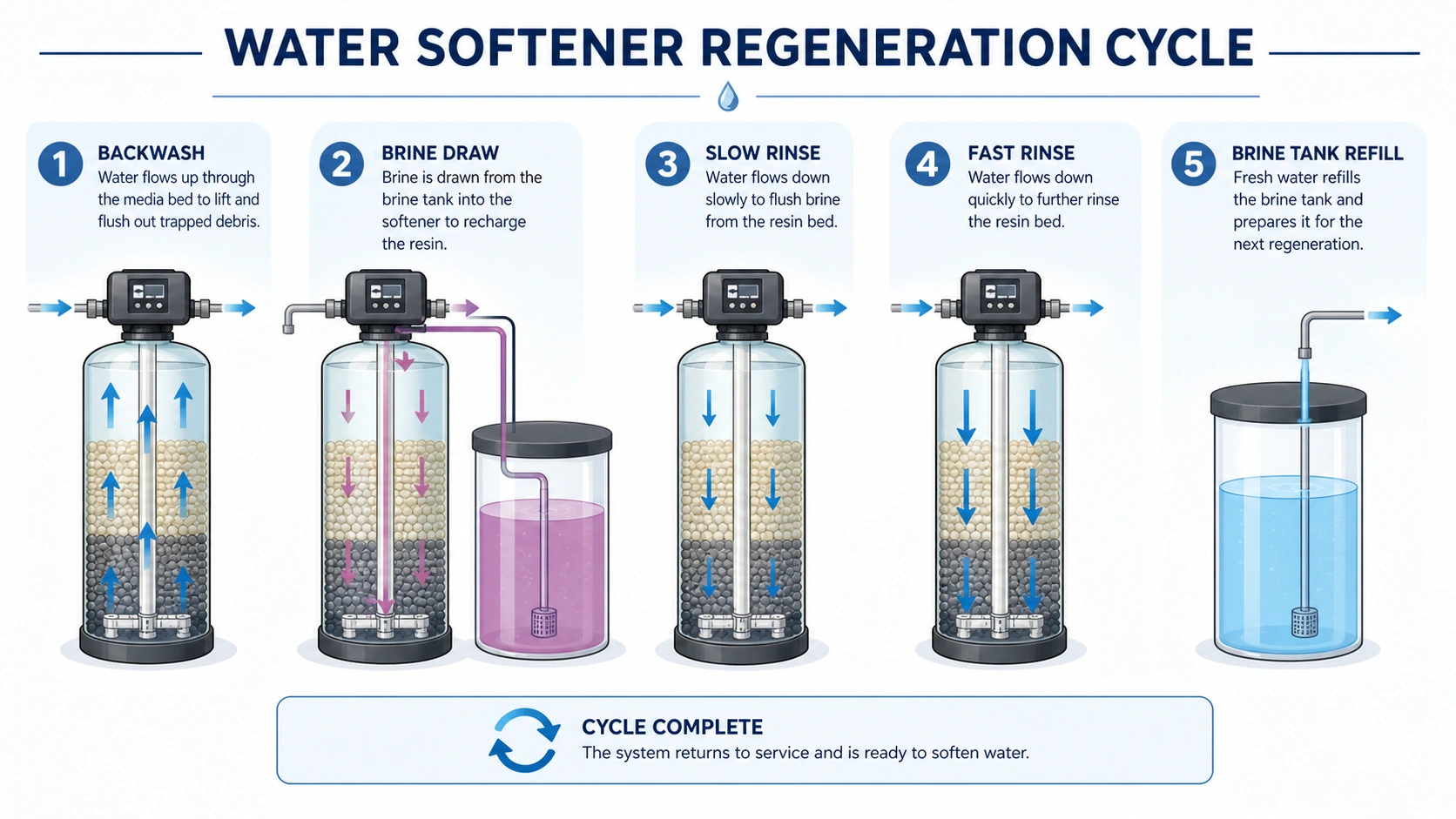 Water Softener Maintenance: Complete Guide
Red Lights, Error Codes, and Blinking LEDs
Remember that scene in a horror movie where you stare at a cryptic message on a screen? That’s your softener’s control board when it flashes “Err03” or something equally unhelpful. Google might say it’s a “solenoid valve issue,” which sounds like something from a sci-fi novel.
Here’s the line: if the manual doesn’t explain the code in plain English, stop Googling. Error codes are designed for technicians. You’ll waste an afternoon watching a YouTube video from a guy named “PlumberDan69” only to discover your model has a different motherboard. I’ve been there. I now have a bookmark folder called “Water Softener Regrets.”
A professional will diagnose the code, check the electronics, and likely fix it in twenty minutes. You’ll pay for the service call, but you’ll save your sanity. And your phone’s browser history.
The Dreaded “No Water” Call
This one’s scary: you wake up to zero water pressure. Not a trickle—just silence. Your softener is stuck in regeneration mode and won’t let go. This can happen if a valve fails or the control head crashes mid-cycle.
Do not start disassembling the valve body while you’re hungry and annoyed. That’s how you end up with springs flying into the cat’s water dish. If your system won’t bypass to give you water (check the bypass valve first, obviously), it’s time for a pro. They have the right tools to force the cycle, replace a motor, or bypass the unit without flooding your laundry room.
Also, if you smell a rotten egg odor from your water? That’s not a regeneration issue—it’s a bacteria problem. And that, my friend, requires a pro who doesn’t just fix softeners but understands water chemistry. Because your water should not smell like a sulfur spring. Unless you’re into that.
Final Wisdom (For Real This Time)
So, when do you call a professional? Summary version: if your fiddling makes things worse, if you see error codes you can’t decode, if you’re using tools that look like they belong in a torture chamber, or if you’ve already broken the bypass valve. Also, if your regeneration cycle is louder than your vacuum cleaner.
Look, I love DIY as much as the next person. I once fixed a garbage disposal with a hex key and sheer will. But softener regeneration is a delicate ballet of electronics, water pressure, and salt. One wrong move and your Tuesday becomes a plumbing disaster. Save your back, your basement, and your relationship with your water heater. Call the expert.
Your softener will thank you. Maybe not audibly, but you’ll know.
