Commercial Water Softeners Impact Equipment Fixtures Lifespan

Look, I know your commercial water softener isn’t exactly the life of the party. It’s a big metal can that sits in a back room doing the most boring job ever: removing mineral...
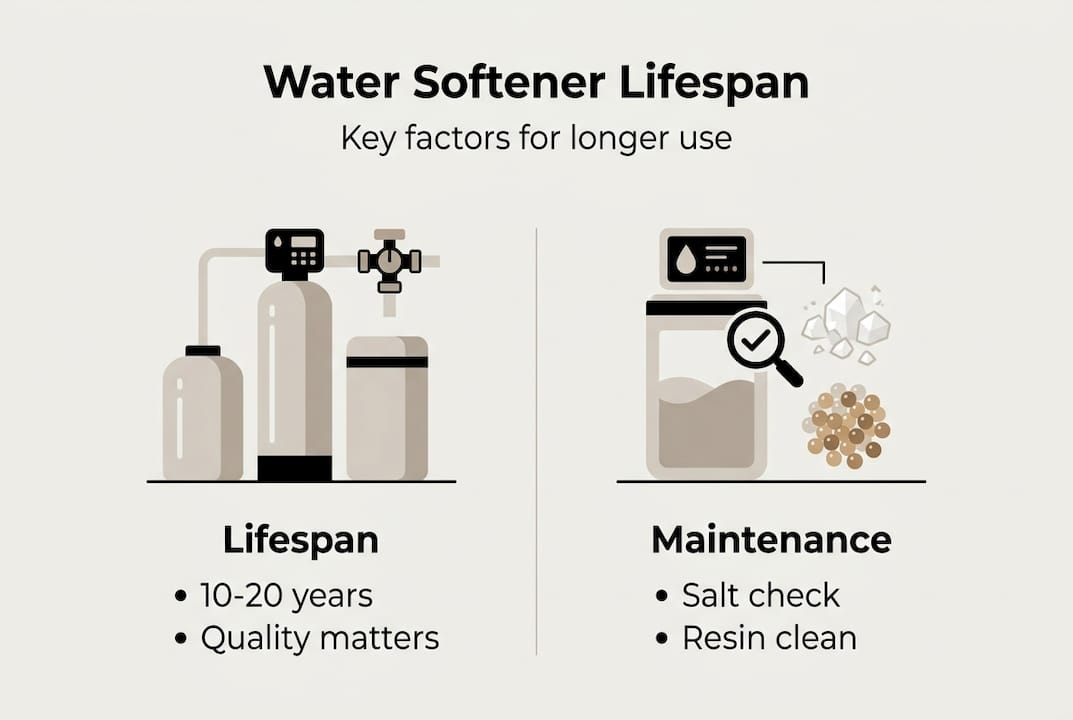
Look, I know your commercial water softener isn’t exactly the life of the party. It’s a big metal can that sits in a back room doing the most boring job ever: removing minerals. But if you ignore this glorified bucket, your expensive equipment will start dying like extras in a horror movie.
Hard water is basically nature’s way of being passive-aggressive. It doesn’t attack you directly—it just quietly coats your boilers, pipes, and coffee machines in a layer of rock-hard scale. That scale acts like a cozy blanket for bacteria and a death sentence for energy bills.
Think of scale as the uninvited guest who eats all your snacks and then breaks your couch. A mere 1/8-inch of scale can increase your energy costs by up to 18%. That’s like paying for a steak dinner and getting a sad salad.
Must Read
The Fixture Massacre
Your fixtures—faucets, showerheads, toilet valves—they’re the pretty faces of your business. Hard water, however, is the villain that gives them acne. Those white, crusty deposits aren’t a design feature; they’re the mineral equivalent of plaque on a giant’s teeth.
When calcium and magnesium build up, they clog aerators and valve seats. Suddenly your fancy touchless faucet starts drip-drip-dripping like a bad blues song. A commercial water softener prevents this by swapping those tough minerals for friendly sodium ions. It’s like sending your pipes to a spa.
Here’s a jaw-dropping fact: hard water can cut a faucet’s lifespan by up to 50%. That means if a faucet should last ten years, you’re replacing it in five. Imagine telling your accountant that your sinks have a midlife crisis every half-decade.
Ice Makers and Dishwashers: The Silent Screamers
Let’s talk about the real drama queens: ice makers and commercial dishwashers. These machines run constantly, so scale buildup hits them like a freight train. An ice maker with hard water will produce cloudy, weird-tasting cubes that make your customers question their life choices.
Your dishwasher? It’s basically a Rube Goldberg machine that hates minerals. Scale clogs spray arms, ruins heating elements, and creates a film on glasses that looks worse than a hangover. Without a softener, you’ll be buying a new dishwasher every few years, which is a great way to cry into your coffee.
I once saw a commercial boiler that looked like it had been turned into a stalactite cave. The owner said, “It worked fine for three years, then it just exploded.” Well, it didn’t explode dramatically—it just stopped heating, but the repair bill was explosive enough.
The Boiler’s Sad, Slow Death
Your boiler is the heart of your commercial kitchen or laundry. Hard water makes it suffer from a condition I call “mineral heart disease.” Scale builds up on the heat exchanger, making the boiler work harder and harder until it throws a tantrum.
Here’s a surprising stat: a water softener can extend a boiler’s lifespan by 30–50%. That’s thousands of dollars saved. It’s like giving your boiler a free gym membership—it stays lean, mean, and efficient. Without it, your boiler will warm you with the sad efficiency of a wet blanket.
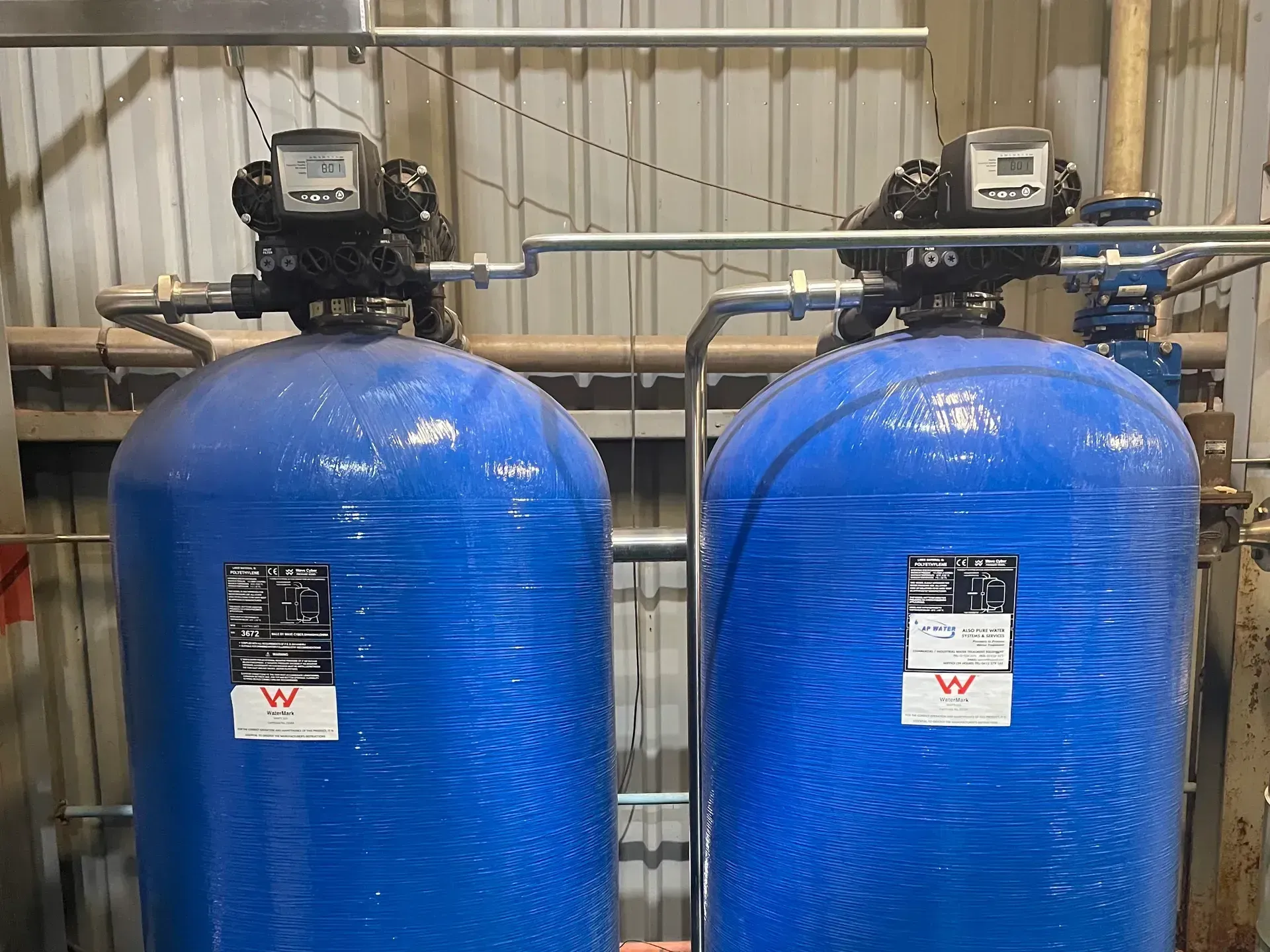 Deionised vs Reverse Osmosis Water | AP Water Systems
I’ve heard mechanics call hard water “the silent thief.” It steals money from your utility bills, then steals equipment from your wallet. Meanwhile, a commercial water softener costs pennies per day to run. That’s cheaper than a daily latte, and your coffee machine will thank you.
The Surprising Bonus: Soap Suds and Smiles
Wait, there’s more. Soft water makes soap and detergents work drastically better. You’ll use up to 50% less soap in your dishwashers and laundries. Your glasses come out spotless, your towels feel fluffy, and your customers stop complaining that everything smells like a wet dog.
Even your plumbing pipes benefit. Scale inside pipes reduces water flow and increases pressure strain. A softener keeps the pipes so clean that your plumber might actually get bored. And a bored plumber is a happy plumber—or at least one who doesn’t charge you emergency rates at 2 AM.
One time, a restaurant owner told me his espresso machine “died” every 18 months. After installing a softener, the same machine ran for six years without a hiccup. He said the machine tasted better, too, but I think he was just happy about the savings.
Myths That Make Me Grumpy
Some people think commercial softeners waste water. The new high-efficiency models use about 3% of your water for regeneration. That’s less than you lose from a single leaky toilet. Other people worry about salty water—nope, it doesn’t taste salty; the sodium level is negligible for humans, though check with a vet if you have a pet turtle with high blood pressure.
Another myth: “But my equipment is already ruined, so why bother?” That’s like saying your car has a flat tire so you might as well drive off a cliff. Softeners don’t fix existing scale, but they stop new scale from forming immediately. It’s a protective shield, not a time machine.
Final Take: Your Fixtures Will Throw You a Party
Think of a commercial water softener as the world’s most boring superhero. It doesn’t wear a cape; it wears a resin tank. But it quietly saves your equipment from a slow, crusty death. Your faucets will flow freely, your boiler will heat happily, and your dishwasher will stop giving you side-eye.
So, buy one. Your wallet will thank you, your maintenance guy will have fewer gray hairs, and your ice cubes will be so clear they’ll look like diamonds. And that, my friend, is the kind of hard-water story with a soft ending.
