Does Ultraviolet Treatment Remove Chlorine From Water

So, picture this: last weekend, I’m standing in my kitchen, staring at my shiny new UV water purifier like it’s a magic wand. My friend had just told me, “Oh, that thing will...
So, picture this: last weekend, I’m standing in my kitchen, staring at my shiny new UV water purifier like it’s a magic wand. My friend had just told me, “Oh, that thing will zap all the chlorine out, no problem.” I nodded wisely, pretending I knew what I was talking about—classic me. But later, sipping a glass of water, I caught a faint whiff of that pool-like smell and thought: wait a minute, did the UV really do its job?
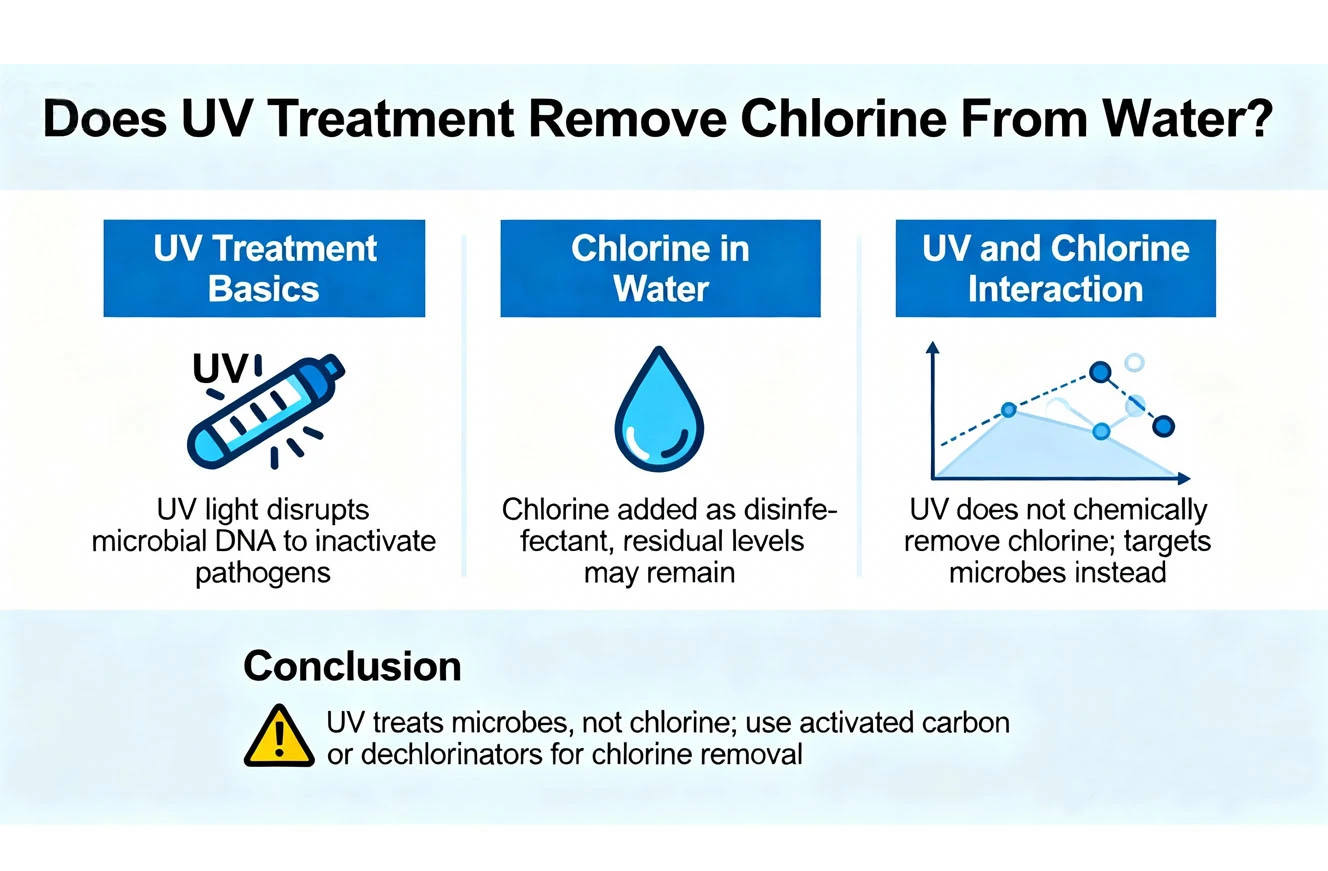
Let’s cut to the chase: Ultraviolet (UV) treatment does not remove chlorine from water. Shocker, right? I mean, UV light is amazing at killing bacteria and viruses—like a tiny sun that nukes germs—but it’s not a chemical sponge. Chlorine is a dissolved chemical, not a living thing, so UV rays just pass right through it like it’s invisible.
Why the confusion? (And why I felt like a dummy)
I blame all those clever marketing ads that show UV lamps glowing inside clear tubes, promising “pure, fresh water.” They don’t exactly scream, “Hey, this won’t touch your chlorine!” Rude. The truth is, UV targets microorganisms—like E. coli or giardia—by messing up their DNA. Chlorine, on the other hand, is a stable molecule that laughs in the face of ultraviolet light.
Must Read
Think of it this way: UV is like a bouncer at a club who only kicks out rowdy bacteria. Chlorine is just the background music—annoying, maybe, but the bouncer doesn’t touch the speakers. You’d need a different tool—like a carbon filter or reverse osmosis—to pull that chlorine out.
So what actually happens to chlorine under UV?
Here’s the kicker: nothing. Not a single chlorine molecule gets destroyed, removed, or even mildly offended. Some fancy UV systems use a process called photocatalytic oxidation (boring science alert!) where UV reacts with a catalyst to break down chemicals, but that’s a whole different beast. Your standard home UV purifier? It’s just a bright light in a tube.
I learned this the hard way when I tested my water after UV treatment. Still tasted like a swimming pool’s leftovers. My wife gave me that “I told you so” look—you know the one, very specific and slightly smug.
 Reducing chlorine and chloramines in industrial water | Trojan Technologies
But wait—is that always a bad thing? (Spoiler: not really)
Honestly, chlorine isn’t the villain some people make it out to be. It keeps your water free from pathogens during transport—kind of a hero in disguise. If your UV lamp removed chlorine, you’d actually lose that protection. So unless you’re storing water for weeks, a little chlorine is your friend.
That said, if you hate the taste (I get it, I really do), you’ll need a different strategy. Many folks combine UV with a carbon filter after the UV stage. The UV kills the germs, then the carbon grabs the chlorine by the scruff of its neck and kicks it out. Teamwork makes the dream work!
How to tell if your water still has chlorine (a quick DIY)
You don’t need a lab coat for this. Just grab a glass of your UV-treated water and sniff it—if it smells like a public pool, there’s chlorine. Or, if you’re fancy, buy a simple chlorine test strip from an aquarium store. They cost pennies and save you from guessing.
I did the sniff test after my UV filter and was 100% chlorine-scented. My ego took a hit, but my brain grew a few wrinkles from the lesson.
 Wastewater Treatment Uv Disinfection at Tamara Wilson blog
The ironic twist: UV and chlorine actually work together
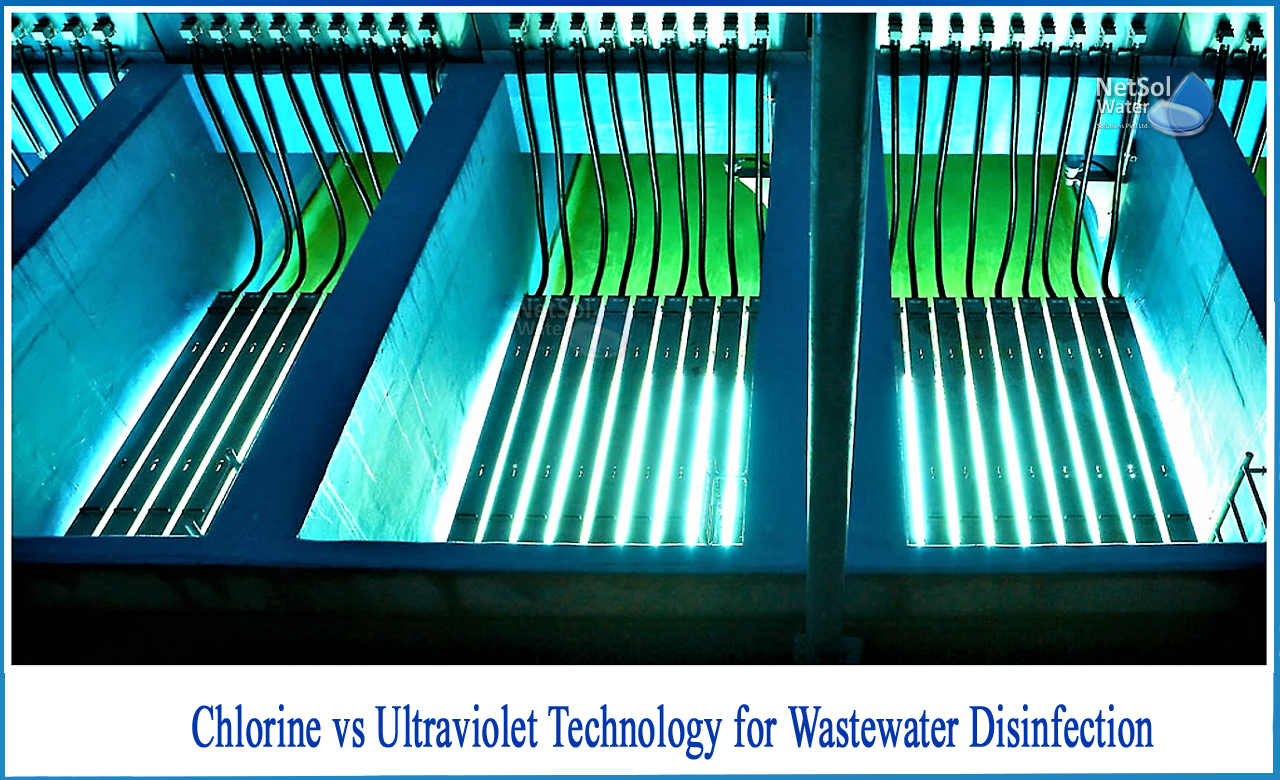
Here’s the funny part—some water treatment plants use UV and chlorine together. The UV kills the tough bugs, while the chlorine stays behind to prevent regrowth in pipes. So one system doesn’t cancel the other out; they’re like an odd couple who bicker but get the job done.
In your home, you could totally have both: UV for germ-killing, and maybe a dechlorinator if you really want that chemical gone. Just don’t expect your UV lamp to be a multitasking superhero—it’s more of a one-trick pony. A very effective pony, but still.
Final thought (and a confession)
I still have my UV purifier, and I love it—I just know its limits now. It’s like having a friend who’s great at fixing cars but can’t bake a cake. You don’t blame them; you just call a baker. So if you’re chasing chlorine-free water, grab a carbon filter or a reverse osmosis system, and let UV do its germ-zapping thing.
And please, don’t trust everything your friend says at a kitchen party. I learned that one the hard, chlorinated way.
