Does Iced Coffee Or Cold Brew Have More Caffeine

So there I was, last Tuesday, staring into the abyss of my third spreadsheet of the morning. My eyes were glazing over. I needed a rescue, and fast. I sprinted to the café dow...

So there I was, last Tuesday, staring into the abyss of my third spreadsheet of the morning. My eyes were glazing over. I needed a rescue, and fast. I sprinted to the café downstairs, fully prepared to order my usual triple-shot iced latte—you know, the “liquid lightning” option.
The barista, a cool guy with a sleeve of tattoos, raised an eyebrow. “Try the cold brew today,” he said. “Way smoother. And it’s got way more caffeine.” I paused. Did it, though? Or was that just barista marketing magic? My inner skeptic wasn’t buying it until I did some actual digging.
The Great Caffeine Smackdown: Concentration vs. Volume
Here’s the first curveball: cold brew is usually more concentrated. Because it steeps for 12 to 24 hours with a heavy dose of coffee grounds, you’re extracting a higher ratio of caffeine per ounce than a quick hot brew. But—and this is a big but—most people don’t drink it straight.
Must Read
Think about it. You order a cold brew, and what arrives is often half coffee concentrate and half water or milk. That beautiful, dark liquid is diluted. Meanwhile, your iced coffee is typically brewed hot (stronger than drip, but not as intense as concentrate), then poured over melting ice.
The ice is the silent assassin here. It dilutes your iced coffee too, but usually, the barista compensates by brewing it doubly strong. So we’re not comparing apples to apples. We’re comparing concentration versus total liquid volume in the cup.
The Nitty-Gritty Numbers (Don’t Glaze Over, I Promise)
Let’s get scientific for a sec, but keep it fun. A standard 8-ounce cup of hot drip coffee has around 95 milligrams of caffeine. Your typical 16-ounce iced coffee? Often around 165 mg—since it’s brewed stronger and uses more coffee grounds to survive the ice melt.
Now, a 16-ounce cold brew from a popular chain? I’ve seen numbers ranging from 200 mg all the way up to 260 mg. Sounds like cold brew wins, right? Not so fast, caffeine cowboy.
 Cold Brew vs Hot Coffee: Which Is Better in Summer? – Via Guatemala Coffee
That depends entirely on the brew ratio the café uses. Some spots use a 1:5 coffee-to-water ratio for their concentrate. Others use 1:8. That’s a 60% difference in caffeine density. You’re basically playing caffeine roulette unless you ask your barista specifically how they make it.
The “Smoother” Lie (And Why It Matters)
You’ve heard the line: “Cold brew is less acidic, so you can drink more of it.” I’ve fallen for it, too. It’s true that cold brew has lower acidity (around 60% less, according to some studies), which makes it taste like chocolate silk. But here’s the trick: that smoothness lets you chug it.
You finish a 24-ounce cold brew in 20 minutes, feeling like a champion. With hot iced coffee? The bitterness and acidity usually make you sip more slowly. Your total caffeine intake per drinking session is often higher with cold brew simply because it’s too easy to drink. Ironic, isn’t it? The “gentle” drink is actually the caffeine bulldozer.
Plus, let’s talk about the trendy nitro cold brew. That stuff is served straight from a keg, undiluted, and loaded with nitrogen bubbles. A 12-ounce nitro can pack nearly 300 mg of caffeine. That’s basically two and a half Red Bulls in one classy-looking glass. Cheers to heart palpitations!
What About Your Home Brew? 🏠
If you’re making it yourself, the game changes again. Homemade iced coffee is often just leftover hot coffee poured over ice. That’s weak sauce—literally. You’re getting the same caffeine as a warm cup, just cold. My friend, you are caffeine-thieving yourself.
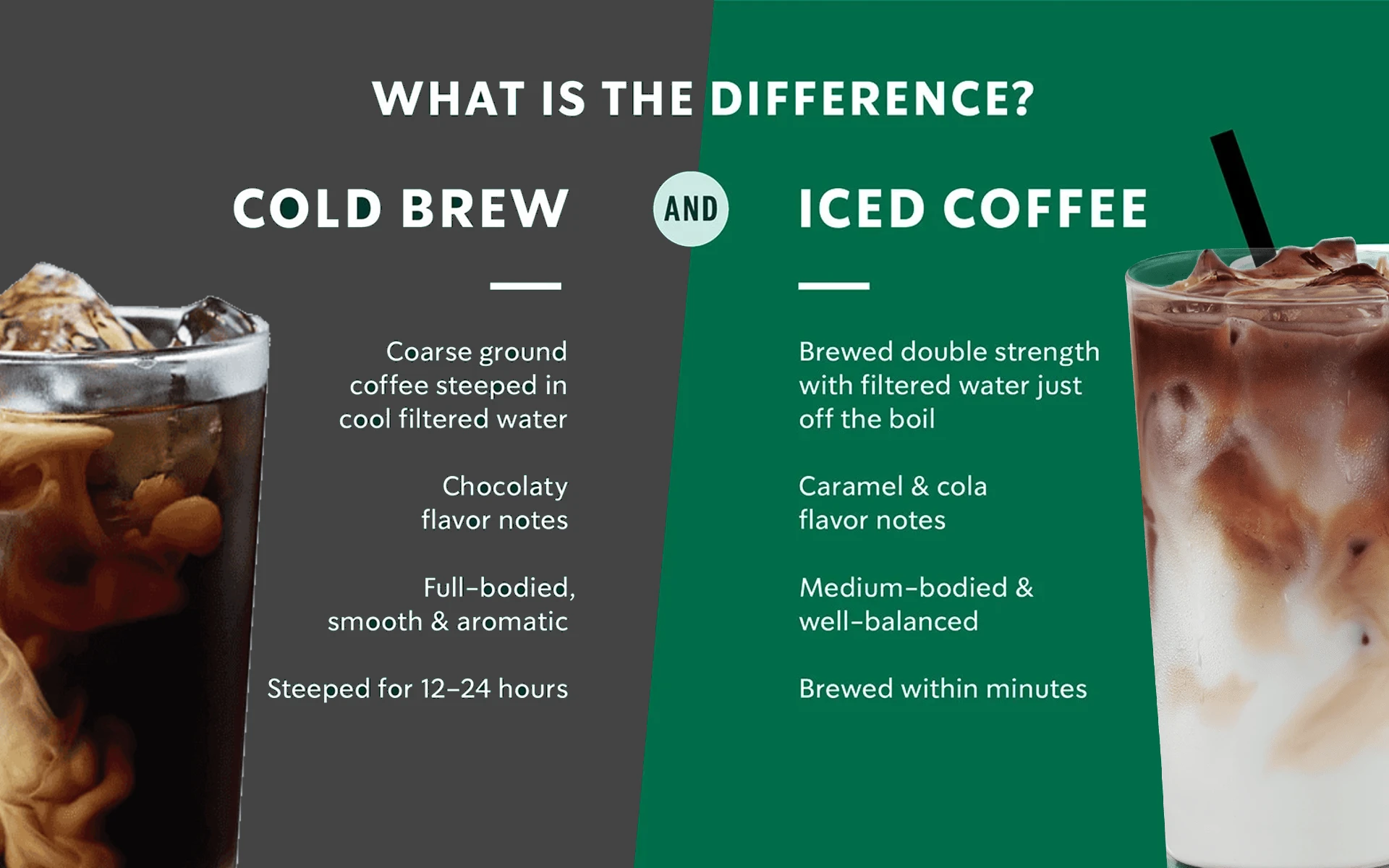 Caffeine In Iced Coffee Vs Cold Brew | Detroit Chinatown
For homemade cold brew, you control the ratio. Want maximum punch? Use a 1:4 ratio (one cup coffee to four cups water). That concentrate will knock you sideways. But you have to remember to dilute it. Otherwise, you’ll be cleaning the ceiling at 2 AM. (Not speaking from experience. Okay, maybe a little.)
The moral of the story? Cold brew has the potential for way more caffeine per ounce, especially if it’s a pure concentrate or nitro. But the iced coffee from your corner shop isn’t a weakling either—it’s just more predictable.
The Final Sip: Which One Wins?
If you’re looking for the biggest bang for your caffeine buck in a single serving, go for a straight nitro cold brew or a large cold brew without extra milk. That’s your winner. It’s like ordering the “direct injection” of coffee.
But if you want a consistent, reliable jolt that won’t surprise you with a 300-mg spike? Go with iced coffee. It’s the steady friend who shows up on time. The cold brew is the mysterious friend who might bring you a gentle hug or a rocket booster—you never know until you drink it.
So next time you’re at the counter, look the barista in the eye and ask: “How concentrated is your cold brew, really?” They might laugh. They might get defensive. But you’ll walk away armed with the truth. And maybe a slight tremor in your hands. You’re welcome.
