How Much Does A 5 Gallon Bottle Of Water Weigh

Alright, let’s tackle the big question that’s probably been keeping you up at night: “How much does a 5-gallon bottle of water actually weigh?” Maybe you’re prepping for a cam...

Alright, let’s tackle the big question that’s probably been keeping you up at night: “How much does a 5-gallon bottle of water actually weigh?” Maybe you’re prepping for a camping trip, stocking up for a party, or just wondering if your groceries are plotting against your spine. I get it—water is heavy, and we need to know what we’re dealing with. So grab a glass of water (or a tiny thimble—no judgment), and let’s dive in.
The short answer: it’s a lot heavier than it looks
A standard 5-gallon bottle of water (the kind you see in offices or on water coolers) weighs about 41.7 pounds (18.9 kilograms) just for the water. That’s right—over 41 pounds of pure, refreshing H2O. But wait, there’s more! The plastic bottle itself adds a little extra baggage, usually around 1 to 2 pounds. So the total weight when you lug it into your car or office? Rookie mistake—you’re looking at roughly 43 to 44 pounds. That’s like carrying a small child, a medium-sized dog, or a stack of textbooks from college that you swore you’d read. Spoiler: you didn’t.
Let’s break it down: water math is fun (no, really)
Here’s the nerdy part, but I promise it’s painless. One gallon of water weighs 8.34 pounds at room temperature. Multiply that by 5 gallons: 8.34 x 5 = 41.7 pounds. If you’re feeling fancy and want to use metric, that’s about 3.78 kilograms per gallon, so 5 gallons = 18.9 kilograms. Easy peasy. But here’s the joke: if you’re that person who fills a 5-gallon jug at the grocery store and then struggles to lift it into your cart, you’re not weak—you’re just doing science. Physics is laughing at you, but also with you.
Must Read
But wait—does temperature change the weight?
Oh, you thought this was simple? Nice try. Water expands when it’s hot and contracts when it’s cold, which slightly changes its density. But here’s the kicker: the weight stays almost the same because you’re still measuring 5 gallons of water, just with a tiny wiggle room. At freezing point, water is densest, so a 5-gallon bottle at 32°F (0°C) might weigh a hair less—like 0.1 pounds less. Honestly, that’s like saying, “Your sandwich is slightly lighter because the bread is cold.” It doesn’t matter. Don’t overthink it. Your back will still ache.
The real struggle: carrying that beast
Now you know the weight, but let’s talk about the experience. A 5-gallon bottle isn’t just heavy—it’s awkward. It’s like wrestling a large, round, slippery seal that’s also full of your future hydration. You can’t hug it properly; it’s too wide. You can’t balance it on your hip—unless you have the core strength of a gymnast who also lifts water jugs. Most people end up doing the “water bottle shuffle”: legs wide, back straight, face red, and a prayer that please-don’t-let-me-drop-this-in-the-mid. I’ve been there. We’ve all been there. Solidarity, my friend.
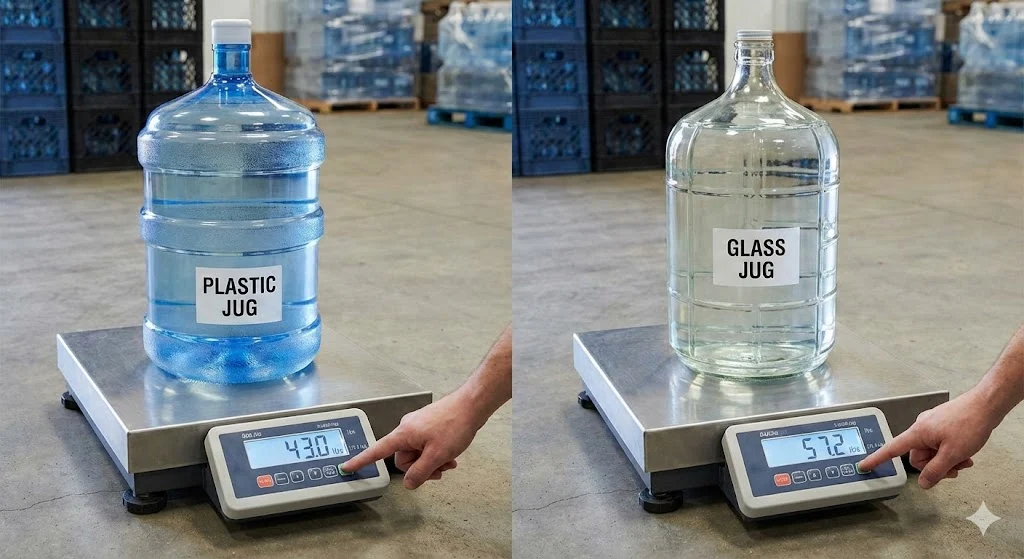 How Much Does a 5 Gallon Jug of Water Weigh? Full Jug Chart
Why does this matter? Because your back will thank you
Knowing the weight helps you plan ahead. If you’re moving a few bottles for an office or a home, you know to ask for help or to use a dolly. Pro tip: Those plastic bottle carriers with handles? They cost like $10 and save you from a pulled muscle and a ruined Friday. Also, if you’re ordering online or picking up at the store, you can estimate how many you can lift in one trip. Spoiler: one. The answer is one. Unless you’re Thor. In which case, please carry two and send us a video.
A quick note for the curious: water versus other liquids
If you’re wondering, “Hey, what about milk? Or juice? Or that fancy kombucha?” Well, water is the baseline. Milk is slightly heavier (about 8.6 pounds per gallon) because of the fat and solids. Gasoline is lighter—only about 6 pounds per gallon. So a 5-gallon jug of gas weighs only 30 pounds. That’s why your car feels lighter after a road trip. The more you know, the more you can impress your friends at parties. You’re welcome.
The “fun” fact: you’re basically carrying a small human
Let’s put this in perspective. A 5-gallon bottle of water weighs about as much as an average 4-year-old child. So if you’ve ever carried a tired toddler from the car to bed, you already know the feeling. The only difference? The toddler might giggle or wiggle. The water jug just sits there, silently judging your lifting form. Stay strong. No pun intended.
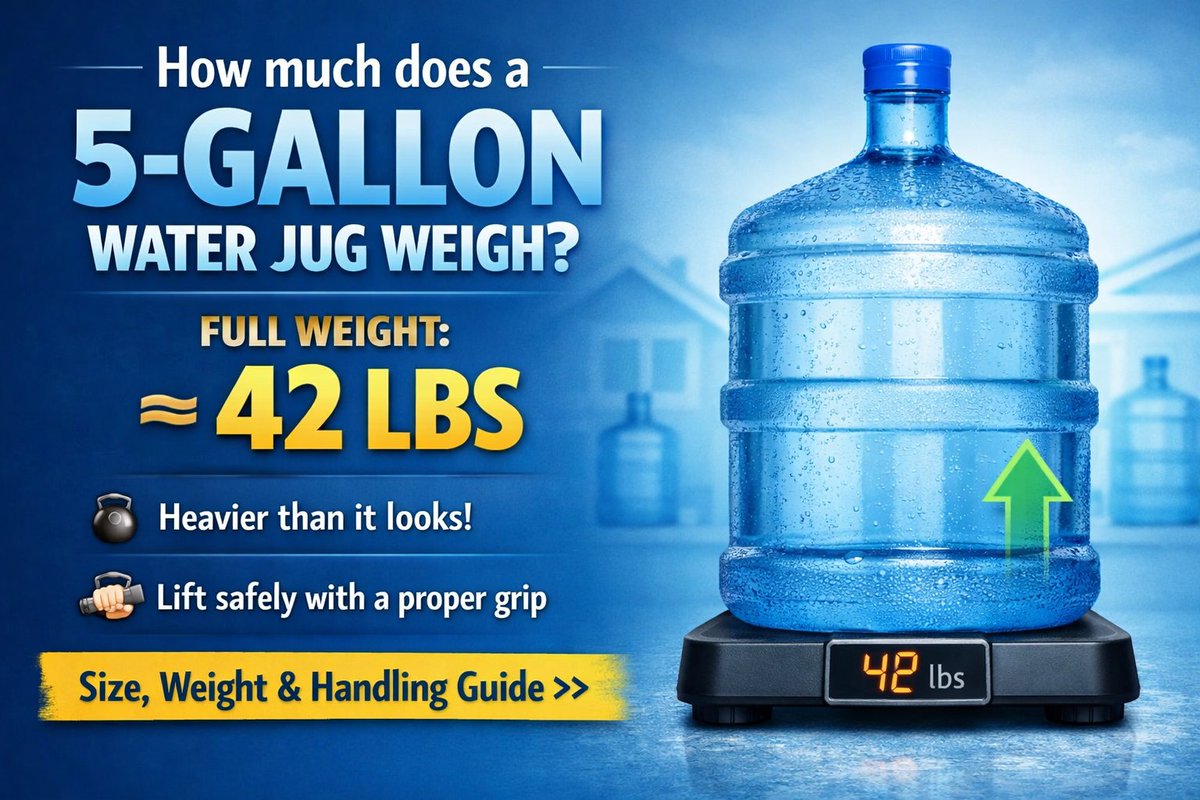 Water Delivery (@bottlewaterca) / Posts / X
Wait, what if you’re using a glass bottle?
Some old-school water companies still use glass 5-gallon jugs (usually for sparkling water or fancy setups). Those can add an extra 5 to 7 pounds to the total. So we’re talking 48 to 50 pounds—literally half a hundredweight. At that point, you’re not just carrying water; you’re doing an unpaid workout at the office. But hey, it builds character. And arm muscles.
So, what’s the takeaway?
A 5-gallon bottle of water weighs around 42 to 44 pounds, depending on the bottle and the temperature. It’s heavy, it’s awkward, and it will probably test your patience. But it’s also life-giving magic water that keeps you hydrated, makes your coffee, and fuels your plants. So next time you heave one of those jugs onto a cooler or into your trunk, remember: you’re carrying five gallons of pure potential. That’s enough water to make 80 cups of coffee, hydrate a small garden, or win a staring contest with thirst.
Final thought: you’re stronger than you know
Sure, a 5-gallon bottle of water is heavy. But so are your dreams, your goals, and that leftover lasagna in the fridge. You’ve lifted heavier things in life—like a broken heart, a heavy schedule, or the expectations of your cat. You’ve got this. And if you ever drop the bottle? Don’t worry. The water splashes, the jug rolls, and you laugh. Then you mop it up, take a deep breath, and try again. Because that’s what water does: it keeps flowing. And so do you. Now go hydrate, champ. 🚰
