How To Calculate Water Bill From Meter Reading

So, you’re staring at your water meter like it’s a spaceship control panel. Don’t worry, I’ve been there. Figuring out how to calculate your water bill from the meter reading...
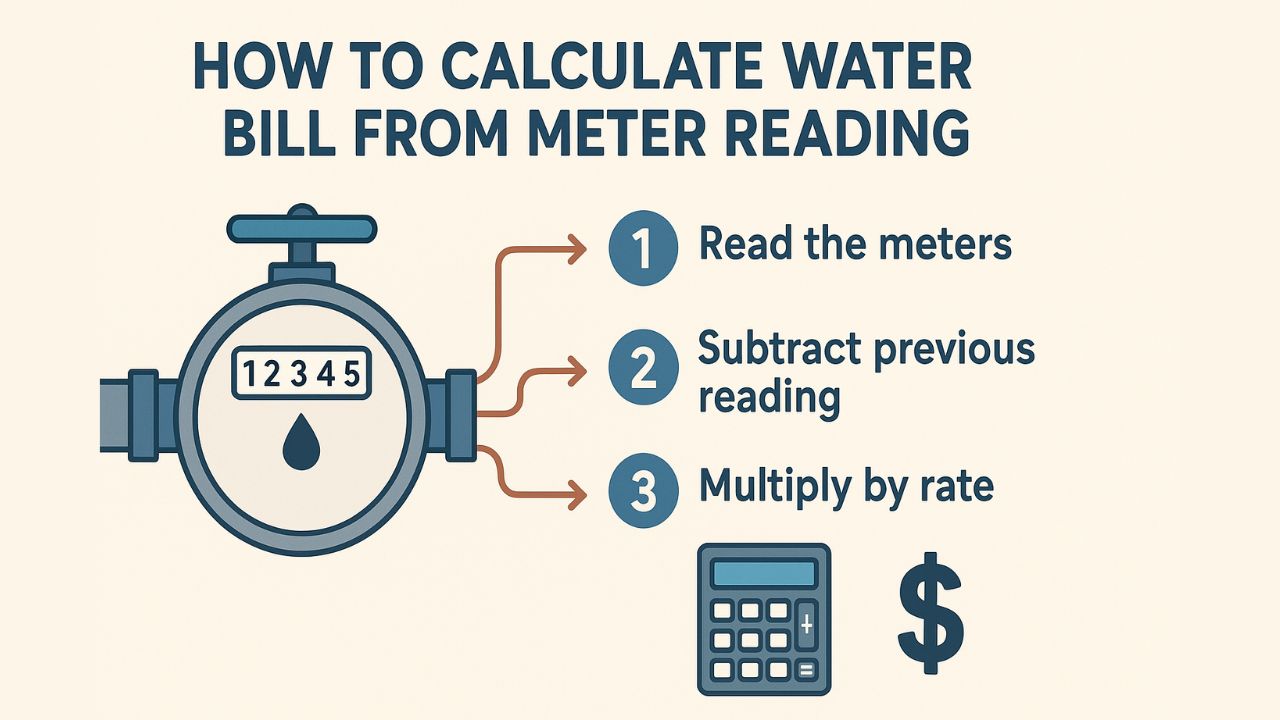
So, you’re staring at your water meter like it’s a spaceship control panel. Don’t worry, I’ve been there. Figuring out how to calculate your water bill from the meter reading is way easier than assembling IKEA furniture—and with far fewer leftover screws.
First, Find Your Water Meter
Your water meter is usually hiding in a little concrete box near the street or in your basement. Lift the lid (carefully, because spiders love these things). You’ll see a series of numbers, kind of like an odometer in your car.
Most meters show your total water usage in cubic feet or gallons. Don’t panic if it’s a blur of digits—just write down the numbers you see. Ignore any red dials or spinning triangles for now; those just tell you if water is running somewhere.
Must Read
The Magic Formula: Old vs. New
Here’s the secret: your water bill is based on usage between two readings. You’ll need your previous meter reading (usually on your last bill) and your current one. Take the new reading, subtract the old reading, and bam—that’s how much water you used.
Let’s say your meter read 12,345 last month, and now it reads 12,400. That’s a difference of 55 units. Keep in mind that the “unit” might be cubic feet or gallons, depending on where you live. Your water company’s bill tells you the conversion rate (usually 1 cubic foot = 7.48 gallons).
Why does this matter? Because if you skip this step, you might as well be guessing how many jellybeans are in a jar. Accuracy is your friend, and a little math saves you from surprise charges.
Converting to Gallons (If You’re Feeling Fancy)
Most water meters measure in cubic feet because plumbers love weird units. One cubic foot of water equals 7.48 gallons. So if you used 55 cubic feet, multiply 55 by 7.48—that’s about 411 gallons. Not bad for a month of showers and dishwashing!
But your bill probably doesn’t charge per gallon—it uses a rate like “$3 per 100 cubic feet.” So take your usage (55 cubic feet) and divide by 100 to get 0.55 units. Then multiply by the rate. That’s your water charge before taxes and fees.
Yes, there’s math. But think of it this way: you’re basically being a detective for your own pipes. You’ve got this.
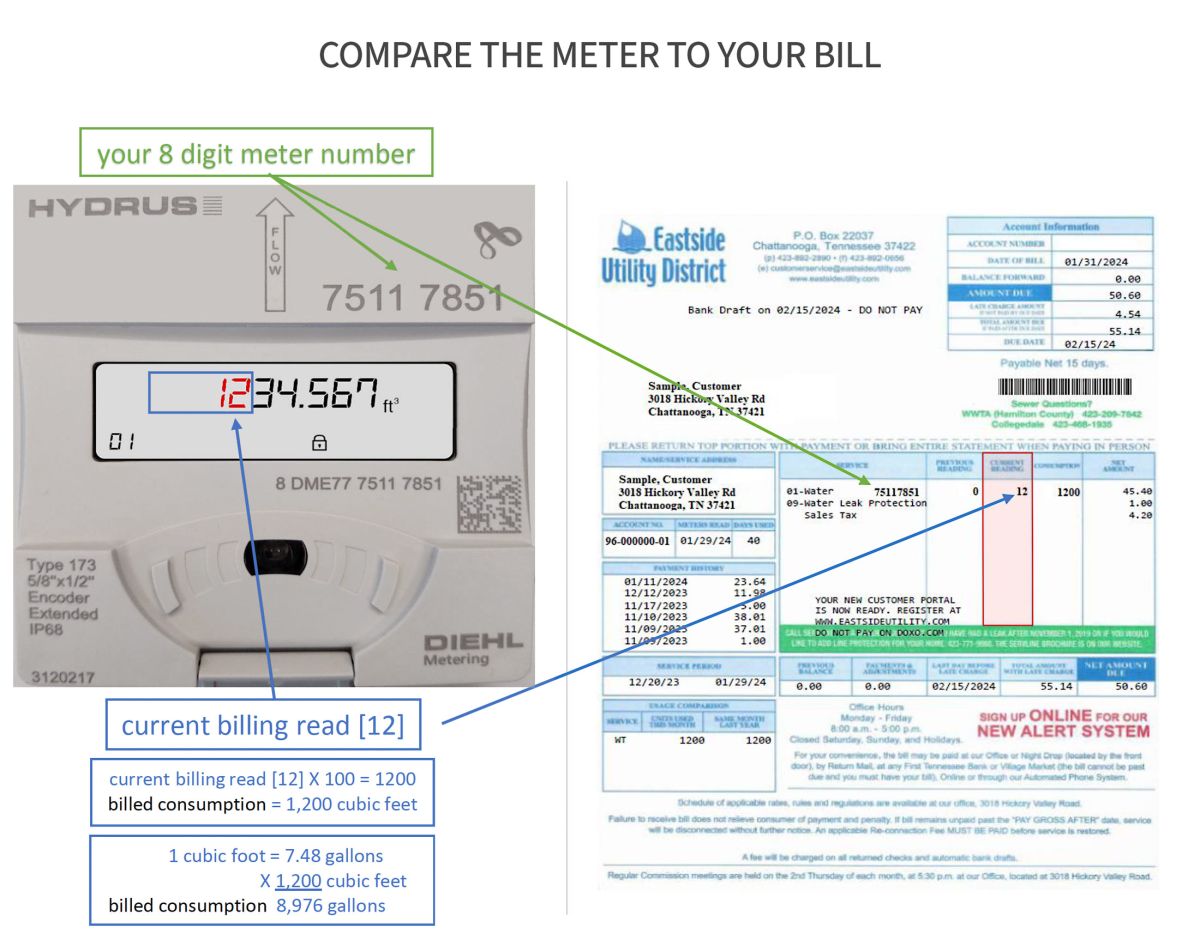 Water Meter Reading Example
The Sneaky Extra Charges (They Always Have ‘Em)
Your water bill isn’t just for the wet stuff—it also includes sewer charges, service fees, and sometimes a “we read the meter” tax. Usually, the sewer charge is a percentage of your water usage, like 70%. So if your water charge is $20, the sewer charge might be $14.
Don’t blame the math; blame the infrastructure. Every flush and shower has to go somewhere, and treating that water costs money. Just remember: your meter reading only covers the water you used, not the magical fees on top.
If your bill suddenly spikes, your meter reading is your best buddy. A leaky toilet could waste 200 gallons a day without you ever hearing a drip. Compare your current reading to last week’s to catch the culprit.
Real-Life Example (Because We All Love Stories)
Let’s do this together. Imagine your last meter reading was 9,876 and today it’s 9,980. That’s 104 cubic feet used. Your water company charges $2.50 per 100 cubic feet. So divide 104 by 100 = 1.04, times $2.50 = $2.60. That’s your base water cost.
Now add the sewer fee (say 70% of $2.60 = $1.82) and a fixed service fee of $5. Total bill: $2.60 + $1.82 + $5 = $9.42. Not too shabby for all those bubble baths!
But what if you forgot to subtract? You’d pay for 9,980 units—yikes. Always subtract, or your wallet will cry harder than a leaky faucet at 3 AM.
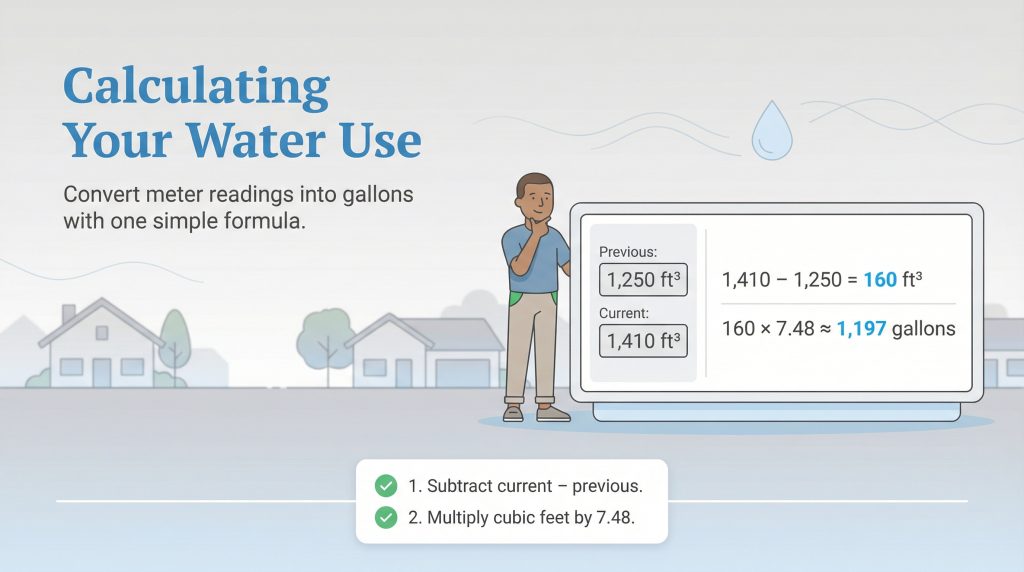 How to Read a Water Meter: The Complete Guide to Tracking Usage and
Pro Tips to Save Your Sanity
Take a photo of your meter every month on the same day. Your phone’s camera remembers the date, so you never have to guess. Photos don’t lie, but your memory of last week’s numbers totally does.
If your meter has a small red triangle or star, that’s a leak detector. If it’s spinning when no water is on, something’s dripping. Fix that pronto, or your bill will balloon like a parade float.
Also, check your water company’s website—they often have a calculator tool that does the math for you. You just type in the numbers and laugh at how much you saved by not guessing.
The Uplifting Conclusion (You Made It!)
Congrats! You now know how to turn a confusing cluster of digits into a clear, sassy water bill. You’re no longer a meter-reading newbie—you’re a water-usage wizard. Next time your neighbor complains about their bill, you can casually say, “Oh, I just check my meter. It’s easy.”
And remember, water is amazing. It makes plants grow, keeps you clean, and occasionally turns into ice cubes for your lemonade. You’re not just paying for H2O—you’re paying for life’s little pleasures, like not smelling like a potato after a workout.
So go ahead, high-five your water meter. It might not high-five back, but it just saved you a bunch of cash and confusion. You’re a hero, and that’s the best bill you’ll ever get.
