How Much Does It Cost To Get A Well Installed

So, you’re thinking about ditching the municipal water supply and going rogue in your own backyard. Welcome to the world of well drilling, where you trade a monthly water bill...
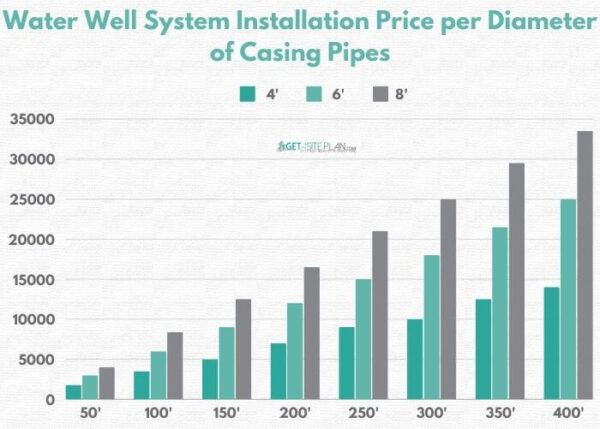
So, you’re thinking about ditching the municipal water supply and going rogue in your own backyard. Welcome to the world of well drilling, where you trade a monthly water bill for a very expensive hole in the ground. But how much does it actually cost to get a well installed? Buckle up, because the answer is as wobbly as a wet noodle.
First, the short, soul-crushing answer: expect to pay anywhere from $3,000 to $15,000 for a standard residential well. Yes, that’s a bigger range than my aunt’s mood at a family reunion. But before you faint into your overpriced latte, let’s break down why it’s so wildly inconsistent.
It’s All About Depth, Baby
Think of drilling a well like ordering a pizza, except the pizza toppings are buried underground and the delivery fee is insane. The single biggest factor is how deep you have to go to hit water. In some lucky places, you might strike a gusher at 50 feet. In others, you’re going down 500 feet—and that’s where your wallet starts weeping.
Must Read
Drillers typically charge by the foot, usually between $25 and $60 per foot. So if your neighbor’s well is shallow, don’t get cocky. Underground water tables are as predictable as a cat’s next nap—they just do what they want. And don’t forget, you’re paying for every single foot, even the dry ones. Talk about a false economy.
The Hidden Extras That Will Make You Holler
The drilling cost is just the tip of the iceberg. You also need a pump, and boy, do they vary. A basic submersible pump might run you $300, but a heavy-duty model for a deep well can be $2,000. That’s like paying for a deluxe car wash when you only needed a garden hose.
Then there’s the casing—the giant pipe that lines your well so it doesn’t collapse into a muddy mess. Steel casing is pricey, while PVC is cheaper. Either way, you’re paying for something that lives underground forever. It’s the most expensive home improvement nobody will ever see.
 2025 Well Drilling Costs | Average Water Well Installation Cost
Oh, and permits—because the government wants to know you’re not stealing their groundwater. A permit can cost anywhere from $100 to $800, depending on where you live. In California, they might also ask for your firstborn and a kidney, but that’s just the sunshine tax.
Water Testing: The Plot Thickens
Once the well is drilled, you can’t just crack a cold one and call it a day. You have to test the water for bacteria, minerals, and contaminants. This costs about $100 to $400 and is mandatory in most places, because nobody wants to drink arsenic with their morning coffee. Surprising fact: about 15% of private wells in the U.S. have unsafe levels of contaminants. So, yes, you’re paying to avoid surprise poisoning.
If the test shows your water is harder than a calculus exam, you might need a water softener. That’s another $500 to $2,500 installed. And if you have iron or sulfur—which makes water smell like rotten eggs—add a filtration system for $1,000 more. Suddenly, tap water from the city sounds romantic.
Location, Location, Location (And Geology)
Where you live is the wild card. In the Midwest, where the water table is high, a well might cost $4,000. In rocky New England, drillers often charge a premium because they’re essentially poking holes in granite. I’ve heard stories of people paying $20,000 in the Rockies because every foot required dynamite and a chiropractor.
![How Much Does It Cost to Drill a Well? [2025 Data] - Get A Site Plan](https://getasiteplan.com/wp-content/uploads/2024/12/well-drilling-price-range-per-foot-600x432.jpg) How Much Does It Cost to Drill a Well? [2025 Data] - Get A Site Plan
How Much Does It Cost to Drill a Well? [2025 Data] - Get A Site Plan
Another fun surprise: abandoned wells. If you buy an old house with a disconnected well, you may have to fill it in before drilling a new one. That’s like paying to bury a ghost. Filling an abandoned well can cost $500 to $3,000, which is the opposite of a good time.
The Bottom Line (No Pun Intended)
So, the grand total for a fully functioning well—drilling, pump, casing, testing, and permits—usually falls between $6,000 and $25,000. That’s a lot of zeroes for something that’s literally a hole in the ground. But here’s the surprising part: a well can increase your property value by up to 4%. And you’ll save on water bills forever. That is, unless the pump breaks or the aquifer dries up—then you’re back to square one with a dry hole.
But hey, think of the upside: you’ll never complain about a water main break again. You’ll have your own private aquifer, your very own treasure trove of H2O. Just be ready for visitors to ask, “Is this well water?” and you get to say, “Yes, it’s the expensive kind.”
At the end of the day, getting a well installed is like adopting a very expensive, high-maintenance pet that lives in your yard. It costs a fortune upfront, requires constant care, and occasionally tries to kill you with bacteria. But it also gives you cold, crisp water that tastes like freedom—and that, my friends, is priceless. Or at least three thousand to twenty-five thousand dollars, depending on the day.
