How To Check Total Dissolved Solids In Water

So, you want to check the secret life of your water. Not the taste, not the smell—the invisible stuff floating inside. We’re talking Total Dissolved Solids, or TDS. It sounds...
_English_v1_00139.jpg)
So, you want to check the secret life of your water. Not the taste, not the smell—the invisible stuff floating inside. We’re talking Total Dissolved Solids, or TDS. It sounds like a boring science term. But trust me, it’s a wild little party in a glass.
What exactly are we looking for?
Think of TDS as the leftover bits from a rock party. Water runs over minerals like calcium, magnesium, and salt. It also picks up tiny amounts of metals or even organic gunk. These are the "solids" that dissolve completely—you can’t see them, but they’re there. Every single drop has a story.
Low TDS means the water is nearly pure, like a blank canvas. High TDS? That’s like chunky soup for your taste buds. Fun fact: Some fancy bottled waters brag about high TDS for "mineral flavor." But your tap water? It might just be a salty rock parade.
Must Read
Why should you even care?
Because water is personal. If your water tastes flat, or weirdly metallic, TDS is the culprit. It affects how coffee brews, how soap lathers, and even how your fish tank behaves. Yes, your pet goldfish cares about TDS. Seriously—fish are divas about dissolved solids.
Quirky fact: Some people use TDS to spot fake bottled water. If the label says "spring water" but the TDS is super low, someone probably filled that bottle from a hose. Busted.
Gadgets: The TDS Meter
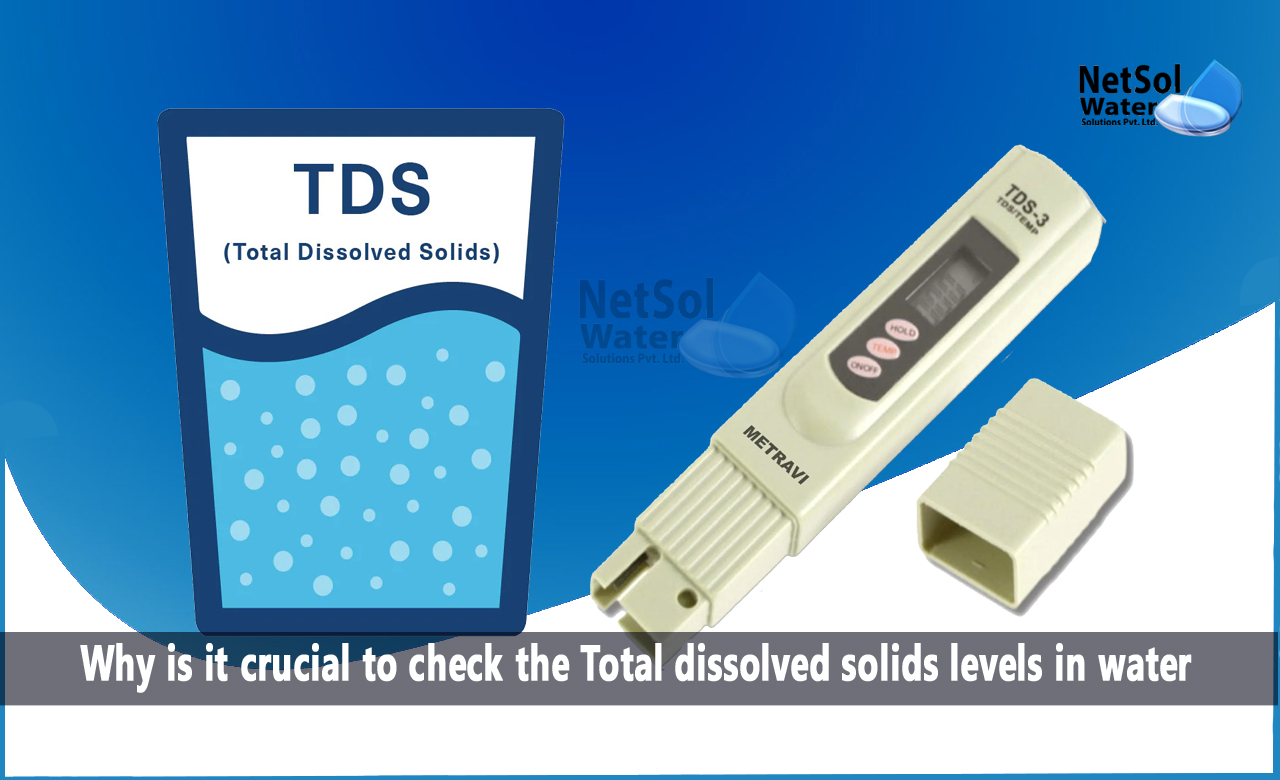
You don’t need a lab coat. You just need a TDS meter. It looks like a fat thermometer or a weird pen. They cost about ten bucks online. Yes, ten bucks for science in your pocket.
How it works: You dip the metal prongs into a glass of water. It zaps a tiny electrical current through the liquid. Dissolved solids conduct electricity, so the meter reads how much is there. Boom—a number appears. Magic? Nope, just physics party tricks.
 Total Dissolved Solids: Understanding Water Quality Indicators – Water
Step 1: Fill a clean glass
Use tap water, or any water you’re curious about. Don’t use a dirty cup—old coffee grounds will mess up the reading. Fresh and clear is the rule.
Step 2: Dip and wait
Submerge the meter’s tip about an inch deep. Don’t touch the sides of the glass. Then, press the button (if there is one). Wait for the number to stop bouncing. It usually takes five seconds. That number is your TDS in parts per million, or ppm.
Step 3: Interpret the chaos
Here’s the cheat sheet: 0–50 ppm is ultra-pure water, like distilled or reverse osmosis. 50–150 ppm is typical tap water—most people find this fine. 150–300 ppm gets "minerally," especially in hard water areas. 300–500 ppm? Your water might taste like a rock lollipop. Above 500 ppm? That’s like drinking from a salty creek. Not refreshing.
Funny detail: Some office water coolers have TDS meters built in. People stare at the numbers like they’re reading a horoscope. "Oh, my water is 235 today—must be a good day for coffee." It’s a mood ring for your glass.
The science is silly, but awesome
Checking TDS is like being a water detective. You’re hunting for invisible visitors. One time, I tested my friend’s "premium" bottled water. It read 10 ppm, which is basically fancy air. He was not amused. I was laughing.
 What Should Be The Tds Of Ro Drinking Water at Amy Kates blog
You can also test rain, pond water, or even your fish tank. Rain usually scores below 10 ppm—so pristine. Pond water? It can hit 500 ppm or more, thanks to mud and fish doo-doo. Yes, fish doo-doo counts as dissolved solids. Gross? Sure. Fun to measure? Absolutely.
Why this topic is just fun
Because water hides things. We treat it like boring, clear stuff. But TDS proves that every drop is a chemical soup—a unique blend of minerals, salts, and maybe a hint of ancient rock. When you check your water, you’re shaking hands with geology.
Plus, it’s a party trick. Pour a glass of tap water and a glass of distilled water side by side. Tell your guests to guess which is which. They’ll probably fail. Then whip out your TDS meter. Instant hero.
Final warning: Don’t overthink it
Low TDS doesn’t mean "bad." High TDS doesn’t mean "dangerous." Most water is perfectly safe, unless TDS is above 1,000 ppm (which tastes like the ocean). The real fun is comparing different sources. Your neighbor’s well water vs. your city water—it’s a rivalry.
So, grab a cheap meter. Test your tap. Test your kettle. Test your friend’s weird "alkaline" water they paid too much for. You’ll be surprised, amused, and slightly smarter. And that’s the whole point—curiosity, one dissolved solid at a time.
_English_v1_00139.jpg&description=How+To+Check+Total+Dissolved+Solids+In+Water)