How Much Water Is Healthy To Drink In A Day

Let’s be honest: the whole “eight glasses a day” thing feels like a rule passed down from a fitness guru who also sells you overpriced alkaline water. It’s the kind of advice...

Let’s be honest: the whole “eight glasses a day” thing feels like a rule passed down from a fitness guru who also sells you overpriced alkaline water. It’s the kind of advice that hangs over you like a guilt cloud after your second coffee. But hydration isn’t a one-size-fits-all commandment. It’s more like a quiet conversation your body is having with you all day long.
The Magic Number That Isn’t Magic
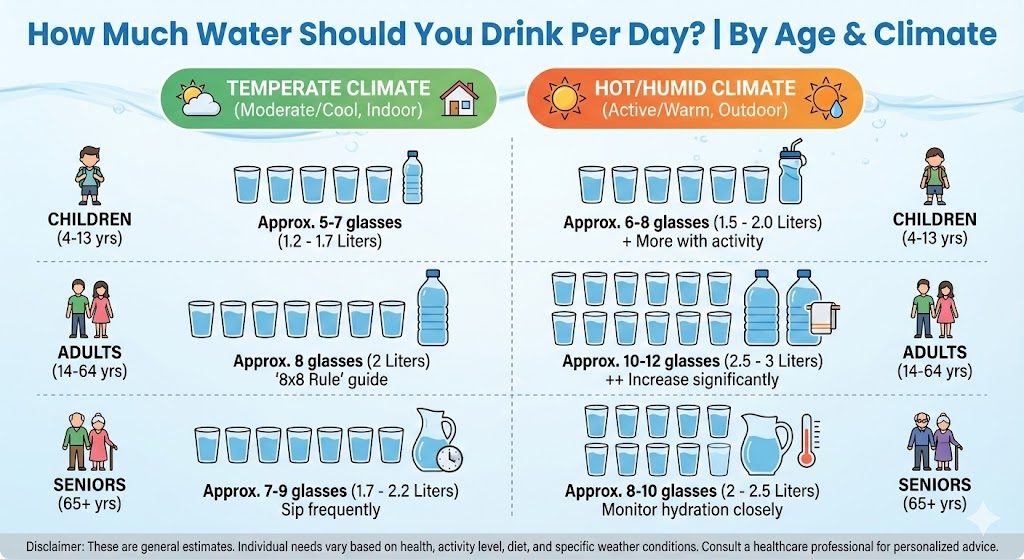
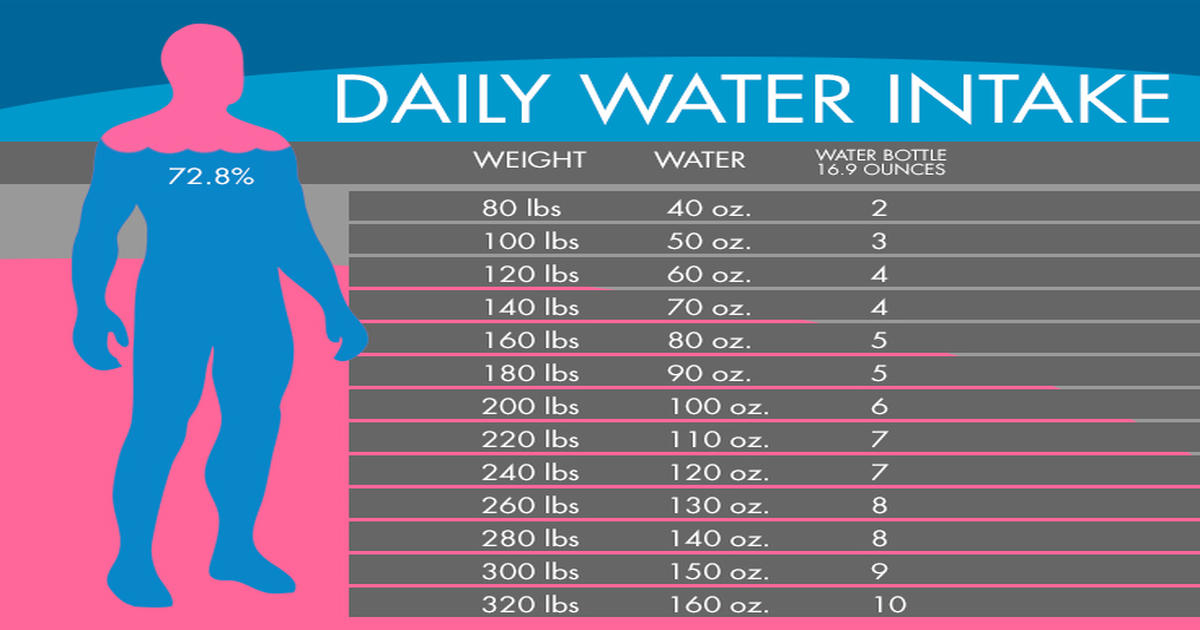
So, how much water do you actually need? The National Academies of Sciences suggests about 3.7 liters for men and 2.7 liters for women per day—but here’s the kicker: that includes all fluids, plus the water in your food. Think juicy watermelon, that bowl of soup, or even your morning tea. It’s not just a solo act with your stainless steel bottle.
Your personal number depends on your life. If you just crushed a hot yoga class in July, you’re drinking more than someone binge-watching a show on a rainy couch. Listen to your thirst—it’s a surprisingly accurate internal compass. Your brain actually triggers thirst when you’re about two percent dehydrated, which is pretty efficient.
Must Read
The Aqua-Filtered Reality Check
Here’s where the culture clash happens: we’ve been trained to treat water like a virtue signal. Carrying a gallon jug feels like a badge of honor, but chugging too much can actually flush out essential electrolytes and lead to hyponatremia—a fancy term for “your cells are waterlogged.” The goal isn’t a waterfall; it’s a gentle stream.
I once had a friend who carried a four-liter jug everywhere. She was proud, but her skin looked ashy and she always felt bloated. Turns out, she was drinking more than her kidneys could process efficiently. The body is not a sponge; it’s a finely tuned filtration system.
Practical Tips for the Hydration-Hesitant
Start your morning with a glass of water. Your body loses fluids overnight (hello, breathing and sweating), so a gentle 8-12 ounces is like hitting the reset button. It doesn’t have to be ice-cold—lukewarm water is actually easier for your stomach to absorb.
Eat your water, don’t just drink it. Cucumbers, strawberries, zucchini, and broth-based soups are hydration superstars. One cucumber is about 96% water. It’s basically nature’s hydration pack, but crunchier.
 How Much Water Should You Drink Per Day?
Use the “pee test” as your guide. Pale yellow is the sweet spot. Clear means you’re probably overdoing it, while dark amber means you’re running on fumes. It’s not glamorous, but it’s the most honest feedback you’ll get all day.
When Life Thirsts for Something More
We often reach for water when what we really need is a break, a stretch, or a snack. Thirst can mimic hunger, so if you’re feeling peckish an hour after lunch, try a glass of water first. Wait ten minutes. You might just be bored, not dehydrated.
There’s a fun fact from the Hadza people of Tanzania, one of the last hunter-gatherer societies: they don’t carry water bottles. They hydrate by eating tubers and drinking from natural springs when they find them. Their bodies are tuned to the environment, not a reminder app.
The Caffeine Conundrum
You’ve probably heard that coffee “doesn’t count” because it dehydrates you. That’s a myth. While caffeine is a mild diuretic, a cup of coffee or tea still contributes to your total fluid intake. So does that can of soda. So does that light beer at happy hour. The math is forgiving.
The real enemy is excessive sugar or alcohol, which can mess with your body’s water balance. A margarita might taste like a hydration break, but your kidney knows the truth. Everything in moderation, including the moderation.
 How Much Water Should You Drink Daily For Good Health - Healthy Food
Cultural Sips Worth Taking
In Japan, it’s common to drink warm water upon waking, believed to aid digestion and energy. In Mexico, you’ll find agua fresca—fruit-infused water that’s a celebration in a glass. Borrow these traditions. Add a slice of lemon, a sprig of mint, or a few frozen berries. It turns hydration from a chore into a small ritual.
Even the ancient Greeks prized hydration, with Hippocrates declaring, “If you are not thirsty, you are hydrated enough.” The man knew his priorities. Trust your body’s ancient intelligence over any influencer’s recommendation.
The Bottom Line (No, It’s Not a Number)
Forget the pressure to chug a gallon. Aim for six to eight cups of fluids a day as a baseline, then adjust for your activity, climate, and how you feel. If your lips are dry, you have a headache, or your urine is dark, drink up. If you’re feeling sloshy, back off.
There’s no magic pill, only a gentle, sustainable rhythm. Your body is a remarkable system that knows what it needs. The trick is not to drown its voice with rules, but to listen to its quiet request for a sip.
So go ahead. Take that glass of water, hold it, and take a slow, deliberate sip. That’s your daily practice. Not a target, not a test, but a simple moment of care. You’ll probably be fine. And if you’re really worried, just eat a cucumber and call it a day.
