What Is A Good Tds Level For Drinking Water

So, you’ve just unboxed your shiny new water filter or maybe a little TDS meter, and you’re staring at a number that looks like a secret code. Relax, you’re not alone. Thinkin...
So, you’ve just unboxed your shiny new water filter or maybe a little TDS meter, and you’re staring at a number that looks like a secret code. Relax, you’re not alone. Thinking about TDS levels for drinking water feels like a science class you never signed up for. But let’s make it simple, because great water is something we all deserve, right?
First, let’s crack the code. TDS stands for Total Dissolved Solids. Basically, it’s everything that’s dissolved in your water, like minerals, salts, and tiny bits of organic stuff. Think of it as the personality of your water—some have a lot going on, others are shy and simple.
What’s the magic number?
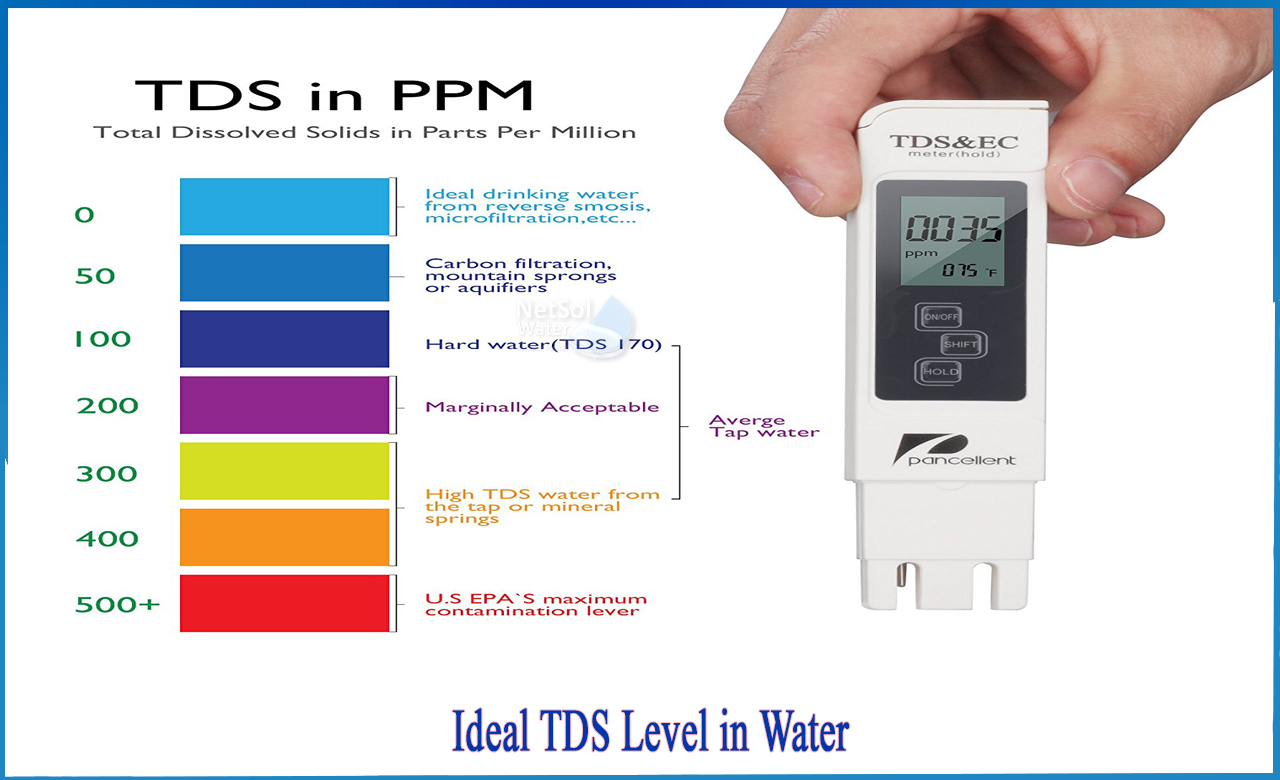
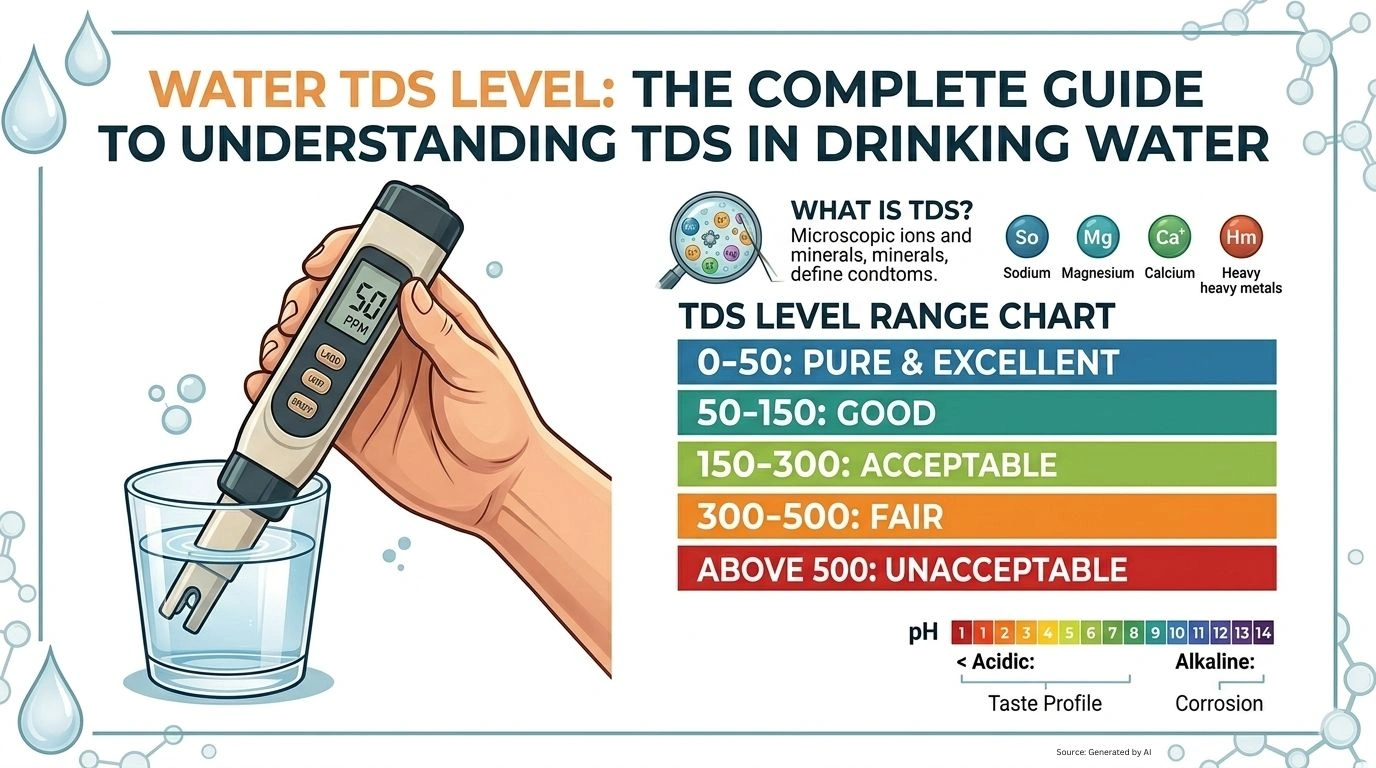
In the world of everyday drinking, a good TDS level usually falls between 50 and 300 parts per million (ppm). That’s your sweet spot for water that tastes fresh, clean, and not too weird. Anything below 50 ppm might taste a little flat or distilled, like you’re drinking an empty glass.
Must Read
But here’s the twist: water with zero TDS isn’t bad for you, it’s just boring. It’s like eating a plain cracker when you could have one with a little salt and crunch. Minerals like calcium and magnesium add that satisfying, crisp mouthfeel we often crave.
When the numbers get wild
Now, if your tap water shows a TDS reading over 500 or 600 ppm, you’re in harder water territory. It’s not poison, but it might taste metallic, salty, or leave white spots on your glasses. I remember my friend’s water coming out at 800 ppm—it was like drinking from a rocky stream with a grudge.
Over 900 or 1,000 ppm? That’s when you might notice a funny aftertaste or a bit of stomach gurgle. Not a huge danger for healthy adults, but not exactly a refreshing pleasure. Your taste buds are your best guide here.
 Water TDS Level: The Detailed Guide For Drinking Water TDS | ZeroB
Why should you care about a number?
Because water is the drink you reach for most, often without thinking. Imagine your morning coffee, your pasta water, or the glass you chug after a run. If your TDS is too high, it can mess with flavor, even making your tea look cloudy or your coffee taste a bit funky.
Also, high TDS can be a gentle hint about your pipes or your well. It’s not a panic button, but it’s a little nudge to check your water source. Think of it as a regular check-up for your hydration buddy.
The real-world taste test
I once visited a mountain cabin where the water read 30 ppm. It was so pure it felt like I was drinking air. Refreshing? Yes. Memorable? Not really. Then I had a friend’s well water at 350 ppm, with a hint of iron—sort of earthy and bold, like a good mineral spring.
So what’s “good” really depends on your personal preference. Some people love the slight mineral tang of water at 250 ppm. Others prefer it gentler at 100 ppm. There’s no wrong answer, only what makes you smile after a sip.
 Drinkable Water Tds Range
How to find your sweet spot
Grab a cheap TDS meter online (they’re like ten bucks). Test your tap water, your filtered water, and even that pricey bottled water you bought. You might be surprised—some fancy bottles are just glorified tap water with a label.
If your level is above 500 ppm, a simple carbon filter or a reverse osmosis system can bring it down. But don’t chase zero! Water with a TDS of 20-50 is fine for fish tanks, but for you, aim for that 100-250 range. It’s the Goldilocks zone: not too harsh, not too empty.
A little story for the skeptical
My neighbor once said, “I drink anything that comes out the tap.” Then he tested his water at 780 ppm. The next week, he bought a pitcher filter. He says his coffee now tastes “like a hug.” That’s the power of caring about something that seems small but touches every sip of your day.
So, next time you pour a glass, remember: TDS isn’t just chemistry. It’s about making water feel like your water. A little mineral, a little crisp, and just right for you.
