How To Remove Calcium Buildup In Dishwasher

Okay, let’s be real for a second. You open your dishwasher expecting a sparkling clean miracle, and what do you get? Glasses that look like they have a nasty case of dandruff....

Okay, let’s be real for a second. You open your dishwasher expecting a sparkling clean miracle, and what do you get? Glasses that look like they have a nasty case of dandruff. Yep, that’s calcium buildup—also known as limescale, the uninvited guest that throws a mineral party all over your dishes.
But don’t worry! We’re going to kick those chalky white cruds to the curb. Think of this as a spa day for your hardworking appliance, and we’ve got the secrets.
Why Is Your Dishwasher Acting Like a Chalk Factory?
Calcium buildup happens when hard water (the kind loaded with minerals) gets super heated and leaves behind deposits. It’s like your dishwasher is sweating tiny little rocks.
Must Read
The result? Cloudy glasses, a weird smell, and a machine that just doesn’t clean as well. It’s not your dishwasher’s fault—it’s just bad water karma.
The Superstar Ingredient: Vinegar
White distilled vinegar is your new best friend. It’s cheap, it smells like a pickle factory in the best way, and it dissolves calcium like a magic eraser for minerals.
Don’t use fancy balsamic or red wine vinegar—that’s for salads, not scale. Stick with the plain, cheap stuff. Your dishwasher doesn’t care about brand names.
Step 1: The Empty Show
First, make sure your dishwasher is completely empty. No plates, no cups, no forks hiding in the silverware basket. This is a solo performance.
Remove the bottom rack so you can see the spinning arms and the drain area. Give it a quick look—if you see a crusty white fortress, that’s our target.
Step 2: The Vinegar Bath
Pour about two cups of white vinegar into a dishwasher-safe bowl or measuring cup. Place it upright on the top rack of your empty machine.
Do not pour vinegar directly into the detergent dispenser—that’s a rookie mistake. The dispenser is for soap only, and vinegar will mess it up. Trust me, I learned this the hard way.
 How to Clean Calcium Deposits in Dishwasher | 7 Easy Steps
Step 3: Run the Hottest Cycle
Close the door and select the hottest, longest cycle your machine has. Usually, that’s the “Heavy” or “Pots & Pans” setting. Hit start and walk away.
Go binge an episode of your favorite show or contemplate life. The vinegar will steam and bubble, loosening every last bit of calcium. It’s basically a steam room for your dishwasher.
But Wait—What About the Smell?
Yes, your kitchen might smell like a giant pickle for a little while. But that’s a small price for sparkly glasses, right?
To nix the smell, simply open the door after the cycle ends and let it air out for ten minutes. Or light a candle and pretend you’re at a fancy spa that serves pickles.
The Dynamic Duo: Baking Soda
If your dishwasher still looks a little grimy after the vinegar run, it’s time for the sidekick: baking soda. Sprinkle about a cup of it across the bottom of the machine.
Run a short, hot cycle (just the rinse cycle). The baking soda will deodorize and scrub away any remaining grit. Plus, it makes the inside smell like fresh laundry.
What About Lemon Juice?
Lemon juice works too—and it smells way better than vinegar. You can use a cup of lemon juice in that same top-rack bowl trick.
But heads up: lemon juice is a bit pricier and less concentrated than vinegar. Use it if you want a citrusy vibe, but vinegar is the real heavy lifter.
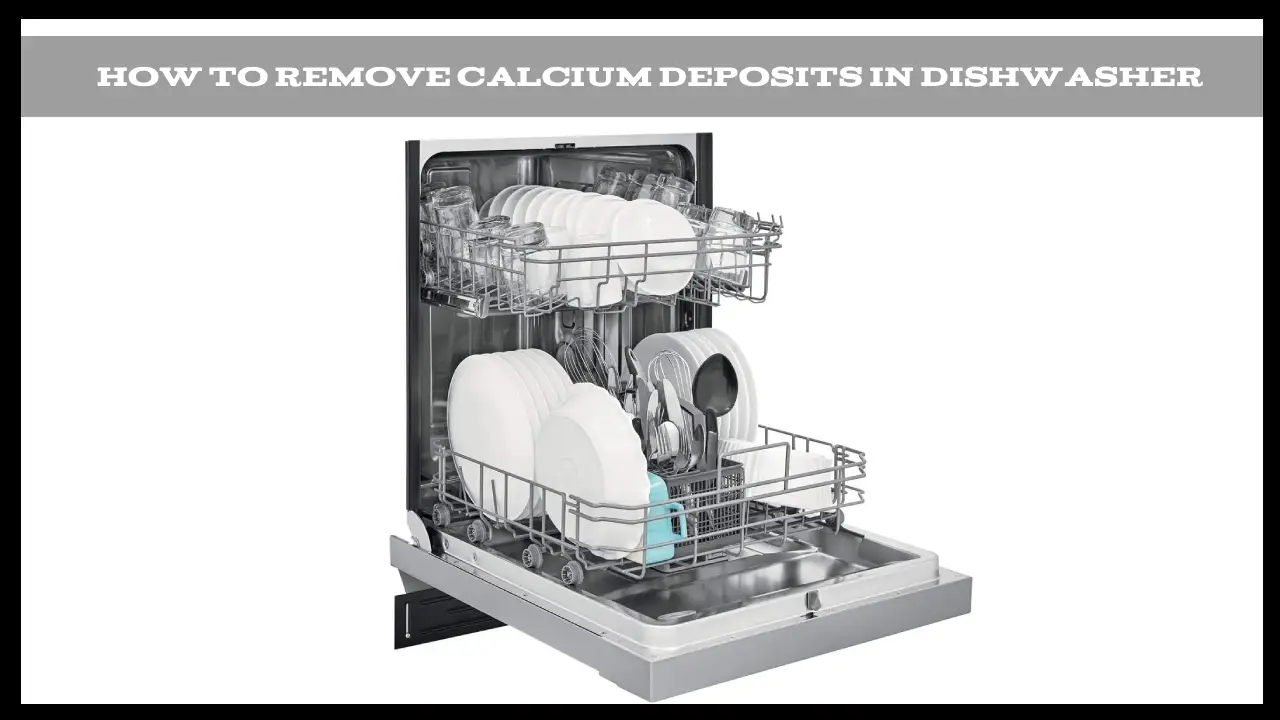 How to Remove Calcium Deposits in Dishwasher Effectively
Prevention: Keep the Chalk Away
Want to stop calcium buildup before it even starts? Use a rinse aid—it’s a magical liquid that helps water slide off your dishes instead of drying into spots.
Also, check if you have a water softener at home. If your water is super hard, a whole-house softener is the ultimate boss move. But that’s a conversation for another day.
For now, just run a vinegar cycle every three months. Set a reminder on your phone: “Time to de-chalk the dishwasher!” It’s way easier than buying new glasses.
A Final Pro Tip (From Someone Who’s Made Mistakes)
Never, and I mean never, use bleach to remove calcium. Bleach and vinegar create toxic chlorine gas—a very bad chemistry experiment. Stick to natural stuff.
Also, if you have a stainless steel dishwasher interior, don’t let vinegar sit on it for hours. Rinse it out promptly, or it can dull the finish. You’re not trying to polish it—you’re just removing chalk.
The Uplifting Conclusion You Deserve
So there you have it! You just learned how to turn your crusty, chalky dishwasher into a sparkling, happy machine. All it took was a little vinegar, some patience, and a sprinkle of baking soda.
Now, go ahead and run that cycle. When you open the door later, you won’t see chalk—you’ll see your own proud reflection in crystal-clear glasses. And that, my friend, is a beautiful thing.
Remember: Your dishwasher works hard for you. It’s okay to give it a little spa love in return. Plus, now your kitchen smells like pickles and victory. Life is good. 🥒✨
