What Is Better Purified Or Distilled Water

Let’s be honest: standing in the water aisle at the grocery store can feel like a pop quiz you didn’t study for. You’ve got spring, mineral, alkaline, sparkling, purified, and...

Let’s be honest: standing in the water aisle at the grocery store can feel like a pop quiz you didn’t study for. You’ve got spring, mineral, alkaline, sparkling, purified, and distilled. It’s enough to make you want to just drink tap and call it a day.
But here we are, staring down the two heavyweights of the hydration world: purified and distilled water. They sound technical, almost like lab equipment, but they’re actually just different approaches to the same goal—getting you clean, crisp water. So which one wins the daily commute to your glass?
The Easy Breakdown: What’s Actually in Your Bottle?
Purified water is the cool, adaptable friend who gets things done without being fussy. It starts from any source—tap, groundwater, even a river—and then goes through a process (usually reverse osmosis or carbon filtration) to remove at least 99.5% of contaminants like chlorine, bacteria, and heavy metals.
Must Read
Distilled water, on the other hand, is the meticulous perfectionist. It’s boiled into steam, then condensed back into liquid, leaving behind almost everything that isn’t H₂O—including minerals, salts, and even some volatile organic compounds. Think of it as water’s minimalist, Marie Kondo moment.
Here’s the kicker: all distilled water is technically purified, but not all purified water is distilled. It’s like the square-rectangle relationship of the water world—confusing until you realize it doesn’t have to be.
Taste Test: Does Your Tongue Know the Difference?
Pour a glass of distilled water and you might notice it tastes… flat. That’s because the distillation process strips away the natural minerals (calcium, magnesium, potassium) that give water its subtle mouthfeel and flavor. Purified water, especially if it’s been remineralized afterward, often has a smoother, more satisfying sip.
This is why a fancy coffee shop would never use distilled water for their espresso machine—it can actually make your brew taste dull and acidic. Purified water is the barista’s best friend, preserving the bean’s character while still being pure.
Fun fact: In some blind taste tests, people actually prefer the taste of tap water over distilled because of the mineral content. Your tongue is smarter than you think.
 Distilled vs. Purified Water: What’s the Difference? – Waterdrop Europe
Practical Life: Which One Should You Actually Use?
Here’s where the rubber meets the road—or the glass meets your lips. For daily drinking, purified water is the clear winner. It’s affordable, widely available, and keeps the electrolytes your body needs for nerve function and hydration.
Distilled water has its VIP moments, but they’re mostly in your appliances. Use it in your iron, humidifier, or steam mop to avoid mineral buildup (scale) that shortens their lifespan. It’s also the go-to for medical settings like CPAP machines and baby formula preparation, where absolute purity matters most.
But here’s the modern twist: you should not drink distilled water exclusively. Because it lacks minerals, over time it can leach small amounts of minerals from your body—and it tastes like a wet sock. Stick to purified for your daily hydration ritual.
A Quick Cultural Reference
Remember that episode of Breaking Bad where Walter White uses a lab-grade water distiller for his blue sky? Yeah, that wasn’t for drinking. In reality, distillers are common in chemistry labs, pharmacies, and even survivalist communities where off-grid water safety is key. But for your Sunday morning smoothie? Overkill.
Meanwhile, purified water is the star of the wellness world. At your favorite yoga studio, that glass bottle with the sleek label? Almost certainly purified, often with a pinch of electrolytes added back. It’s the Goldilocks option—just right.
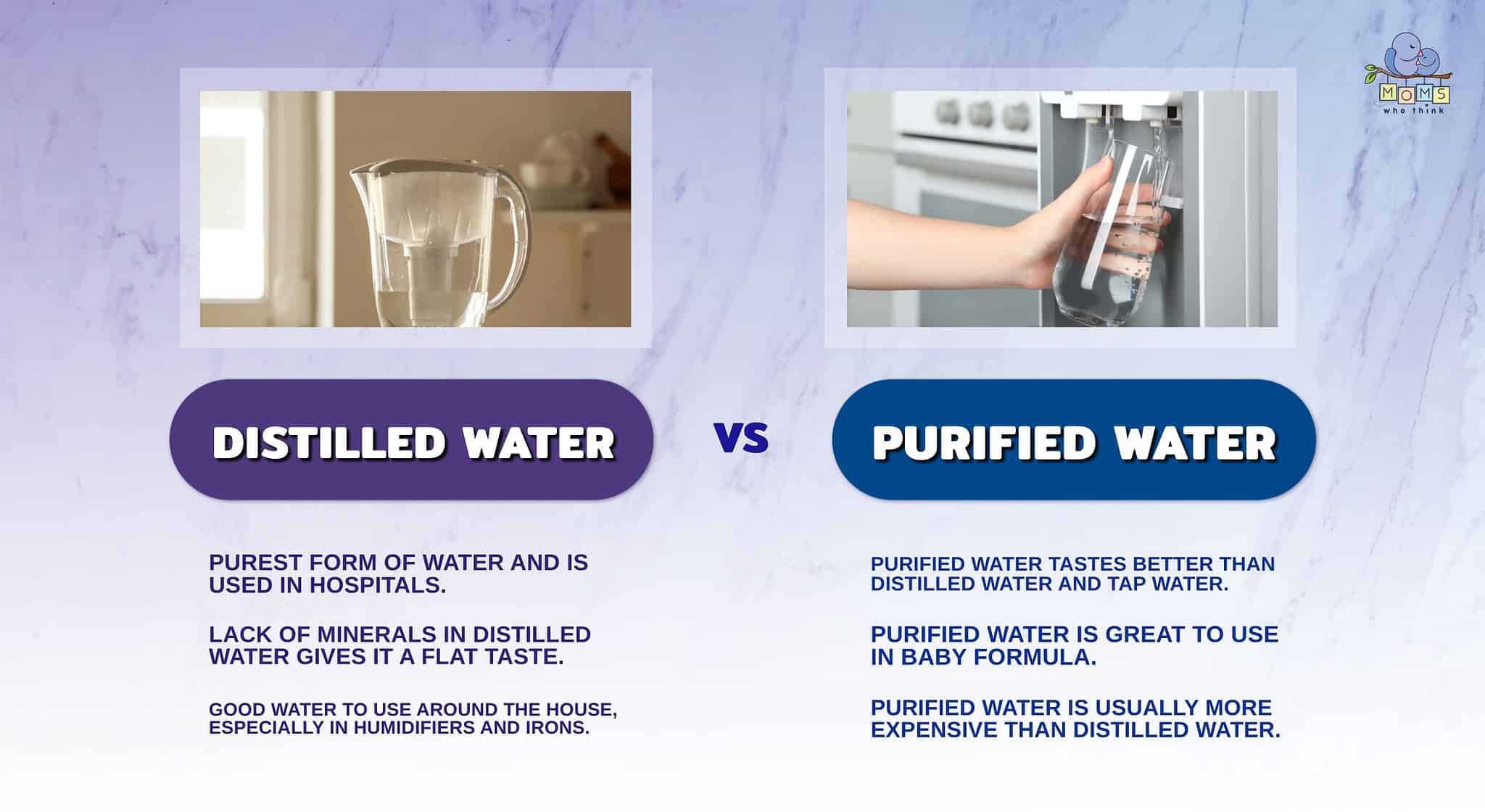 Distilled vs. Purified Water: 4 Differences & Health Benefits
Cost and Convenience: The Unsexy Truth
A gallon of distilled water usually costs about $1.50 to $2.00, while purified water hovers around $1.00 per gallon. If you’re buying in bulk, those pennies add up. But here’s a life hack: buy a countertop water distiller for around $100, and you can make your own. It pays for itself in about six months of regular use.
Or, even simpler: invest in a quality pitcher filter (like a Brita or Pur) that produces purified water from tap. You’ll save money, reduce plastic waste, and have cold, great-tasting water whenever you want. Your wallet and the planet will thank you.
But if you’re the “set it and forget it” type, store-bought purified water is your low-effort, high-reward choice. Distilled is the specialty item you grab for the iron or the car battery.
The Final Sip: What Your Daily Life Needs
Think of purified water as your everyday reliable sedan—does the job, feels good, and gets you where you need to go. Distilled water is the stainless-steel science tool: perfect for specific tasks, weird as a daily driver.
Here’s the reflection: We spend so much time chasing the “perfect” version of everything—better coffee, better yoga mats, better water. And while it’s smart to be informed, sometimes the best choice is the simplest one. For 99% of your day, purified water is your hydration hero. Distilled? Keep it for the steam mop and the car battery.
So next time you’re in that aisle, pause. Grab a bottle of purified, smile at the science, and move on with your life. Your body knows what it likes. And honestly? It’s not that complicated.
