What Is Reverse Osmosis Water Purification

You know that feeling when you pour a glass of water and it just tastes clean? That’s the magic we’re after. But tap water isn’t always that simple—it’s a cocktail of minerals...

You know that feeling when you pour a glass of water and it just tastes clean? That’s the magic we’re after. But tap water isn’t always that simple—it’s a cocktail of minerals, chemicals, and sometimes, the ghosts of last week’s plumbing. Enter reverse osmosis water purification, the quiet hero of the kitchen counter and the celebrity behind every crisp sip at your favorite café.
Let’s break it down without the science lecture. Reverse osmosis, or RO for short, uses pressure to push water through a super-fine membrane. Think of it as a bouncer at an exclusive club—only water molecules get past the velvet rope, while salts, bacteria, and heavy metals are left outside sulking.
This isn’t new; the concept has been around since the 1950s, when it was used to desalinate seawater for thirsty submarines. Now, it’s the tech behind your bottleless water cooler and that fancy under-sink system your neighbor won’t stop bragging about.
Must Read
The process works in stages. First, a pre-filter catches larger bits like sediment and chlorine. Then, the membrane does its heavy lifting, blocking up to 99% of contaminants. Finally, a post-filter polishes the flavor, making sure your morning coffee tastes like ambition, not the local reservoir.
Why should you care?
Because your tap water might have friends you didn’t invite. Pesticides, lead, microplastics—these can sneak in from old pipes or agricultural runoff. RO systems aren’t perfect (they also remove some beneficial minerals like calcium and magnesium), but they give you control over what you drink.
Think of it as a water insurance policy. You wouldn’t drive a car without a seatbelt, right? RO is the seatbelt for your hydration, especially if you live in an area where the water tastes like a swimming pool or has a rusty aftertaste.
Culturally, we’ve been obsessed with filtration for ages. Remember the Brita pitchers of the 1990s? Those were the indie bands of water purification—good, but not quite stadium-level. RO is the headliner, the Taylor Swift of H2O: efficient, recognizable, and a little extra.
Practical tips for the modern home
Don’t overthink installation. Most countertop RO systems are plug-and-play—no tools, no plumber, no lost weekend. If you’re feeling fancy, an under-sink model hides the tech and adds a dedicated faucet that looks sharp next to your induction cooktop.
 Best Water Filters in UAE | Filtersco
Maintenance is minimal but real. Change the pre-filters every six months (set a phone reminder, please). The membrane lasts two to three years, depending on your water quality. Pro tip: buy a TDS meter online for ten bucks—it measures total dissolved solids and tells you exactly how well your system is performing.
Remineralization isn’t a buzzword; it’s a bonus. Some RO systems come with a final stage that adds back calcium and magnesium for taste and health. That’s the difference between flat water and water that dances on your tongue.
Fun little facts to impress your friends
Reverse osmosis is used by NASA on the International Space Station. Yes, the same tech that makes your tap water safe also helps astronauts recycle sweat and urine. Next time you drink RO water, you’re basically sipping like a space explorer—minus the zero-gravity burps.
The membrane pores are about 0.0001 microns wide. For perspective, a human hair is roughly 70 microns. That’s like stopping a basketball from going through a keyhole. The membrane doesn’t care about your plans—it just blocks everything.
Fiji Water and other luxury brands often use a form of RO. So when you buy a plastic bottle for five dollars, you’re mostly paying for the marketing and the selfie aesthetic. A home system gives you that same clarity for pennies per gallon.
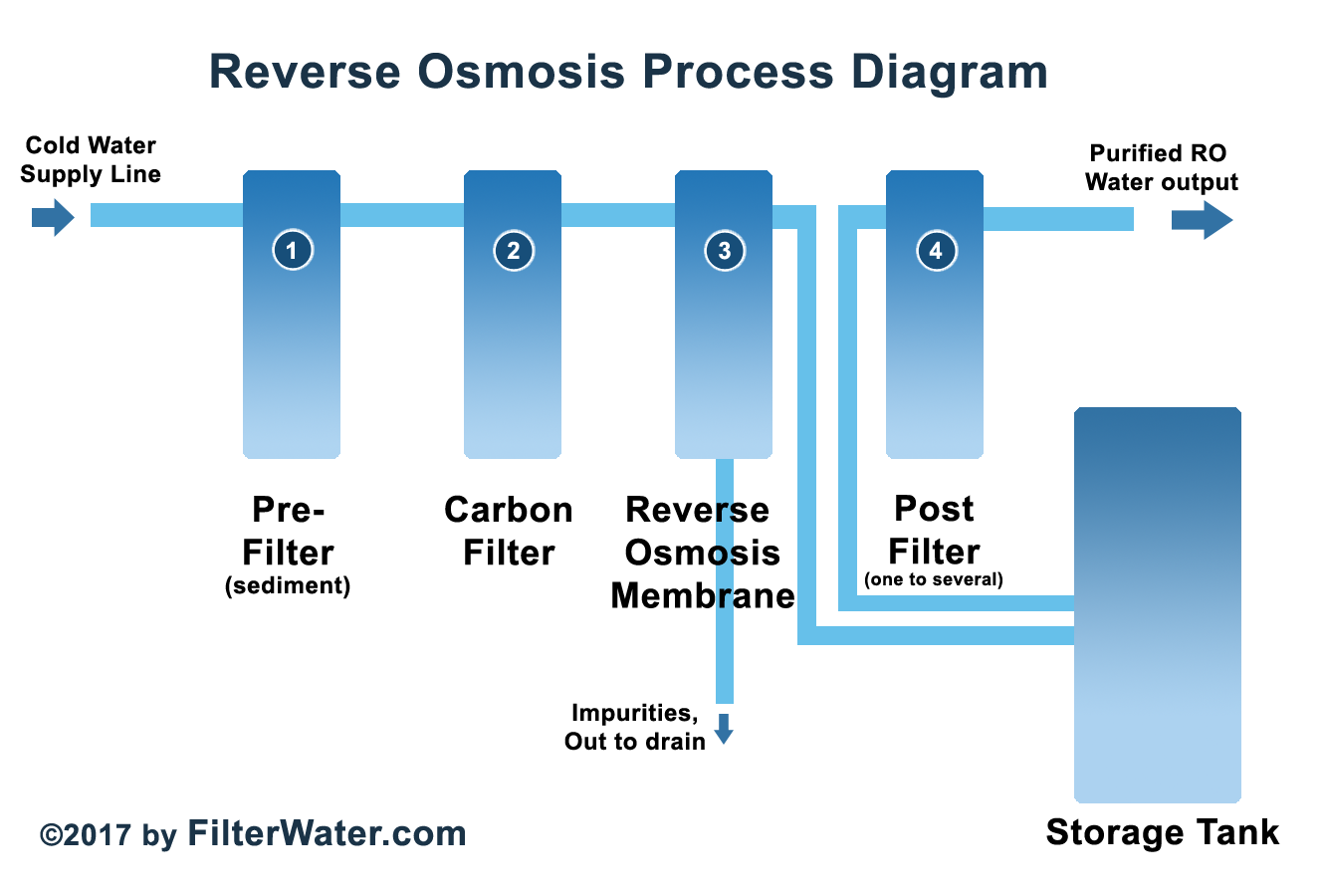 Reverse Osmosis Water Purification Method at Marilyn Stumpf blog
The environmental angle you can’t ignore
RO systems produce wastewater. For every gallon of purified water, they can waste two to four gallons that go down the drain. That sounds bad, but newer models with permeate pumps cut waste by half. And honestly, compared to buying single-use plastic bottles, the planet gives you a high-five.
Use the rejected water for your houseplants (they don’t mind the extra minerals) or for cleaning. It’s not a perfect circle, but it’s a smarter line. Every small shift toward less plastic is a win for your conscience and your countertop.
If you’re worried about electricity, don’t be. Most home RO systems are gravity-fed or use standard line pressure. They hum quietly under your sink, like a refrigerator’s background murmur—present but not demanding.
A short reflection on your daily life
Think about how many times you reach for water in a day: after a workout, with lunch, during that 3 p.m. work slump. Each sip is a tiny ritual of trust. When you know your water is filtered by a process as rigorous as RO, that trust becomes a quiet pleasure—a small, steady luxury you don’t have to think about.
Clean water isn’t a status symbol; it’s a foundation. It’s the clear base for your herbal teas, the silent partner in your evening soup, the reason your ice cubes don’t taste like last night’s leftovers. Reverse osmosis is just a tool, but what it gives you is a pause—a clean slate in a world that often feels muddy.
So go ahead, fill that glass. Let the water run cool and clear. Notice how it feels, how it tastes, how it simply is. That’s the point of all this tech: not to complicate, but to make life a little more effortless. And that, my friend, is the most refreshing thing of all.
