How Much Water Should Be In My Brine Tank

Let’s talk about a little secret your water softener keeps. That white cylinder—the brine tank—is the unsung hero of your home, and it’s probably feeling a bit neglected. You...
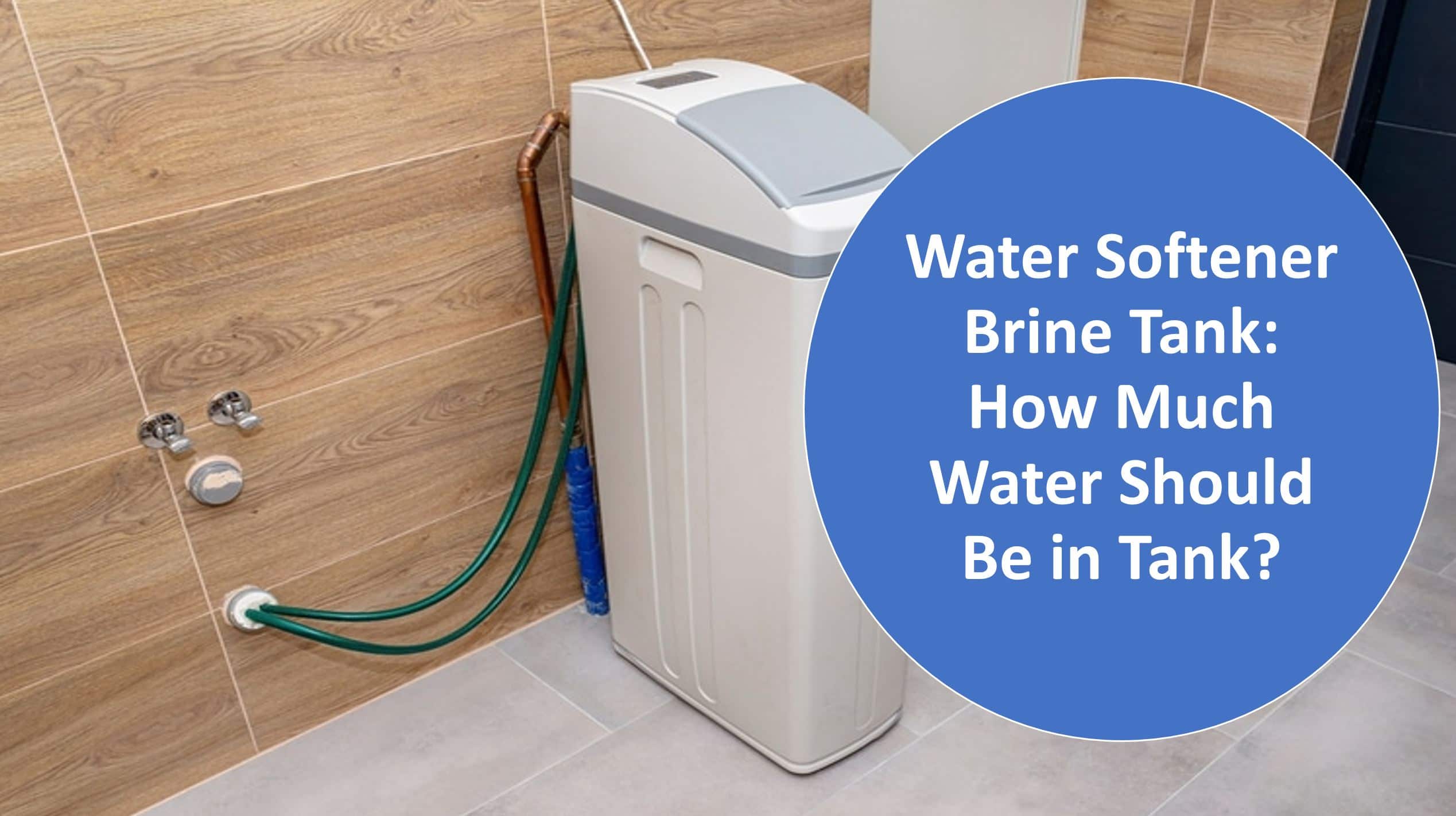
Let’s talk about a little secret your water softener keeps. That white cylinder—the brine tank—is the unsung hero of your home, and it’s probably feeling a bit neglected. You might be wondering, how much water should be in there? It’s a surprisingly common kitchen-table debate, up there with "pineapple on pizza" or "is a hot dog a sandwich."
First, take a deep breath. The short answer is: it depends. Unlike your morning coffee pot, there isn’t a universal fill line. The amount of water in your brine tank changes constantly depending on your water usage, the hardness level, and the regeneration cycle. Think of it as a living, breathing system, not a static bucket.
The Myth of the Perfect Water Level
You’ve probably heard someone say it should be “half full.” That’s like saying every car should be driven at 50 miles per hour. It’s not wrong, but it’s not always right. For a modern, metered water softener, the water level is usually lower than you’d expect—often just a few inches covering the salt, or even less.
Must Read
Here’s the reality: most of the time, you’ll see water sitting just below the bed of salt. If you look inside and see a dry, crusty salt layer with a puddle of water about an inch deep at the bottom, that’s often perfect. The brine tank doesn’t swim; it soaks.
When It Looks Too Full (The Panic Moment)
You open the lid and see a swamp. A murky, salty swamp that looks like a sci-fi movie set. Don’t call a plumber just yet, okay? A high water level after a regeneration cycle is normal. The tank fills with water to create brine, then it drains. It’s a little like your washing machine—it fills, agitates, then spins dry. Give it a few hours.
The real red flag? If that water has been sitting at the high level for more than 24 hours. This usually points to a clogged drain line or a float valve that’s gone rogue. It’s the softener equivalent of a sink that won’t drain. Call in the pros, but don’t panic over a temporary splash zone.
When It Looks Too Empty (The Thirst)
Ever tried to make tea from an empty kettle? Same logic applies. If your brine tank is bone dry—no water, no slush—your salt isn’t dissolving. Your softener is effectively dead. You’ll notice hard water residue on your dishes, and your skin will feel like parchment paper.
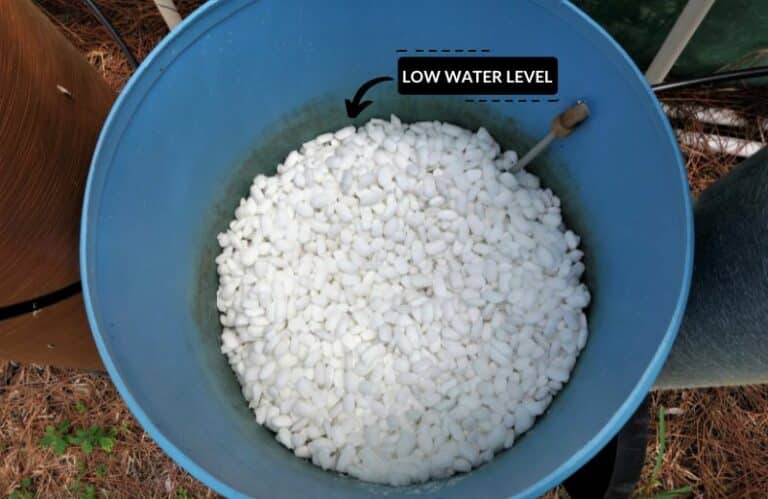 How Much Water Should Be in My Water Softener Brine Tank?
A dry tank is often a sign of “salt bridging,” where a crust of salt forms over the water, leaving a hollow space underneath. It’s a mineral arch. Check for this by gently poking the salt with a broom handle. If it feels hollow, you’ve got a bridge. Break it up, and let the water flow again.
The Cultural Reference You Didn’t Expect
Think of your brine tank like the Velveteen Rabbit—it only works well when it’s lived-in and a little messy. Perfect cleanliness is suspicious. A pristine, empty tank means no salt. A flooded tank means no function. The Goldilocks zone is that slightly damp, salty slush that looks like a snow cone that melted halfway.
And here’s a fun little fact: the Romans used salt as currency. “Salary” comes from the Latin word for salt. So when you’re checking your brine tank, you’re technically checking your household treasury. Treat it with respect. Not too much, not too little—just enough to keep the water all the way smooth.
Practical Tips from the Trenches
Here’s what works, stripped of jargon: Check your salt level monthly, but check your water level only after a regeneration cycle. If the water is clear and covering the salt by two inches, you’re golden. If it’s murky and up to the brim, you’ve got a problem.
 How much water should be in my brine tank: real numbers
Tip number two: Never add salt to a tank that’s already full of water. That creates “salt mush,” which clogs the works. Add salt when the water level is low, like topping off a humidifier. It’s a simple rhythm, not a science experiment.
One more thing: use high-purity salt, like evaporated pellets. Rock salt has impurities that turn your brine into a muddy soup. Think of it as using filtered water for your fancy ice cubes. The taste matters—even for your machine.
The Bottom Line (It’s a Wave, Not a Line)
There’s no fixed “water level” that stays forever. It rises and falls like the tide. The goal isn’t a specific number; it’s consistency. If you see water, you’re fine. If you see a dry pit, you’re not. If you see a flood, wait a day, then act.
Ultimately, your brine tank is a reflection of your life. It’s full of cycles, occasional messes, and strange crusts. You manage it, you forget it, and then you suddenly care a lot—only to realize it’s mostly fine. That’s the lesson.
So next time you peek inside that tank, don’t stress. It’s just a little water. A little salt. A little patience. And just like your Sunday morning, it doesn’t need to be perfect—it just needs to work.
