How Does A Reverse Osmosis Membrane Work

So, you’ve got a reverse osmosis (RO) system under your sink, or you’re thinking about buying one. Maybe you just heard the term and thought, “That sounds like something a sci...
So, you’ve got a reverse osmosis (RO) system under your sink, or you’re thinking about buying one. Maybe you just heard the term and thought, “That sounds like something a science lab would do to a very sad grape.” Relax. I’m going to explain this while keeping your brain inside your skull and a smile on your face.
The Big Idea: Pressure Is a Bully
Imagine you’ve got a super-fancy strainer that only lets water molecules through. Not dirt, not lead, not even a tiny little virus—just delicious H2O. That’s basically a reverse osmosis membrane.
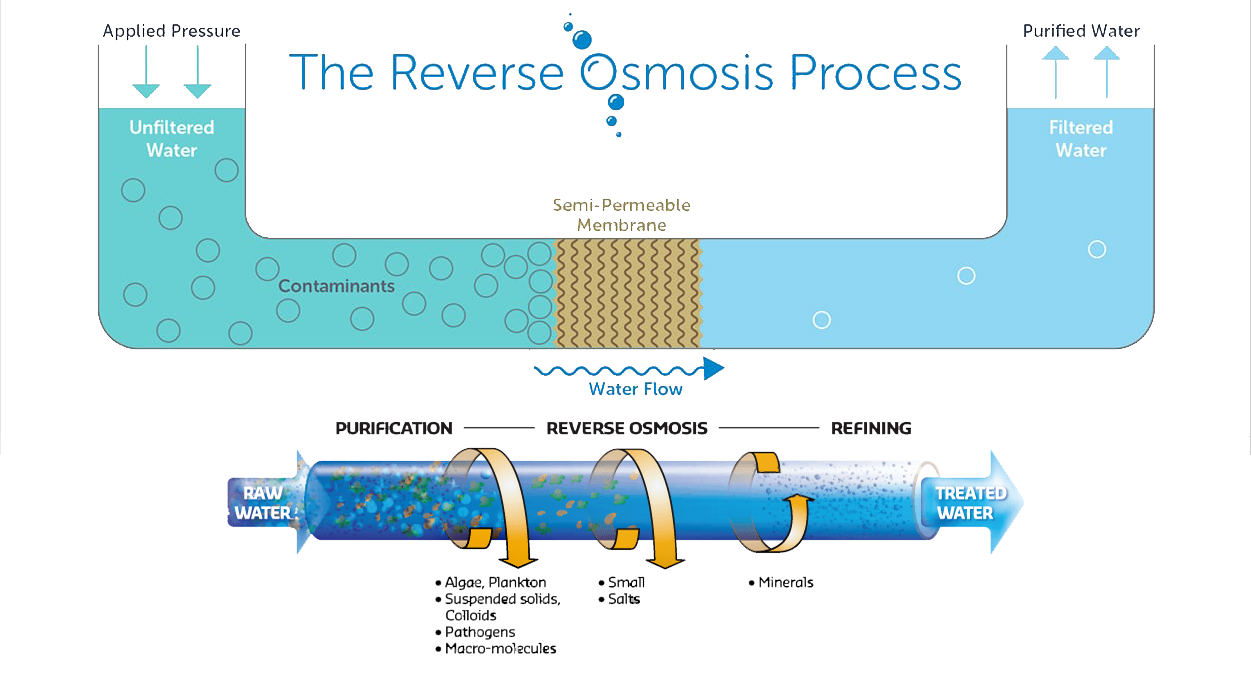
But here’s the weird part: water is lazy. Normally, it just hangs out, balancing itself out like a puddle in a parking lot. To make it go through that strainer, you have to bully it. You apply a lot of pressure—more than nature ever would—so the water says, “Fine, I’ll go through your tiny door, you big mean pump!”
Must Read
That’s the “reverse” part. Normal osmosis is like water shuffling toward a party on the salty side. Reverse osmosis is like water being tackled through a door to escape the salty mess. It’s not graceful, but it works.
The Membrane: A Gatekeeper With Issues
This membrane isn’t a cloth you can see through. It’s a thin-film composite—basically a sandwich of plastics so tight that it makes your jeans after Thanksgiving dinner look loose.
Imagine a bouncer at a club who only lets in people who are exactly seven inches tall, wearing a swimsuit, and certified non-smelly. That’s your RO membrane. It blocks everything: salts, bacteria, viruses, dissolved metals, even fluoride (if you’re that kind of person).
Shocking fact: This membrane is so picky that it rejects about 99% of all dissolved solids. That’s like saying, “Out of 100 scumbags, only one gets into the VIP section of your drinking glass.” And that one? It’s usually just a molecule of water that took the wrong turn.
What Actually Happens Inside That Canister
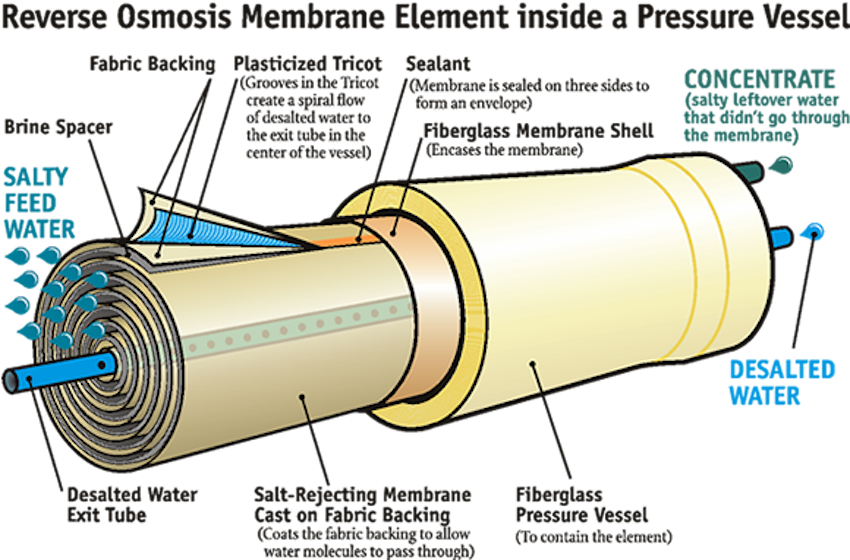
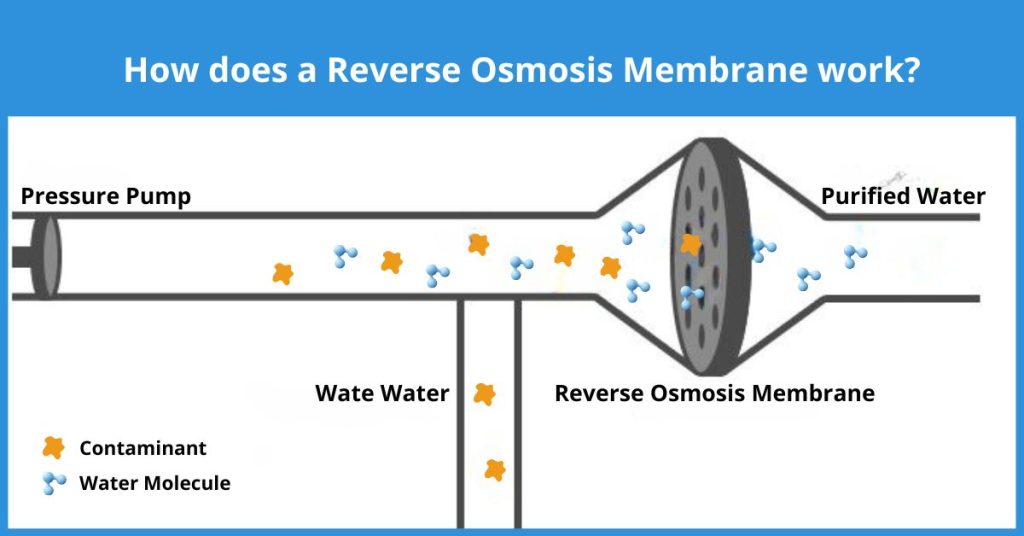
Okay, let’s get a little nerdy, but I’ll keep it fun. The membrane is rolled up like a toilet paper tube that’s been on a diet. You feed water in one end, and the pressure pushes it through this spiral labyrinth.
 How Reverse Osmosis Works | Living Whole
The water that makes it through is called permeate—that’s the good stuff you drink. The water that doesn’t make it? That’s brine or reject water. It’s basically concentrated gunk that gets flushed away. Yes, you waste some water to make clean water. It’s like paying a bouncer a fee to keep the riff-raff out.
Here’s the killer joke: your RO system wastes about 3 to 4 gallons of water for every 1 gallon it makes. That sounds terrible, but relax—most of that reject water goes right down your drain. It’s not like you’re hoarding it in a secret pool. Plus, modern systems are getting better, so thank you, engineering wizards.
Filtration vs. RO: The Showdown
You might be thinking, “Why don’t I just use a Brita?” Good question, suburban hero. A regular filter—like activated carbon—is like a net that catches big fish. It grabs chlorine, some bad tastes, and maybe a few floaty bits.
But a reverse osmosis membrane? That’s a micrometer-level ninja. It catches things ten thousand times smaller than a human hair. Think about that: your hair is 70 microns wide. This membrane stops stuff at 0.0001 microns. That’s smaller than most viruses. It’s like saying, “No, you can’t come in, you microscopic jerk with a fake ID.”
So while a Brita is great for your morning tap water, RO is what you use when you want to pretend you’re drinking glacial melt from the Himalayas. (Spoiler: it’s just your tap water that got a very expensive spa treatment.)
 What Is Reverse Osmosis And How Does It Work
Surprising Facts That Will Annoy Your Friends
Here’s a fun one: RO systems can actually remove dissolved gases like radon—sort of. Radon is a gas, and gases slip through the membrane like a fart in a crowded elevator. So you still need a carbon filter after the RO to catch those stinky ghosts.
Also, did you know that the first commercial RO membranes were used to make seawater drinkable? Yes, sailors used to drink salty death water until the 1950s when some genius at UCLA said, “Let’s squeeze the ocean until it cries pure water.” Now you can do that on your countertop. Humanity is incredible and also ridiculous.
And here’s the kicker: RO water is so pure that it can actually leach minerals from your pipes if it sits too long. That’s why some systems add a “remineralization” stage—so your water has enough calcium to not be a thirsty predator. Otherwise, you’re drinking water that’s basically a hungry ghost.
The Verdict: Is It Worth the Hype?
Yes, if you hate the taste of your tap water or live in an area with concrete instead of water pipes. But it’s not magic. It’s slow, it wastes some water, and it requires you to change filters every six months or else your system turns into a cursed artifact.
But when it’s working? That water is insultingly clean. You’ll sip it and think, “Wow, I’ve never tasted nothingness quite like this before.” And that, my friend, is the entire point.
So next time you fill up a glass from that little faucet, give a silent cheer to the bouncer inside—the one who works 24/7 under pressure, rejecting 99 out of 100 particles, and asking no questions. Just don’t forget to replace its membrane every two years. It’s a tough job, but somebody’s got to do it.
