What Is A Saltless Drinking Water System

Imagine this: you’re running late for work, you grab your favorite glass, fill it from the tap, and take a big gulp. Instead of that crisp, clean taste you hoped for, you get...
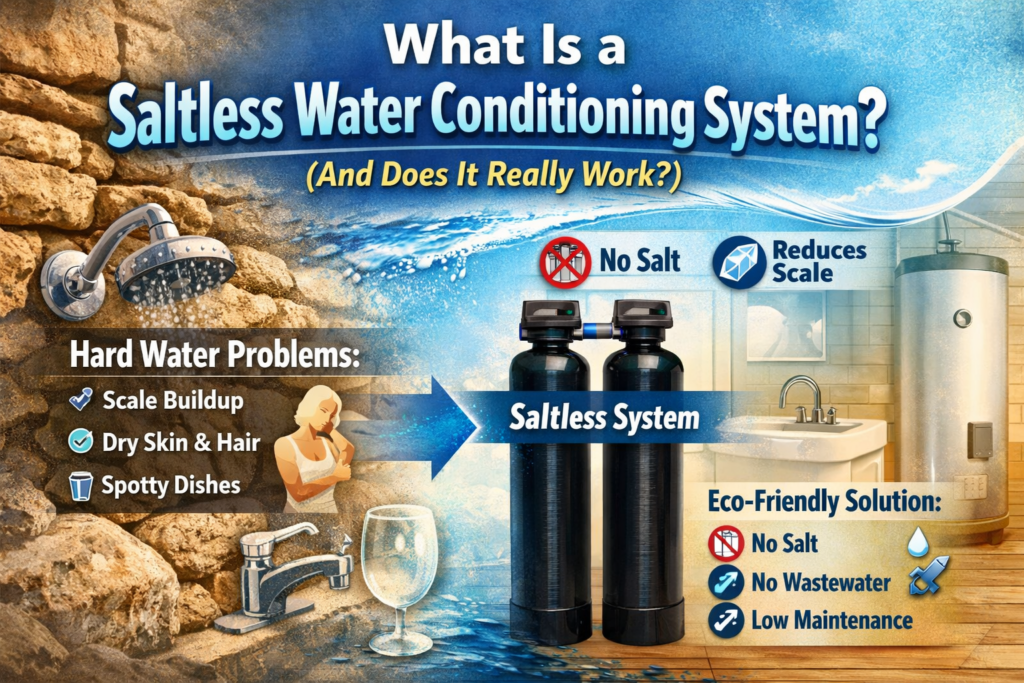
Imagine this: you’re running late for work, you grab your favorite glass, fill it from the tap, and take a big gulp. Instead of that crisp, clean taste you hoped for, you get a faint, chalky whisper of something… mineral-y. Sound familiar? That’s the story of hard water—and it’s the reason so many people are swapping their old salt-based water softeners for something called a saltless drinking water system.
What exactly is a saltless system?
A saltless drinking water system doesn’t remove hard minerals like calcium and magnesium. Instead, it changes their structure so they can’t cling to your pipes and fixtures. Think of it like this: regular salt-based softeners yank the minerals out and replace them with sodium. A saltless system just makes those minerals behave themselves—they stay in the water, but they stop forming that annoying white scale on your kettle and showerhead.
It’s a completely different approach. No big bags of salt to haul from the grocery store. No sloshing brine tanks in your basement that need monthly scrubbing. For busy families or anyone who just wants a simpler life, this is a game-changer.
Must Read
Why should you care? (Hint: Your morning coffee is involved.)
You know that sad, cloudy film on top of your coffee? That’s hard water reacting with your grounds. It robs your brew of flavor and makes it taste bitter or flat. A saltless system leaves the minerals in, but in a form that won’t mess with your coffee’s soul. Your morning cup stays rich and smooth—and you don’t need to add a pinch of salt to fix it.
The same goes for your tea. Have you ever noticed how a perfect cup of Earl Grey suddenly tastes dusty? That’s hard water again. With saltless water, the flavors stay bright and true. Your tea timer will thank you.
The stuff you don’t see: your fridge and your laundry
Think about your refrigerator’s ice maker. Hard water leaves cloudy, ugly ice cubes that smell like basement. A saltless system gives you crystal-clear cubes that actually look like they belong in a fancy cocktail. And your washing machine? Hard water makes your towels stiff and scratchy, no matter how much fabric softener you dump in. Saltless water helps your detergent work better, so towels come out soft and fluffy without a chemical smell.
 saltless water filtration system Archives - McLay Services, Inc.
I once had a friend who spent $50 a month on laundry boosters trying to fix her stiff sheets. A saltless system solved it in one wash. She still jokes that it saved her marriage.
But does it remove bad stuff like chlorine or lead?
Here’s where it gets interesting. A saltless system is not a filter for taste or safety—it’s a conditioner for structure. If your tap water tastes like a swimming pool, you’ll still get that chlorine flavor. But many saltless setups are combined with a carbon filter that zaps chlorine, odors, and some heavy metals. You get the best of both worlds: mineral-balanced water that tastes like it came from a mountain spring, without the scale.
So if you’re worried about lead or pesticides, you’ll want to check your water report or add a separate filter. But for everyday drinking and cooking, a saltless system does the heavy lifting of keeping your appliances scale-free while letting you keep those healthy minerals.
The big “aha” moment: no salt means no slime
Salt-based softeners create a brine that gets flushed down the drain. That salty wastewater can harm local plants and septic systems. Saltless systems use a process called template-assisted crystallization (TAC)—fancy words for “tiny crystals that can’t stick.” There’s no slimy brine tank, no salt purchase, and no environmental guilt. Your garden stays happy, your septic tank stays balanced, and your water bill doesn’t spike.
 Are Saltless Filtration Systems better Than Salt-Based Systems?
One neighbor told me she switched because she felt bad about all that salt ruining her lawn. Now she waters her tomatoes with the kitchen tap, and they’re enormous.
Is it right for you? Let’s keep it real.
If you have extremely hard water (like, scale that looks like a fossil in your pipes), a salt-based system might still be better for the whole house. But for drinking, cooking, and ice? A saltless system is a total upgrade. It’s also perfect if you’re on a low-sodium diet, because no extra salt ends up in your water or your food.
You can buy a small countertop unit for about $100 or a whole-house version for a few hundred. Installation is usually a DIY snap—no plumber needed. Just attach it to your kitchen cold-water line, and you’re done. No backwash, no electricity, no “oops, I forgot to buy salt” panic at 11 PM.
The bottom line, served with a smile
A saltless drinking water system is like a gentle life coach for your water. It doesn’t kick the minerals out—it just asks them to play nice. Your kettle stays shiny, your coffee tastes like you’re at a hipster café, and your ice cubes look like diamonds. Best of all, you can stop being a full-time chemist for your own kitchen. So go ahead, fill that glass. It’s going to be the easiest decision you make this week.
