How To Use A Tds Meter For Water Testing

You’ve probably glimpsed those mysterious little gadgets with a screen and two metal prongs—a TDS meter. Trust me, it’s not some lab rat’s toy; it’s your new pocket-sized scie...

You’ve probably glimpsed those mysterious little gadgets with a screen and two metal prongs—a TDS meter. Trust me, it’s not some lab rat’s toy; it’s your new pocket-sized science buddy.
TDS stands for Total Dissolved Solids, which is a fancy way of saying “what’s floating in my water.” Think minerals, salts, tiny metals—the stuff that makes your tap water taste like a pool or your bottled water feel smooth.
Testing your water with a TDS meter is stupidly easy. And honestly, it’s a bit addictive—you’ll want to test everything from your faucet to the garden hose.
Must Read
What You Actually Need
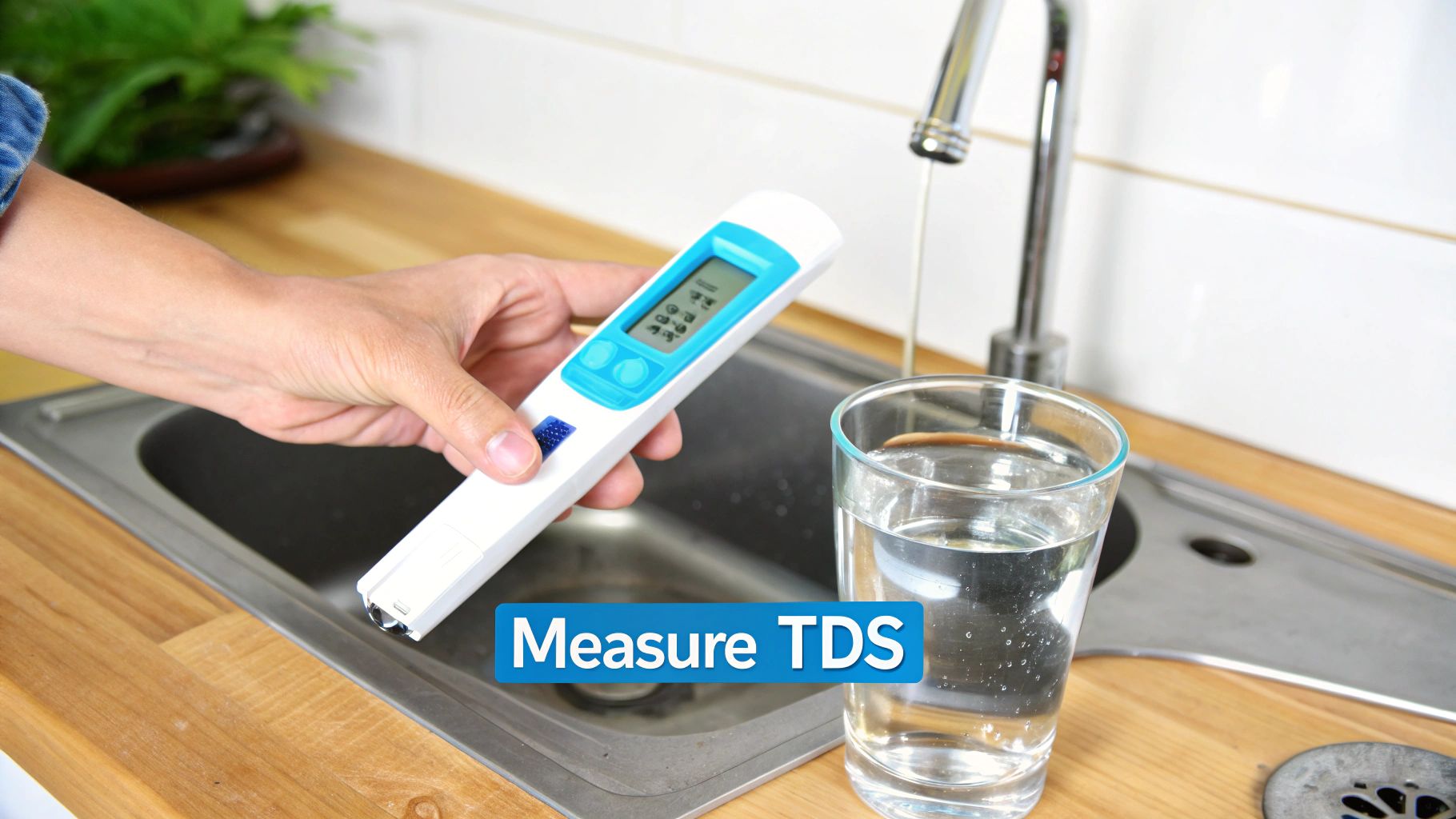
First, grab a clean glass (no leftover coffee, please) and fill it with the water you want to test. Pro tip: don’t dunk the meter directly under the faucet—bubbles mess up the reading.
Next, pop off the meter’s cap, turn it on (most have one button), and plunge the prongs into the water. Wait for the numbers to stop dancing—usually five seconds of patience.
That number you see, in parts per million (ppm), tells the story. A reading under 50 ppm? You’ve got something nearly as pure as rainwater. Over 300 ppm? You’re tasting the local geology.
The Fun Part: What Your Numbers Mean
Let’s decode this like a secret message from your plumbing. Distilled water or reverse osmosis water usually hits between 0 and 10 ppm. That’s the “blank slate” of the water world.
Your average tap water might land between 150 and 300 ppm. That’s totally fine for drinking—lots of healthy minerals in there. But if your meter screams over 500 ppm, you might taste a little… “minerally.”
Here’s the kicker: a TDS meter doesn’t measure contaminants like bacteria or lead. Think of it as a cheerleader, not a detective—it tells you something’s there, but not the whole story.
 How to - TDS Meter Instructions - YouTube
Make It a Game
I dare you to test water from three different sources in one afternoon. Your tap, your friend’s Brita pitcher, and that overpriced spring water from the store. You might laugh at the results.
Watch the numbers vary wildly. You’ll feel a small, nerdy thrill—like you’ve unlocked a secret level in the game of hydration. Water isn’t boring anymore; it’s a mystery.
And if you’ve got a fish tank or a houseplant collection? This tool is your best friend. Fish are divas about water purity, and plants hate surprise mineral overloads.
Keep It Clean, Keep It Fun
After each test, rinse the prongs with distilled water (or just tap if that’s all you’ve got) and dry them with a soft cloth. Don’t rub too hard—those prongs are sensitive little souls.
Store the meter in a cool, dry place, away from your cat’s curiosity. A little care, and it’ll work for years, making every glass of water a tiny science experiment.
The best part? You’ll start noticing patterns. Rainy days might lower your tap water TDS. A new water filter? Watch that number drop like a stone.
 How to Reduce TDS in Water for a Cleaner, Tastier Drink
Why This Matters (Beyond the Fun)
Knowing your water helps you make smart choices about filters, hydration, and even cooking. Your coffee or tea will taste noticeably better with lower TDS water—no exaggeration.
Plus, it’s a conversation starter. “Hey, ever tested your water?” is the ultimate party opener for curious souls. Soon you’ll be the neighborhood water guru.
Remember: a TDS meter doesn’t judge your water; it just reports facts. The power is in your hands—literally.
Your Uplifting Final Drink
So go ahead, buy a ten-dollar TDS meter online. It’s cheaper than a fancy coffee and way more enlightening.
You’ll never look at a glass of water the same way again. Every sip will carry a little spark of curiosity. Isn’t that what life’s about?
Go test, wonder, and smile—because the world is full of hidden wonders, even in the stuff you drink every day. Cheers to becoming a water detective!
