How Long Does Bacteriostatic Water Last

Let’s talk about bacteriostatic water. Yes, that weird bottle of medical-looking liquid you might have stashed in your fridge. It’s not magic, but it’s pretty close. And like...

Let’s talk about bacteriostatic water. Yes, that weird bottle of medical-looking liquid you might have stashed in your fridge. It’s not magic, but it’s pretty close. And like all good things, it doesn’t last forever.
First, what even is this stuff?
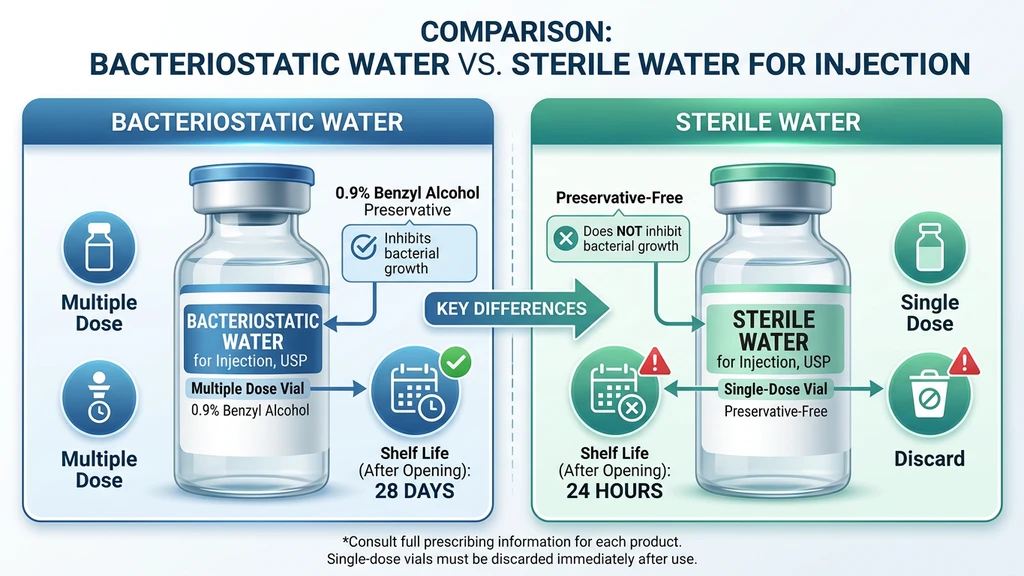
It’s sterile water with a tiny bit of benzyl alcohol added. That alcohol is the superhero here—it stops bacteria from partying in the bottle. Think of it as a bouncer for microbes. Without it, you’d have a moldy mess in days.
But here’s the kicker: even with a bouncer, the party can’t go on forever. Bacteriostatic water has an expiration date, and it’s not just a suggestion.
Must Read
How long does it actually last?
Unopened, a sealed bottle chills out for up to two years. Check the label—that’s your hard deadline. Once you pop the seal, the clock starts ticking fast. You’ve got 28 days max in most cases.
Why 28 days? Because after that, the benzyl alcohol’s mojo wears thin. It’s like a stale slice of pizza—still kinda okay, but not worth the risk. Never use it after 28 days, even if it looks clean.
And yes, even in the fridge. Sorry, your fridge isn’t a time machine.
Funky details that might blow your mind
Did you know bacteriostatic water was invented for injectable meds? It’s the behind-the-scenes hero for mixing antibiotics and hormones. Without it, you’d need a new vial every single dose. Wasteful, right?
Here’s a weird one: you can’t use it for babies. Seriously. The benzyl alcohol is too harsh for newborns. So if you see a tiny human, keep this water far away.
 Bacteriostatic Water: Uses, Mixing, Dosage, Storage & Safety
Another quirky fact? It doesn’t kill everything. It just stops bacteria from multiplying. Think of it as a tranquilizer dart for germs, not a nuclear bomb. Some hardy spores can still survive, which is why the 28-day rule is sacred.
What happens if you push past 28 days?
Imagine a house party where the bouncer falls asleep. Microbes start dancing on the counters. Cloudiness, floating specks, or a weird smell are your red flags. If you see any of that, toss it immediately.
Using old water is like playing Russian roulette with your health. You don’t want to inject unseen bacteria into your body. Not worth it for a few extra days of laziness.
How to store it like a pro
Keep it in a cool, dark place. A pantry or drawer works wonders. Not the bathroom! Steam and humidity make it go bad faster. Your medicine cabinet is a traitor to sterile liquids.
Label the bottle with the date you opened it. Use a permanent marker—don’t trust your memory. I once forgot and had to toss a whole vial. My wallet cried.
And here’s a fun trick: you can freeze it. Really! Freezing pauses the countdown. Bacteriostatic water that’s frozen stays good until you thaw it. Just don’t refreeze it more than once—that’s a no-no.
 How Long Do Reconstituted Peptides Last? | PeptidesExplorer
Why this topic is secretly hilarious
Think about it: we’re obsessing over a liquid that does nothing on its own. It’s just water with a dash of alcohol. Yet it’s the unsung hero of medicine, the silent sidekick of syringes. It’s the literal definition of “supporting character.”
And the fact people argue online about whether it lasts 28 days or 30? Pure comedy. Spoiler: the FDA says 28, but some rebels push it. Don’t be a rebel. Your immune system isn’t a flex.
Also, who names something “bacteriostatic”? Sounds like a dinosaur robot. Tyrannosaurus bacteriostaticus. I’d watch that movie.
The bottom line (short and sweet)
Unopened bottle: up to two years. Opened bottle: exactly 28 days. Expired water: go buy more.
If you’re ever in doubt, remember: when in doubt, throw it out. It’s cheap compared to a trip to the ER. And seriously, it’s just water—don’t get sentimental.
So next time you pick up that little bottle, give it a wink. It’s working hard to keep you safe. Just don’t ask it to stay past its bedtime. Twenty-eight days, friend. That’s the magic number.
