Why Do I Smell Sewage In My House

So, you’re minding your own business, maybe binge-watching a reality show about people who befriend wild boars, when wham—a smell hits you like a punch in the nose. It’s a sew...

So, you’re minding your own business, maybe binge-watching a reality show about people who befriend wild boars, when wham—a smell hits you like a punch in the nose. It’s a sewage stench, a funky, fetid ghost that seems to haunt your home. Congratulations, you’ve just joined the unofficial club of people asking, “Why does my house smell like a backed-up port-a-potty?”
Let’s get one thing straight: your house is not possessed by a gassy demon. The culprit is almost always plumbing, and the good news is, you don’t need an exorcist—you need a plunger and a little know-how. But before we dive in, I’m legally obligated to tell you that natural gas companies add a smell like rotten eggs to help you detect leaks. If you smell that, get out and call the utility company. Not a joke. Gas leaks can make your house go boom.
The VIP of Stink: The Dried-Out P-Trap
Imagine you have a secret weapon in your pipes called a P-trap. It’s that curved U-shaped pipe under your sink that holds a little pool of water. That water acts like a bouncer at a nightclub, blocking sewer gases from sneaking into your living room. But if that bouncer falls asleep—meaning the water evaporates—the fumes waltz right in, laughing in your face.
Must Read
This happens most often in guest bathrooms or laundry sinks you haven’t touched in months. Your aunt’s house plants? They’re fine. That dry trap? A disaster. Just run the water for thirty seconds and flush any toilets in rarely-used rooms every few weeks. It’s like giving your plumbing a refreshing Gatorade.
The Sneaky Snake: A Blocked Vent Pipe
Your house has a chimney-like vent pipe that pokes out of the roof. It’s not for Santa—it’s for letting sewer gas escape harmlessly into the sky. If a bird builds a nest, or leaves clog it up, that gas has nowhere to go but down into your bathroom. Suddenly, your shower smells like a landfill from the Middle Ages.
Here’s a shocking fact: some sewer gases contain methane, which is flammable. No, your house will not spontaneously combust from a blocked vent, but it’s a reminder that plumbing is basically a minefield of science experiments. If you’re brave, put on gloves and check the roof vent with a flashlight. If you’re not? Call a plumber and pretend you’re a French aristocrat who doesn’t do manual labor.
The Rotten Egg Surprise: A Broken Toilet Seal
Your toilet sits on a wax ring, a squishy donut of seal that keeps poop water where it belongs—in the toilet, not on your floor. Over time, that wax dries out, cracks, and breaks. You might not see a leak, but you’ll smell it: a sewage odor that gets stronger when you flush. It’s like your toilet is trying to tell you, “Hey, I’m not feeling so hot.”
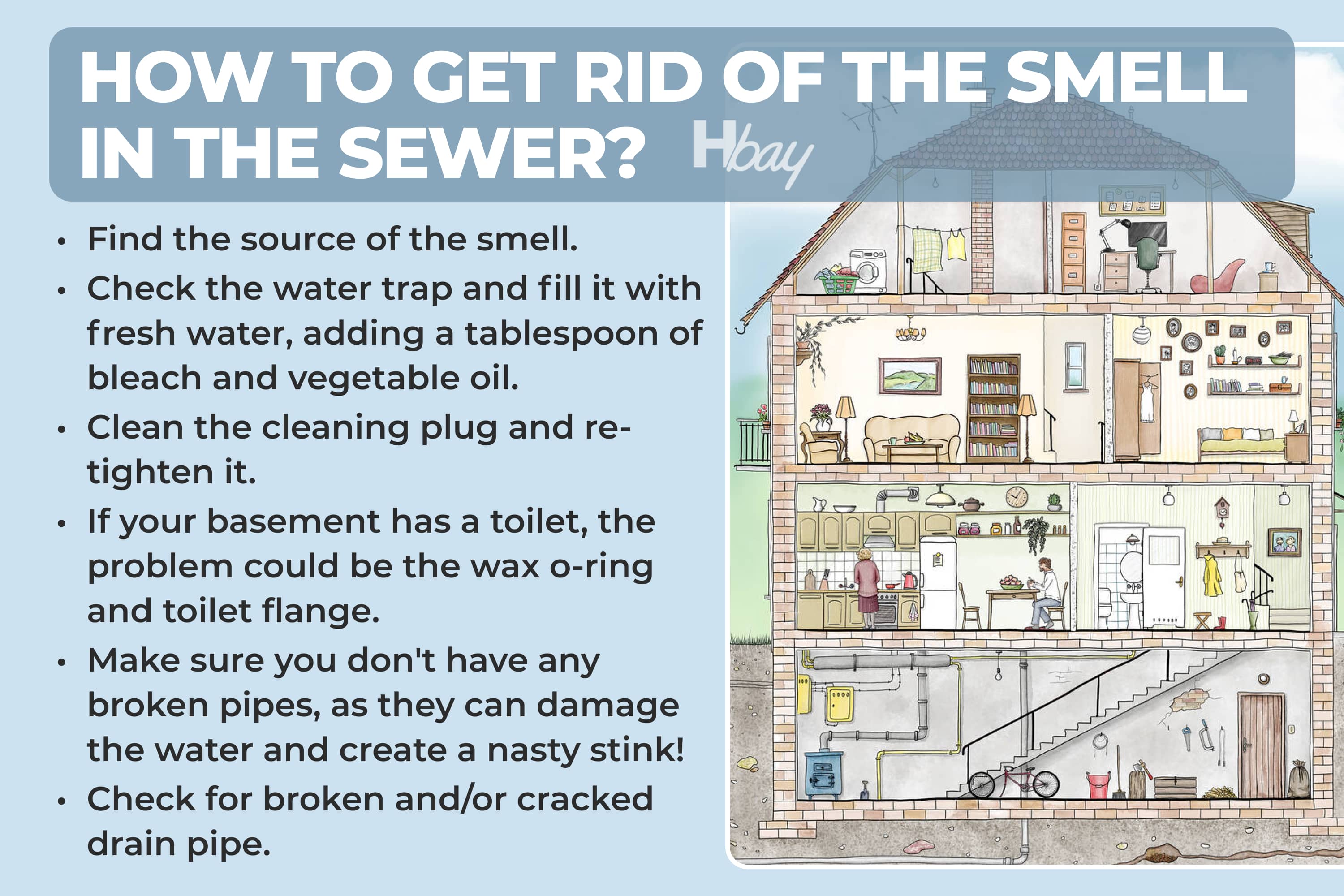 Why Does My Basement Smell Like Sewer When It Rains?
To test this, wiggle the toilet. If it wobbles like a toddler learning to dance, the seal is shot. The fix? Replace the wax ring. It’s messy, it’s gross, but it’s cheaper than a new toilet. Plus, you’ll earn immediate street cred with your plumber.
The Sewer Back-Up: When Nature Calls a Do-Over
Sometimes, the problem isn’t in your house—it’s in the city sewer line. Tree roots, grease blobs, or a rogue action figure can block the main pipe, causing waste to back up into your drains. This smell is unmistakable: it’s the scent of a hundred flushes past, returning for a very unwanted encore.
If the stench hits you after a heavy rain, you might have a combined sewer overflow, a charmingly named problem where stormwater and sewage mix. According to the EPA, over 860 billion gallons of this mixed goop are released every year in the U.S. That’s enough to fill 1.3 million Olympic swimming pools with, well, not water.
The DIY Detective Kit
Before you panic, grab a flashlight and follow your nose. Check every sink, tub, and toilet. Sniff near floor drains in basements or laundry rooms—they’re notorious for drying out. Also, peek under the sink for leaks. A little puddle of water can be the cause of a massive stink.
 What Are the Causes Behind Sewage Smell in Houses?
If you find a dry trap, pour a cup of water down it. If the smell lingers, pour a cup of vinegar—it’s acidic and kills the bacteria that produce the stench. Let it sit for 30 minutes, then flush with hot water. You’ll smell like a salad, but it’s better than sewage.
When to Wave the White Flag
If you’ve done all the above and your house still reeks like a swamp in July, call a professional. A plumber can use a camera snake to see inside your pipes. That’s right—a tiny camera on a wire goes into your toilet. It’s basically plumbing porn, and it’s the only way to find hidden cracks or root invasions.
Remember: your house is a complex system of pipes and traps that keep you from living in a cesspool. Respect the P-trap. Love your wax ring. And never, ever ignore the smell of rotten eggs—because the alternative is much, much smellier.
Now go forth, brave detective. Sniff with confidence, fix with humor, and always have a plunger nearby. Your nose—and your guests—will thank you.
