Why Do I Feel Sick After Drinking

So there I was, 2 AM, staring at the bathroom ceiling like it owed me money. My head was pounding, my stomach was doing acrobatics, and I was wondering why I had toasted to my...

So there I was, 2 AM, staring at the bathroom ceiling like it owed me money. My head was pounding, my stomach was doing acrobatics, and I was wondering why I had toasted to my own demise with that fourth glass of wine. You know the feeling—the room is spinning, but you’re just lying there, trying to make a deal with God. Sound familiar? Yeah, I thought so. I’m not here to lecture you, but let’s get into the weird science of why your own brain decides to betray you after a fun night.
The Chemistry of Betrayal: It’s All About the “How”
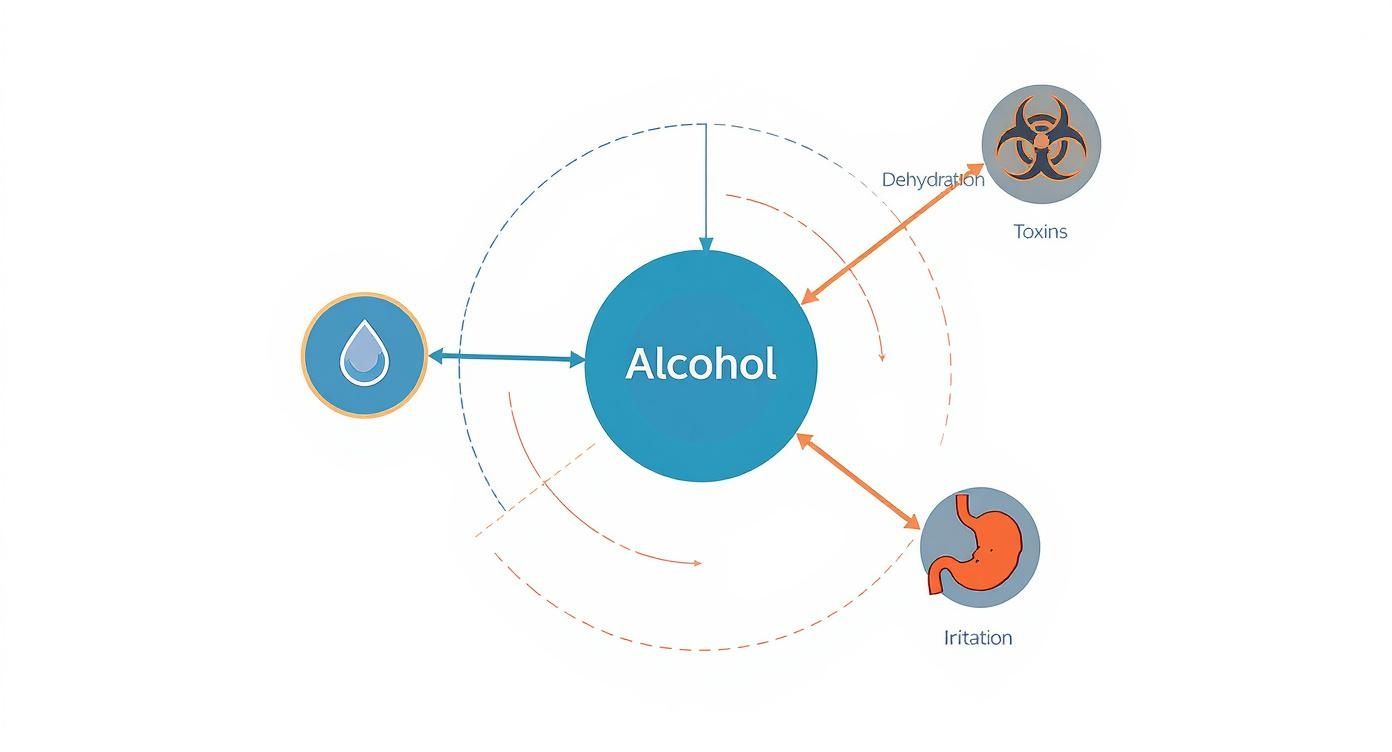
First off, alcohol is a toxin. Your body doesn’t care that it tastes like a fruity summer afternoon; it sees it as poison. Your liver has to work overtime to break it down using an enzyme called alcohol dehydrogenase. The problem? That process creates a byproduct called acetaldehyde, which is even more toxic than alcohol itself. It’s the real villain in this story—like the henchman that shows up after the main bad guy is dealt with.
Your body then frantically converts that acetaldehyde into something less nasty, but it takes time. If you drink faster than your liver can handle, that acetaldehyde builds up. Congratulations, you’ve just created a chemical hangover while you’re still sipping your drink. That’s why you feel queasy before you even hit the pillow.
Must Read
Dehydration: Your Body’s “Please Stop” Signal
Alcohol is a diuretic, which is a fancy way of saying it makes you pee like a racehorse. It blocks a hormone called vasopressin that tells your kidneys to hold onto water. So every time you raise that glass, you’re literally flushing water out of your system. By the end of the night, your brain has shrunk slightly from dehydration, pulling on the membranes around it. That’s not a headache—that’s your brain physically tugging on its own casing. No wonder you feel sick, right?
And here’s the kicker: dehydration also messes with your electrolyte balance, which controls your muscles and nerves. That is why you might get a shaky hand or a pounding heart the next morning. Your body is basically sending you an invoice for all the water you stole. You owe it. Big time.
The Blame Game: What You Drank Matters
Not all booze is created equal. Dark liquors like whiskey, brandy, and red wine contain more congeners—these are chemical byproducts of fermentation that give drinks their flavor and color. Congeners are like the annoying guests at a party: they overstay their welcome and make you sicker. Clear spirits like vodka or gin are generally cleaner, but don’t let that fool you. If you mix them with sugary sodas, your body fights off the sugar crash too, which adds fuel to the nausea fire.
 Why Do I Feel Sick After Drinking: Causes, Prevention & Tips – Upside
Carbonation is another sneaky culprit. Bubbly drinks like champagne or beer get absorbed into your bloodstream faster because the gas speeds things up. That means you get drunk quicker and feel sicker sooner. Ever noticed how a glass of bubbly goes straight to your head? It’s not just in your imagination—it’s physics and biology ganging up on you.
The Stomach’s Revenge
Your stomach lining hates alcohol. It irritates the mucosal layer, causing extra acid production. That’s what leads to that gnawing, nauseous feeling—it’s literally inflammation of your stomach lining, or gastritis. If you’ve ever thrown up after drinking, that’s your body hitting the emergency eject button. It’s a reflex, not a choice. Your brain says “We have a problem,” and your stomach says “I’ll solve it.”
And if you ate a heavy, greasy meal before drinking? You just made your stomach work double time. Food slows down alcohol absorption, but it also means your gut is digesting fat while trying to process poison. It’s like asking your staff to cook a five-course meal while the building is on fire. Not a great plan.
 Can You Drink Micellar Water? Safety Facts & Risks 2025
Why It Hits Harder With Age: The Unfair Truth
Remember when you could drink a bottle of cheap wine in college and wake up ready for a marathon? Yeah, those days are gone. As you age, your body produces less of that helpful enzyme (alcohol dehydrogenase). Plus, your liver simply gets lazier. Your metabolism slows down, and your body loses water content. That means the alcohol is more concentrated in your system, hitting you harder. It’s not just in your head—it’s a biological betrayal. Your 25-year-old self would be disappointed in your current hangover tolerance.
The “Tomorrow” Cost
Let’s not forget the inflammation hangover gives you. Your immune system gets activated by the toxins, releasing cytokines that cause fatigue, memory fog, and that general “everything hurts” sensation. This is why you might feel like you’ve been hit by a truck—your body is genuinely fighting a low-grade internal battle. And the worst part? You can only cure it with time, water, and regret.
Some people find relief with certain supplements or rehydrating drinks, but there’s no real magic cure. The only guaranteed way to avoid the sick feeling is to drink less—or drink smarter. Alternate with water, don’t drink on an empty stomach, and pace yourself. Your future self (the one curled up in bed at 3 AM) will thank you. Or, you know, you could just laugh at the irony: we voluntarily drink something that makes us feel terrible, and then wonder why we feel terrible. That’s peak human behavior, and I’m totally guilty of it too. Now go hydrate, you beautiful mess.
