What Does Lead Look Like In Water

So, my friend Jenna calls me the other day, absolutely freaking out. She’d just gotten her water test results back, and the number for lead was not good. “But the water looks...

So, my friend Jenna calls me the other day, absolutely freaking out. She’d just gotten her water test results back, and the number for lead was not good. “But the water looks fine!” she kept saying, practically yelling into the phone. I could picture her staring into a crystal-clear glass, waiting for it to turn into a glowing green sludge or something.
That’s the thing, right? We expect danger to announce itself. Like a neon sign or a bad smell. But lead in water is a total ghost—completely invisible, tasteless, and odorless. And honestly, that’s what makes it so creepy.
No, It’s Not Floating Around Like Glitter
You’re probably picturing little gray chunks or a metallic shimmer. Nope. That’s not how it works. Lead is sneaky. It dissolves into the water like salt or sugar does, except you can’t see it dissolve. One second it’s clinging to an old pipe, the next it’s just there in your glass, totally undetected.
Must Read
And here’s the kicker: if you’re looking for a color change or sediment, you’ll be staring at that glass all day. Clean-looking water does not mean safe water. I know, it feels like a betrayal of basic logic.
What Actually Happens to the Water?
Imagine an old pipe made of lead or soldered with lead. Water sits in it for a few hours—while you’re sleeping, or at work. That water starts chemically reacting with the pipe material. Little by little, atoms of lead break off and join the water molecules. They hitch a ride.
By the time you turn on the tap, you’re looking at a perfectly clear stream. You pour it, drink it, maybe make your morning coffee with it. And those invisible lead atoms are already inside your body. Wild, right? And by “wild,” I mean terrifying.
So, How Do You Find It If You Can’t See It?
You don’t “see” it—you test for it. This is where we have to get a little serious, but stay with me. You can buy a home test kit at a hardware store, but they’re not always dead accurate. The gold standard? Send a sample to a certified lab. It costs like thirty bucks and tells you the exact number.
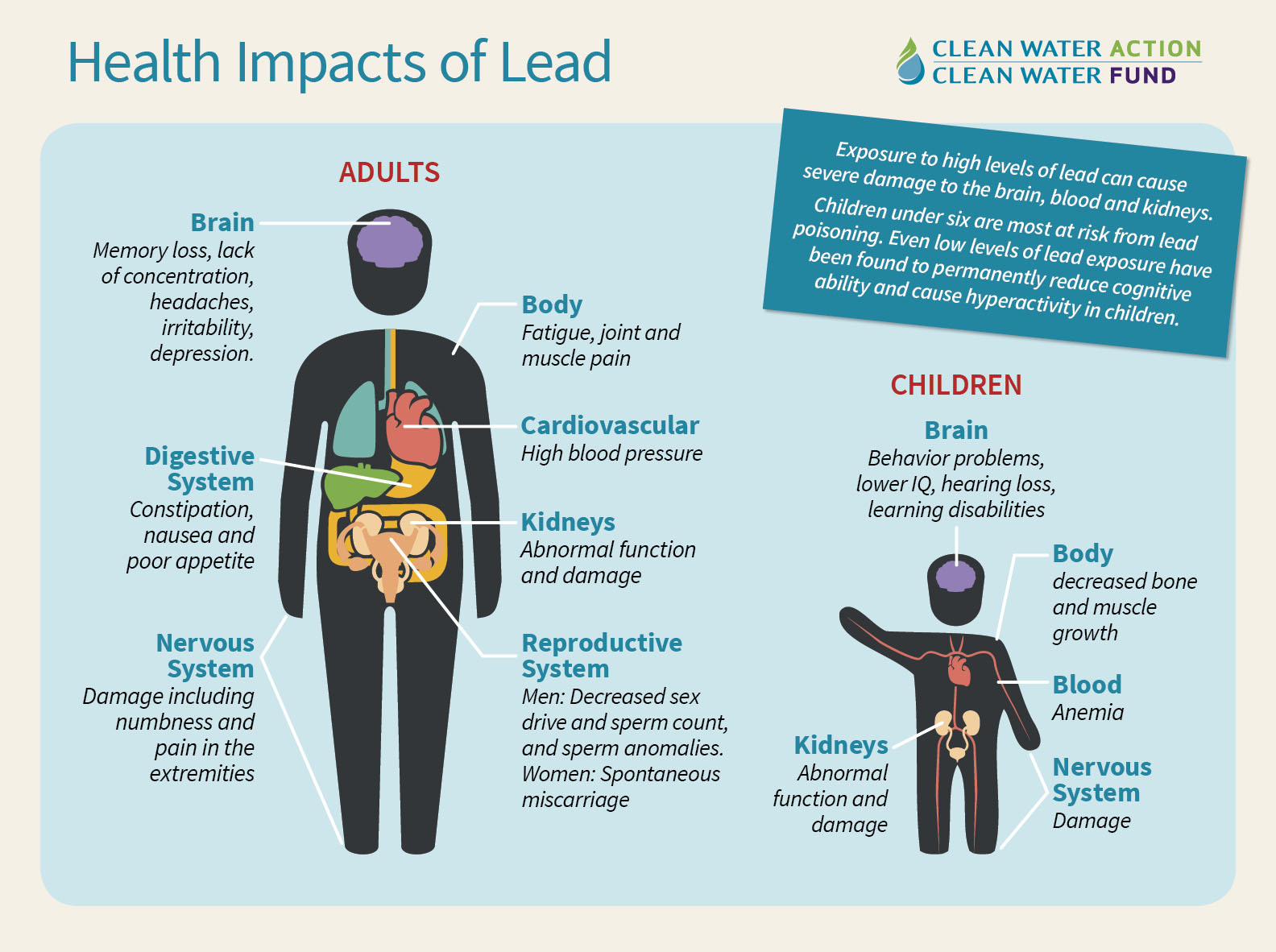 Lead In Water
Another trick? Look at your pipes—but not the water. If your home was built before 1986, there’s a solid chance you have lead pipes, solder, or brass fixtures. A scratch test on a pipe can reveal soft, silvery metal underneath. That’s lead, baby. Don’t lick it. (I’m only half-joking.)
But Wait, I’ve Seen “White Flakes” in My Water
Ah, good catch. Those white flakes or particles aren’t lead. They’re usually mineral deposits—calcium or magnesium—from hard water. Completely harmless, just annoying. Lead doesn’t leave a calling card. It’s the James Bond of contaminants: smooth, silent, and damaging.
If you ever see actual blue-green stains on your sink or tub, that’s a different story. That could be copper corrosion, which might mean your water is acidic. And acidic water? It loves to leach lead out of pipes. So those stains are a clue—not lead itself, but a “hey, check this out” warning.
The Ironic Part: We’re Taught to Trust Clean Water
Think about it. Every ad for bottled water shows a crystal-clear stream or a glacier. We’ve been conditioned to associate clarity with purity. But lead laughs at that logic. It hides in plain sight. It’s the ultimate paradox: the most dangerous water can look like the most beautiful.
I remember visiting a friend’s house with an old well. She bragged, “Our water is so clear, it’s like diamonds.” She had never tested it. I didn’t have the heart to tell her that diamonds are carbon, not a seal of safety. (I did make her get a test later. She was fine, by the way—but the anxiety was real.)
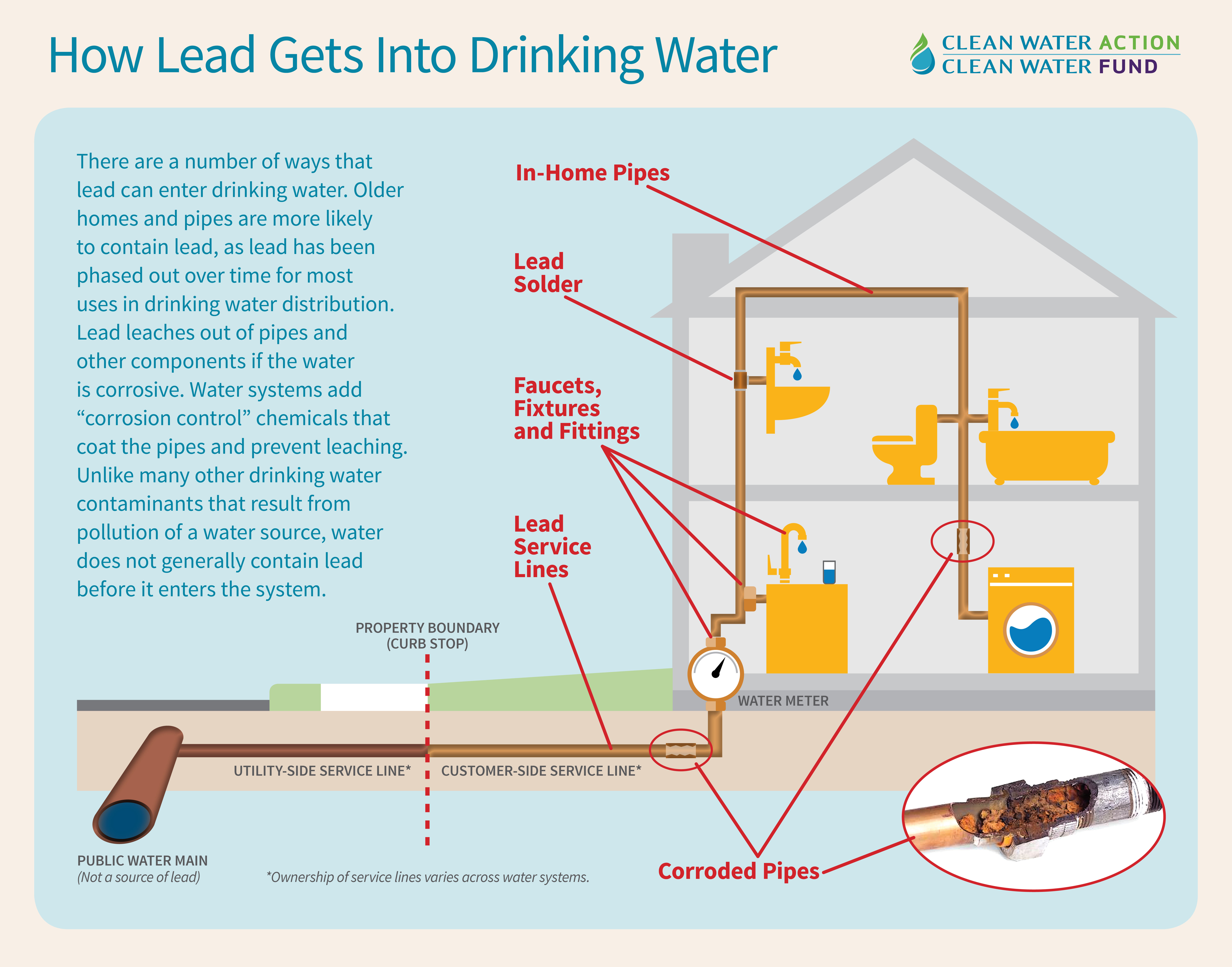 Lead In Water
Let’s Talk About Taste (Spoiler: There Isn’t One)
You might think, “Well, I’d taste something metallic, right?” Wrong again. Lead has no flavor at the low levels that cause harm. By the time you taste metal, you’re probably dealing with iron or copper, which are gross but less dangerous in the short term. Lead is a silent ninja. It doesn’t even trip your “yuck” reflex.
So if your water tastes like a penny? That’s not lead. That’s a whole different problem. But still—get it tested. Your taste buds are not a lab.
So What’s the Takeaway?
Don’t judge your water by its cover. It’s like the universe’s worst magic trick. You look at the glass, see nothing, assume everything is fine. But the trick is on your health. Get a test. It’s cheaper than a date night and way more important.
Jenna finally sent her water to a lab. Good news? Her lead level was low, but not zero. She now runs the tap for a minute before drinking (flushing the stagnant water) and uses a certified filter. And she still looks at her glass suspiciously. Good. A little paranoia is healthy when the enemy is invisible.
So next time you pour a glass of water that looks like pure celebrities, remember: appearances are deceiving. Lead doesn’t care about your aesthetic standards. It just wants a ride into your body. Don’t give it one.
