Does An Ro System Remove Fluoride

Let’s be real—most of us didn’t wake up one morning worried about fluoride. No, we were busy stressing about the weird metallic taste from the tap, or that mysterious orange r...

Let’s be real—most of us didn’t wake up one morning worried about fluoride. No, we were busy stressing about the weird metallic taste from the tap, or that mysterious orange ring in the toilet bowl. But then you read one article, or your neighbor Barb mentions it over the fence, and suddenly you’re Googling “does an RO system remove fluoride?” at 11 p.m., wearing pajama pants with a coffee stain on the knee. Welcome to the club.
The short answer is yes, a Reverse Osmosis system removes fluoride—like, really removes it. We’re talking about 90 to 95 percent of that stuff, gone. Think of it as the bouncer at a very exclusive club: fluoride is wearing cargo shorts and a fanny pack, and RO water is the velvet rope. Not getting in tonight, buddy.
How It Actually Works (In Normal People Terms)
Imagine you’ve got a colander, and inside that colander you’ve placed a super-fine mesh sock. Now pour a gallon of muddy pond water over it. The mud? Gone. The water? Drips through clean. That’s basically RO, except the mesh is tiny enough to catch individual fluoride ions—which are smaller than a speck of dust. It’s like trying to trap a mosquito with a chain-link fence, but somehow doing it anyway.
Must Read
I’ve got a buddy, Dave, who installed an RO system under his sink. He called me after the first glass, yelling, “This water tastes like nothing! It’s the best nothing I’ve ever had!” And he’s right. RO water is so stripped-down it’s almost boring. But boring is good when you’re worried about what’s not supposed to be there.
But Wait—Is Fluoride Even Bad?
This is where the conversation gets sticky, like honey on a hot counter. On one hand, fluoride is why your dentist gives you a sticker and says “great job!” It helps prevent cavities. On the other hand, there’s a whole camp of folks who think too much fluoride turns your bones into chalk. I’m not picking sides here—I’m just saying an RO system gives you the choice. You want it? Add a drop of fluoride later. You don’t? Skip it. It’s like having a salad bar for your water.
Let me tell you about my cousin Jenna. She’s a conspiracy theorist in the best, most harmless way. She bought an RO system because she read that fluoride was “government mind-control juice.” I asked if she felt any different after a week. She said, “Not really, but my ice cubes are clearer.” Sometimes the best proof is just a clear ice cube.
 Does Reverse Osmosis Remove Fluoride From Water? And How?
The Downside You Didn’t Ask About
Here’s the groaner: RO systems are thirsty. For every gallon of filtered water you get, they dump about three gallons down the drain. It’s like paying for a steak and only eating the fat. If you’re on a water bill or live in drought territory, your wallet might start crying. But hey—you wanted the fluoride gone. Everything has a price, and sometimes that price is a slightly higher August water bill.
Also, RO systems are slow. You won’t be filling a pitcher for a dinner party in thirty seconds. You’ll stand there, watching the tank refill, wondering if your life has peaked. I timed mine once: two minutes for a full glass. That’s not slow enough to be a crisis, but it’s slow enough to make you rethink your life choices.
What About Those “Remineralization” Filters?
Oh, you fancy, huh? Some RO systems come with an extra filter that adds back good minerals like calcium and magnesium. It’s like taking all the sugar out of a soda, then adding a little bit of nice honey. You get the fluoride out, but your water still tastes “alive.” I tried one once. It tasted like… water. But expensive water. The kind that comes in a glass bottle with a French name you can’t pronounce.
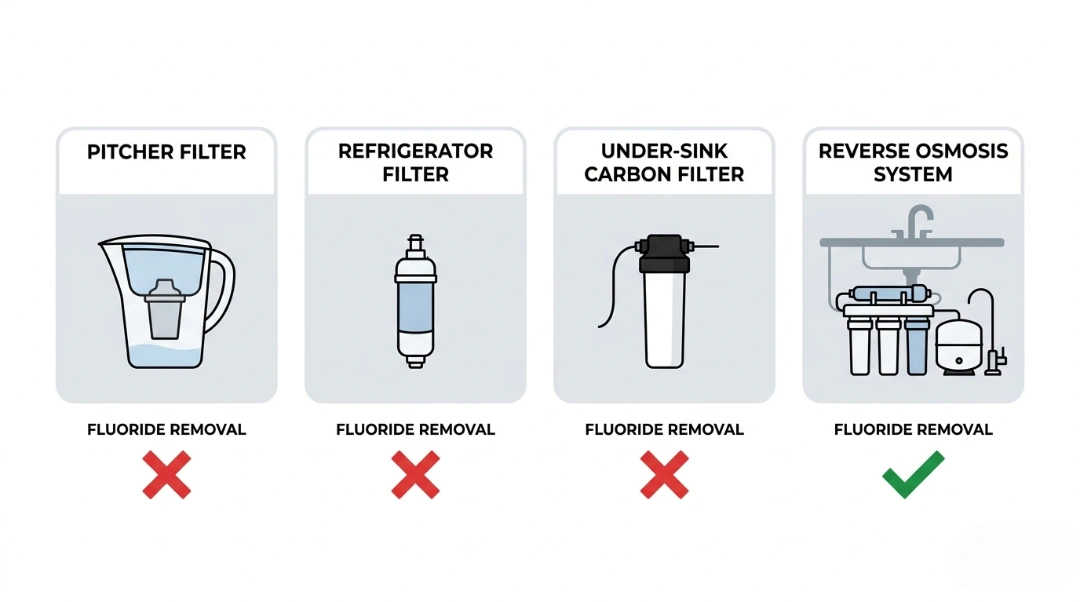 Does Reverse Osmosis Remove Fluoride? Explained
If you’re the type who likes your water to have a personality, get the remineralization stage. If you just want the fluoride gone and don’t care if the water tastes like a blank canvas, skip it. Either way, the RO is doing its fluoride-removing job. It’s a workhorse, not a show pony.
The Final Sip
So, does an RO system remove fluoride? Yes, emphatically yes. It’s the nuclear option for water purification. But it’s also a little wasteful, slow, and effects a lot of decisions. You have to decide if the trade-offs are worth it. For me? I sleep better knowing my water is as empty as a politician’s promise—except clean and fluoride-free. And that’s a trade I’ll take any day.
Now, go fill your glass. No, not from the tap. From the RO system. You’ve earned this boring, perfect water.
