How To Use Water Softener Pellets

So, my friend Dave the plumber once showed up at my door looking like he’d wrestled a limestone golem. He was covered in a white, crusty residue, and he just sighed, “Your wat...
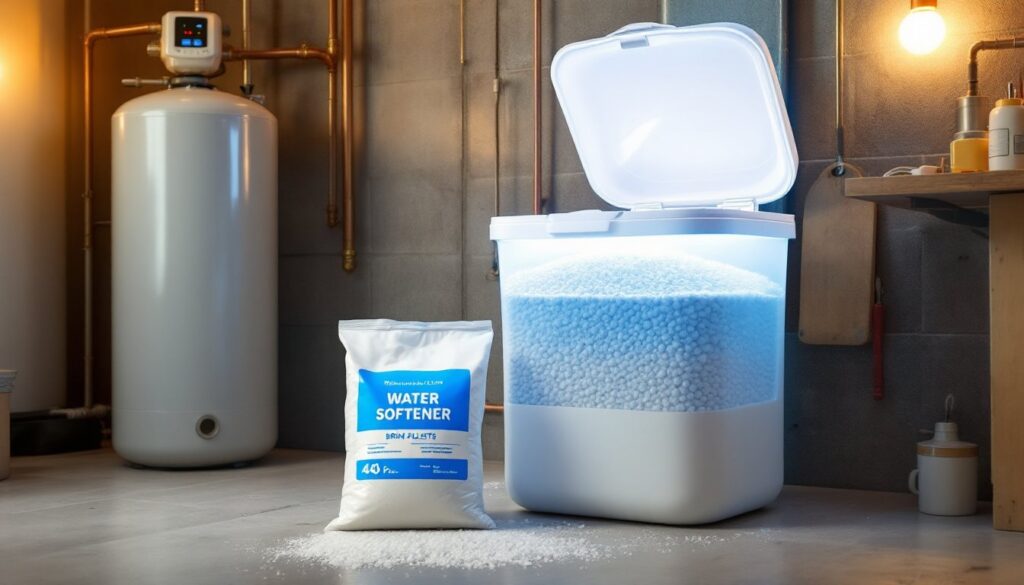
So, my friend Dave the plumber once showed up at my door looking like he’d wrestled a limestone golem. He was covered in a white, crusty residue, and he just sighed, “Your water heater is weeping calcium. It’s basically crying rocks.” That’s when I learned that hard water isn’t just annoying—it’s a tiny, silent apocalypse happening in your pipes. And the only way to stop it? Water softener pellets. Buckle up, because we’re about to make your water significantly less angry.
Think of water softener pellets as tiny, sacrificial soldiers for your plumbing. They’re made of sodium chloride (a fancy name for salt), and they sit in a big tank waiting for a mission. The mission? To swap out the nasty calcium and magnesium ions in your water for nice, harmless sodium ions. Without them, your showerheads clog, your dishes get spots, and your laundry feels like sandpaper—which I’m sure none of you are into, right?
Step One: Know Your Enemy (and Your Machine)
First, open your softener’s brine tank—that’s the big plastic bin usually next to the main filter tank. If it looks like a swamp with salt crystals, do not panic. That’s normal. But if you see a solid block of salt that could double as a paperweight, you’ve got a “salt bridge,” and my heart goes out to you. Break that up with a broom handle before adding new pellets.
Must Read
Now, check the water level. It should be a few inches above the salt, not below it. If it’s dry, your softener is basically performing interpretive dance instead of filtering water. You need moisture to make the brine solution that does all the chemical wizardry.
Step Two: Picking Your Pellets (Yes, It Matters)
You’ll see two main types at the store: solar salt (from evaporated sea water) and evaporated salt (mined from ancient underground deposits). I always go with evaporated pellets because they’re purer and leave less gunk in the tank—like choosing a clean friend over a messy one. Avoid “rock salt” for de-icing driveways; it’s full of dirt that’ll turn your softener into a mud pit.
Here’s a pro tip: always buy pellets, not crystals. Crystals tend to dissolve too fast and clump together into a salty brick that your softener will hate. Pellets are uniform, stack nicely, and last longer. Your water will thank you, I promise—even if it can’t speak.
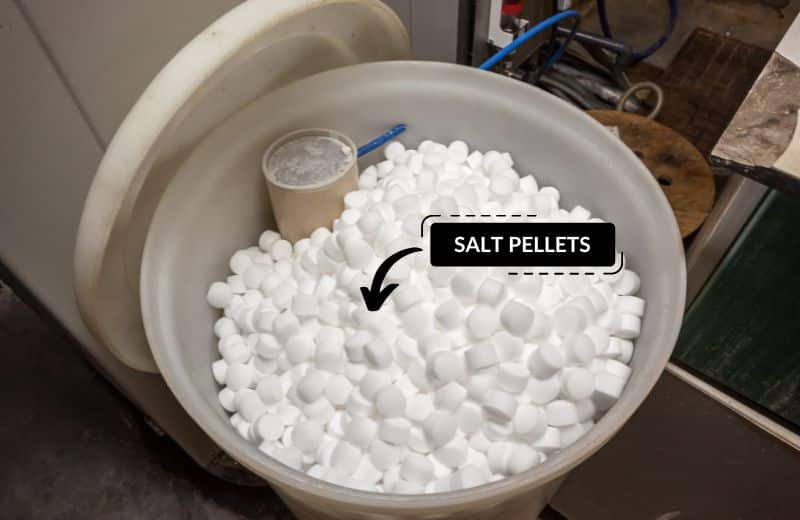 5 Gal Bucket Funnel Salt Depot Clean Choice Water Softener Salt Pellets
Step Three: The Filling Dance
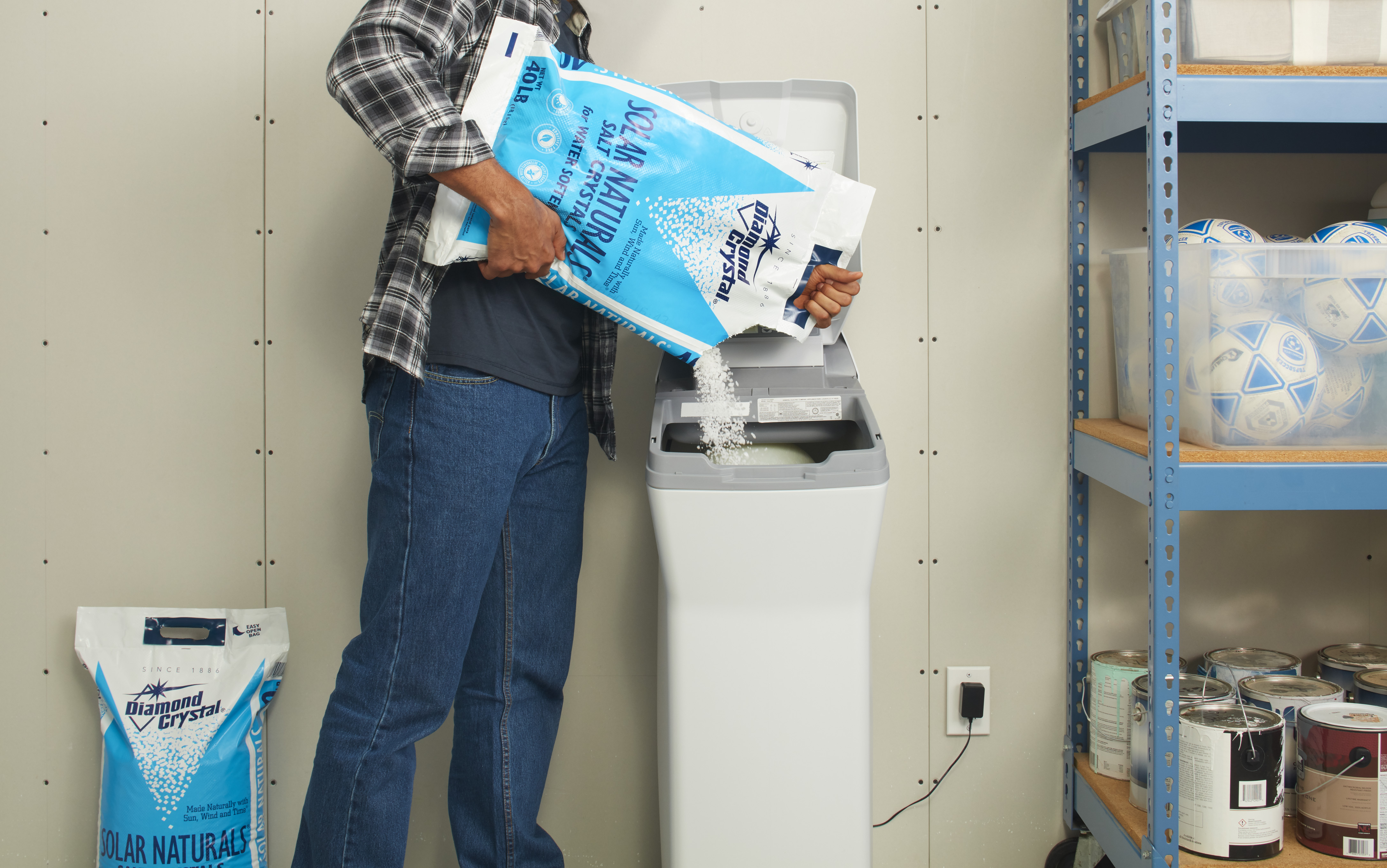
Pour the pellets directly into the brine tank. Don’t be shy—fill it up to about halfway or two-thirds full. It’s not an exact science, but don’t overfill because the pellets need room to dissolve and move around. If you pack it to the brim, you’ll get salt bridges faster than you can say “hard water nightmare.”
Oh, and a confession: I once spilled an entire 40-pound bag on my basement floor. It sounded like a hailstorm wrapped in a tragedy. So, maybe do this over a towel or an old sheet. C’mon, learn from my mess.
Step Four: Let the Machine Do Its Thing
After you pour in the pellets, your water softener will automatically run a regeneration cycle—usually overnight. This flushes the brine through the resin beads, recharging them for their next heroic calcium-removal mission. You don’t need to press anything unless your unit is a manual relic from the 1980s. If it is, consult the manual or call someone who actually reads manuals (not me).
Check the salt level once a month. I mark my calendar with a little “salt day” emoji. You’ll know it’s time to refill when only a few inches of pellets remain at the bottom of the tank. If you see water but no salt, your softener is crying for help—and your dishes will start wearing those ugly white spots again.
 How To Use Water Softener Salt Pellets at Nancy Sheridan blog
Common Disasters (And How to Laugh Them Off)
What if your water suddenly tastes salty? You probably overfilled the tank, or the softener is stuck in regeneration mode. Don’t drink that water—just run a cycle manually to flush it out. If the salt keeps clumping into a bridge, add a cup of citric acid (yep, the stuff in Lemonheads) to break it down. It’s weirdly satisfying to watch science fight science.
And if you forget to add pellets for six months, don’t shame yourself—I’ve been there. Your softener won’t explode, but your water will go back to being a mineral bully. Just restart the process, and remember: consistency is cheaper than replacing a water heater. Your wallet will high-five you.
The Final Sip (Or Shower)
Using water softener pellets isn’t rocket science—it’s just salty, solved home maintenance. The payoff? Silky hair, spotless glasses, and pipes that won’t turn into calcium-crusted arteries. Next time you take a luxurious, non-chalky shower, remember Dave the plumber. He’s probably wrestling a geyser of limescale somewhere, but you? You’ve got this.
Now go buy some pellets, pour them in, and pat yourself on the back for being an adult who actually takes care of their appliances. I’m proud of you—and your water softener is, too. (Shh, don’t tell it I said that.)
