How To Filter Nitrates From Water

So, my neighbor, let’s call him Bob because that’s his name, decided to become a gentleman farmer. He bought thirty fancy goldfish, built a koi pond the size of a Volkswagen,...

So, my neighbor, let’s call him Bob because that’s his name, decided to become a gentleman farmer. He bought thirty fancy goldfish, built a koi pond the size of a Volkswagen, and stocked it with water straight from the hose. Three days later, thirty little orange bodies were floating belly-up like terrible, shiny confetti. Bob was devastated.
Turns out, his well water was a nitrate cocktail. It was basically a Gatorade for algae but poison for fish. Don’t worry, this isn’t a tragedy about Bob’s fish; it’s a guide for you—because you are probably sipping the same stuff.
Nitrates are sneaky. They’re odorless, colorless, and tasteless, yet they’re the number-one contaminant in rural well water. The EPA says anything over 10 mg/L is a no-go for drinking, but let’s be real—who tests their water before their morning coffee? You should, but more on that later.
Must Read
What The Heck Are You Filtering For?
Nitrates (NO3) are basically nitrogen with extra oxygen atoms. They come from fertilizer runoff, septic tanks, and even your own lawn’s “quick green” solution. Your body converts them to nitrites, which mess with your blood’s ability to carry oxygen. Not great for babies, pregnant folks, or anyone who enjoys breathing.
The good news? You don’t need a lab coat to fix this. You just need the right tool for the job—and a little bit of patience.
The Myth-Busting Section (Sorry, Brita)
Let’s kill a myth right now: Your standard fridge filter won’t touch nitrates. That carbon block is great for chlorine and bad tastes, but nitrates are tiny little ions that laugh at activated carbon. It’s like trying to catch mosquitoes with a fishing net. You need something with a smaller mesh, my friend.
Boiling water? Nope. That actually concentrates the nitrates as the water evaporates. You’d be making a nitrate soup. Please don’t do that.
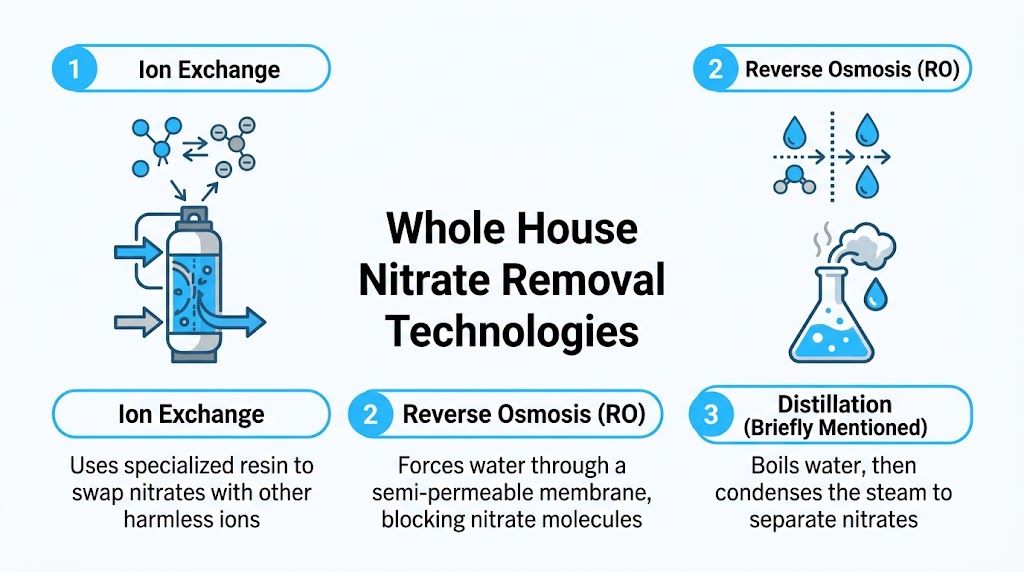
Method #1: The Heavy Lifter – Reverse Osmosis (RO)
This is the gold standard. RO systems push water through a semi-permeable membrane with pores so tiny, they block nitrates, lead, arsenic, and even some viruses. It’s essentially a snooty bouncer for your water supply. You can get an under-sink unit for around $200-400. It works, but it’s slow and wasteful. Expect to pour about three gallons of water down the drain for every one gallon you drink.
 Best Whole House Nitrate Filter Options for 2026
If you’re renting or hate DIY installation, buy a countertop RO unit. They plug in, recirculate the waste water, and look like a sci-fi prop. Your landlord will never know.
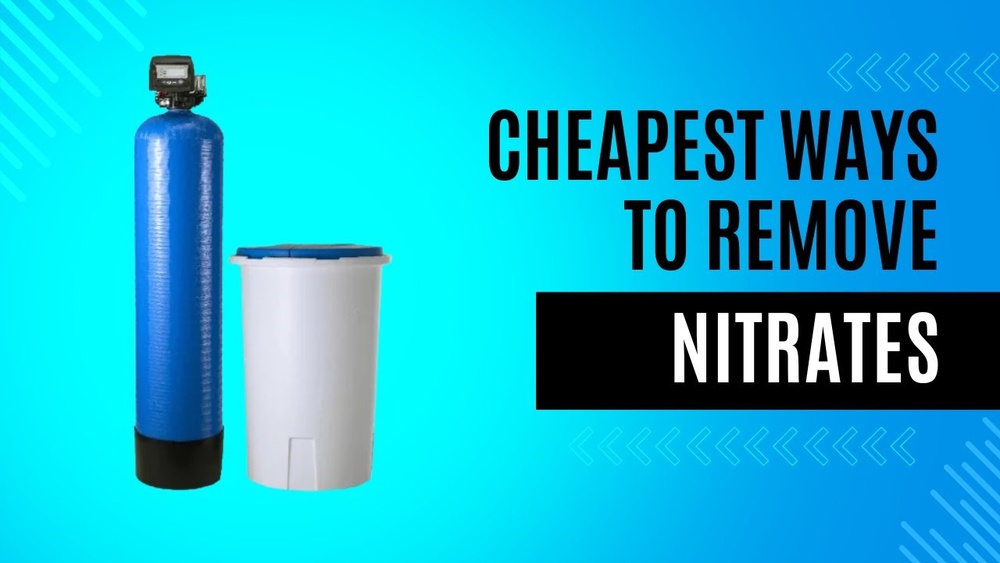
Method #2: The Old-School Fix – Anion Exchange Resins
This is chemistry in a can. Anion exchange tanks swap nitrates for harmless chloride ions (like table salt). You’ve seen these in whole-house systems or big water softeners. The catch? The resin eventually gets full and needs to be “regenerated” with a brine solution. This means you’re managing salt bags and backwash cycles. It’s not hard, but it’s a chore.
Most people pair this with a carbon filter to catch the salt taste. Yes, irony: you filter out chemicals, then add salt, then filter again. Welcome to water treatment.
Method #3: The No-Brainer – Distillation
Distillers boil water and catch the steam. Since nitrates stay behind in the boiling chamber (they’re too heavy to evaporate), you get pure, flat-tasting water. Pro tip: The water tastes flat because it’s devoid of oxygen and minerals. Shake it in a bottle before drinking, or add a pinch of sea salt. Seriously. It makes it taste like mountain spring water.
Distillation is energy-hungry (it uses electricity to boil), and it’s slow. But it’s also cheap to buy ($100-$150) and requires zero installation. Perfect for renters or the easily intimidated.
 How To Filter Nitrates From Water: Effective Methods That Work - RO System
The “I’m Not Ready To Buy Gadgets” Option
Go to your local grocery store and look for the big, refillable water jugs. Many have a “RO water” or “purified water” dispenser. It costs about 50 cents a gallon. That’s cheaper than bottled water and honestly, it’s often better because those machines are maintained by professionals.
I do this. I keep a five-gallon jug in my trunk and fill up every Sunday while my wife shops for kale I will never eat. It works, it’s lazy, and it’s delicious.
How To Know If You Even Have A Problem
You can’t taste nitrates, so stop sniffing your tap water. Buy a test strip kit online (they’re like $15 for 50 strips). Dip it, wait 60 seconds, and compare the color to the chart. If it’s dark pink or purple, you’ve got levels above 10 ppm. That’s your cue to act.
Test once in the spring after the first rain, and once in the late summer. Those are peak nitrate times because of fertilizer runoff. Nobody wants a surprise chemistry lesson in their morning oatmeal.
The Final, Practical Takeaway
You do not need to turn your kitchen into a laboratory. If you’re on a budget: buy the test strips, then buy distilled water for drinking. If you drink a lot of coffee or tea (like me, three pots a day), get a countertop RO unit. The taste difference is unreal—your coffee will taste like it came from a $500 pour-over setup.
Bob? He now uses a small RO unit just for the fish tank. The koi are thriving, and he’s stopped naming them after his ex-girlfriends. Progress, people. Your kidneys don’t have to work overtime just because your well water is a little extra. Filter it, drink it, and move on with your life.
