How To Take A Water Meter Reading

So, picture this: last week, I got a letter from my water company that looked suspiciously like a bill from a small, angry country. I’d been on autopilot, paying the same amou...
So, picture this: last week, I got a letter from my water company that looked suspiciously like a bill from a small, angry country. I’d been on autopilot, paying the same amount for months, and suddenly they wanted a “real reading.” Cue my panic—a weird mix of fearing a leak the size of Lake Superior and the dawning horror that I had no clue where my water meter even lived.
I found it huddled against the foundation, looking like a forgotten lawn ornament. It was a dusty plastic dome, staring up at me, silent and judgmental. I realized then that taking a water meter reading isn't just a chore—it’s a small act of defiance against mysterious bills. And honestly? It’s way easier than assembling IKEA furniture.
First, Find Your Meter (It’s Playing Hide and Seek)
Your water meter is probably in one of three places, and it’s rarely a guest of honor. It’s typically outside near the street in a concrete box with a metal lid, or inside your basement or garage, right where the main water pipe enters the house. If you’re in a warm climate, check a box built into the sidewalk or front yard.
Must Read
Pro tip for the brave: If you find a metal lid on the ground, you don’t need a crowbar. Many just have a small slot to hook a screwdriver into. Pop it open—gently!—and you’ll see a small, mechanical or digital face. If you see a spider the size of your thumb, just nod politely. You’re the guest here.
The Reading Itself: It’s Not Ancient Greek
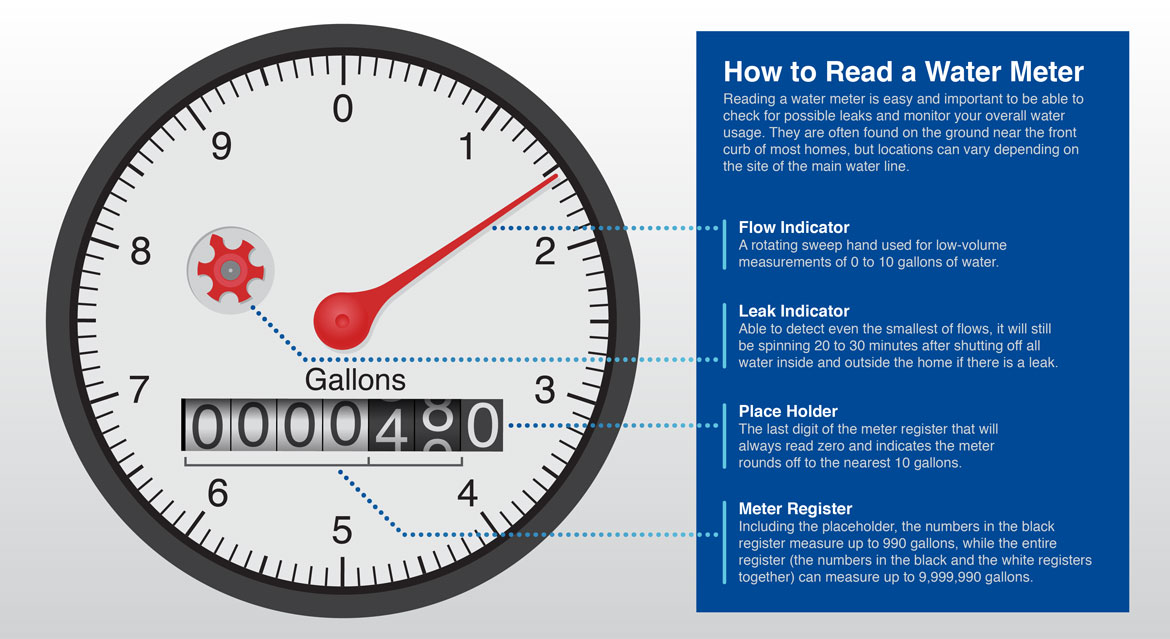
Once you find the meter, wipe off the grime (because dust is the enemy of clarity). You’ll see a series of dials and digits, or a simple digital counter. The most common type looks like an odometer in a car—just black and white numbers. That’s your reading.
Ignore the red numbers (or the dials with smaller tick marks). Those measure tenths of a gallon, and the water company doesn’t care about those until you’ve used a thousand. The big black numbers are what matter. Read them left to right, and write them down exactly as they appear.
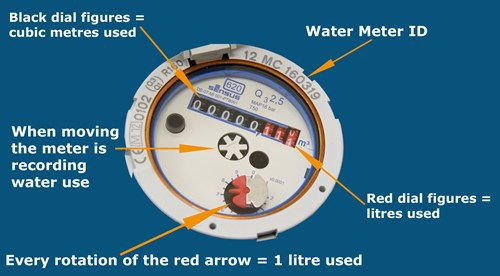 Reading your meter - Kāpiti Coast District Council
Did you know? Some old-school meters have a sweep hand, like a clock. If it’s spinning like a hummingbird on espresso, you might have a leak. Don’t worry, it’s not a ghost—probably.
The Two Common Types: Dial vs. Digital
If you see a dial with multiple circles numbered 0-9 (and each circle has one pointer), you’re looking at a metric dial meter. This is where people get nervous. Don’t be. You just read the number each pointer is pointing to, again from left to right. If the pointer is between two numbers, always take the smaller number.
For example: If the first dial looks like it’s pointing at 3, the second at 8, the third at 1—your reading is 381. Simple, right? The only trap is when a pointer looks like it’s exactly on a number. Then, you look at the next dial to the right. If that next dial hasn’t passed zero, you use the lower number. It’s like reading a clock, but with less time pressure.
Send It Off (Without Overthinking)
Now you have a string of numbers—usually 5 to 7 digits. That’s all the company needs. Take a clear photo with your phone as proof. Trust me, that photo is your best friend if there’s a billing dispute later. Then, submit the reading online, via an app, or by calling their automated line.
 How to Read a Water Meter | Billing, Leaks & Overconsumption
Side note: If your meter is digital (LCD screen), you might need to press a button to wake it up. Look for “Cust Read” or a big number. Sometimes it’ll flash between different readings—just write down the one that looks like total consumption, not a timestamp. It’s usually the one with no decimal points.
Why Bother? (The Real Reason)
Look, ignoring your water meter is like ignoring a slow leak in your roof—it will eventually get expensive. By reading it yourself, you can spot a sudden spike in usage before you get a bill that makes you choke on your coffee. I once caught a running toilet this way—saved about $40 that month.
Plus, it makes you feel ridiculously competent. You, the water wizard, who stares into a hole in the ground and tells the utility company the truth.
One Final, Ironic Favor
Before you close that meter lid, check if the dial is still spinning with all your taps off. If it is, you’ve got a leak. If it’s not, congratulations—you just performed a tiny, boring miracle. Now go wash that dirt off your hands, and maybe treat yourself to a nice glass of tap water. You’ve earned it.
