How To Make Ionized Water At Home

Have you ever wondered if your tap water could be, well, a little more sparkling? Not with bubbles, but with a little extra zzz-zing for your health and your morning routine?...

Have you ever wondered if your tap water could be, well, a little more sparkling? Not with bubbles, but with a little extra zzz-zing for your health and your morning routine? Well, put down the fancy plastic bottle, because we’re about to get a little science-y—in the most fun way possible!
Making ionized water at home is like giving your H2O a tiny, healthy upgrade. It’s not about turning it into rocket fuel; it’s about adjusting its pH level to make it more alkaline. Think of it as turning a neutral handshake into a high-five for your cells.
Here’s the secret: ionized water is rich in antioxidants. That’s the stuff that helps your body fight off oxidative stress—the “rust” of daily life. It’s like giving your insides a little anti-aging spa treatment, one sip at a time.
Must Read
Your At-Home Ionizer: No Degree Required
You don’t need a lab coat or a gizmo that costs as much as a car. The simplest way? Lemon and baking soda. I know, I know—it sounds like a baking project gone wild. Stick with me!
Fill a glass with filtered water (tap is fine, but filtered is cleaner). Squeeze in the juice of half a fresh lemon. Wait—lemons are acidic, right? Yes, but your body processes them as alkaline. It’s a neat trick.
Now, add a tiny pinch—and I mean tiny—of baking soda. Not a tablespoon, just a whisper of white powder. Stir gently until it fizzes. That fizz is chemistry at play, releasing carbon dioxide and raising the pH.
The “DIY Gadget” Method (More Fun!)
If you want to feel like a mad scientist, grab a glass pitcher and a copper coil. Yes, a simple copper pipe or coil from a hardware store. Wash it well, drop it in the pitcher, and let it sit for 4 to 8 hours.
The copper acts as a natural ionizer, releasing tiny, beneficial ions into the water. This method also leaves you with water that boasts a subtle, clean taste. Even better? It’s a zero-electricity upgrade for your kitchen.
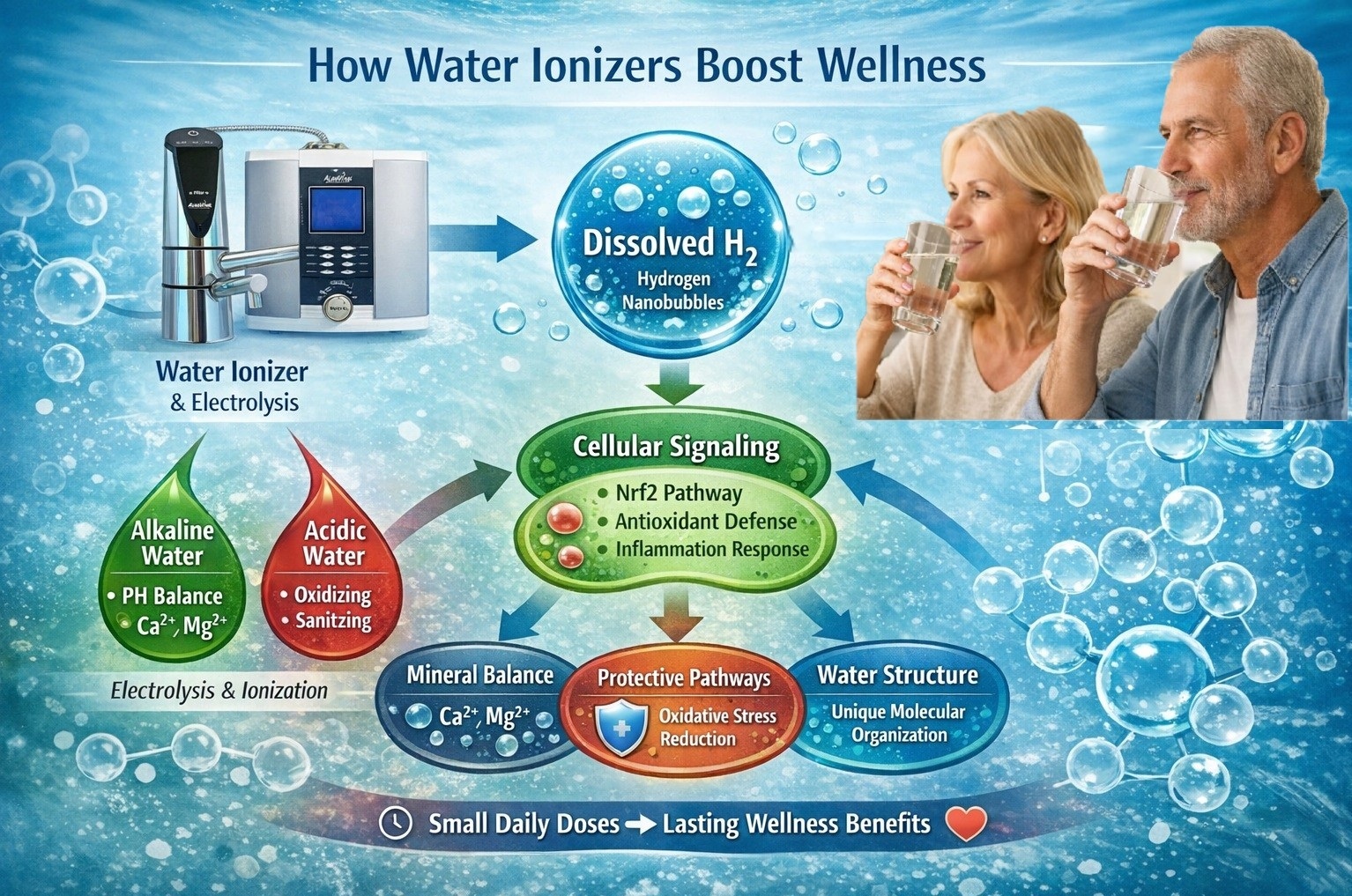 The Science of Ionized Water, Hydrogen Water, and Water Structure
You can also use coral calcium stones—little mineral rocks you drop into your water bottle. They slowly release alkaline minerals like calcium and magnesium. Pop one in your reusable bottle, and you are literally sipping on a stem-free health boost.
Why Bother? (The Fun Part!)
People who sip ionized water often say they feel more energetic and less groggy in the afternoon. Is it a miracle? No. Is it a gentle, continuous nudge for your body to feel better? Absolutely.
And here’s the kicker: it makes your coffee and tea taste smoother. The higher pH cuts through bitterness. You’ll be sipping a latte that feels like it’s hugging your taste buds.
You can also use it to wash your veggies. Ionized water helps pull out pesticides and dirt more effectively than plain water. It’s like giving your salads a tiny, refreshing power-wash.
A Few “Don’t”s Before You Get Zesty
Don’t overdo the baking soda. A little goes a long way; too much tastes like a salt lick. Start with a pinch, test the taste, and always, always sip it slowly.
 Alkaline Ionized Water -- Learning About Water Ionizers: March 2026
Store your ionized water in a glass container, not plastic. The ions can interact with plastic over time. Think of it as treating your special water with the respect it deserves.
And please, don’t use this as a substitute for medical treatment. Ionized water is a fun, uplifting habit, not a magic cure. Your doctor is still your best friend for health advice!
The Sparkling Takeaway
There’s something deeply satisfying about crafting a better version of a basic necessity. You aren’t just drinking water; you are drinking your own curiosity and creativity. That tiny fizz is a little cheer for your cells.
So go ahead—squeeze a lemon, drop in a stone, or coil that wire. Turn your kitchen into a tiny wellness lab. You might just find that the best energy boost comes not from a can, but from a glass you made yourself.
And when you take that first sip, remember: you didn’t just make water. You made possibility. Now, what else can you create with a little curiosity and a splash of joy? Stay thirsty for discovery.
