How Does Ph Affect Water Quality

Ever taken a sip of water that tasted a little off? Maybe it was super bitter, or weirdly metallic, like you were licking a penny. That’s not just your imagination—that’s pH d...

Ever taken a sip of water that tasted a little off? Maybe it was super bitter, or weirdly metallic, like you were licking a penny. That’s not just your imagination—that’s pH doing its thing. It’s one of those science-y terms, but honestly, it’s just a way to measure how acidic or basic your water is.
Think of pH like a mood ring for water. The scale runs from 0 to 14, where 7 is perfectly neutral—that’s pure, balanced water. Numbers below 7 mean it’s acidic (think lemon juice), and numbers above 7 mean it’s basic or alkaline (think baking soda). But here’s the kicker: the scale is logarithmic, so a change from 7 to 6 isn’t just one step—it’s ten times more acidic. Kinda wild, right?
So why should you care about this invisible number? Because pH is like the gatekeeper of your water quality. It controls everything from how your pipes feel to whether that fish in the lake can breathe. Let’s dive into why it’s way cooler than a high school chemistry pop quiz.
Must Read
Your Pipes Are Begging for Balance
First stop: your home plumbing. If your water’s pH dips too low (say, under 6.5), it becomes corrosive. Imagine a tiny, invisible army of acid molecules nibbling away at your copper pipes. Yikes.
That corrosion doesn’t just wreck your pipes—it leaches metals like lead and copper into your drinking water. Suddenly, that glass of water has a metallic aftertaste and maybe some stuff you don’t want in your body. On the flip side, water that’s too high (over 8.5) can leave scale—a chalky white crust—on your faucets and inside your kettle. It’s like your water is trying to build a tiny limestone cave in your coffee maker.
Most municipal water is treated to sit right around 6.5 to 8.5 on the pH scale. That sweet spot keeps your pipes safe and your water tasting clean. But if you’re on a well? You might want to test that pH yourself—your pipes will thank you.
What About the Fish?
Now, let’s take a trip to your local pond or river. For aquatic life, pH is like the volume knob on their entire world. Most freshwater fish, like trout or bass, are happiest between 6.5 and 9.0. When pH drops too low—maybe from acid rain or runoff—fish can get stressed out, their gills get damaged, and they can’t absorb oxygen properly. Not cool.
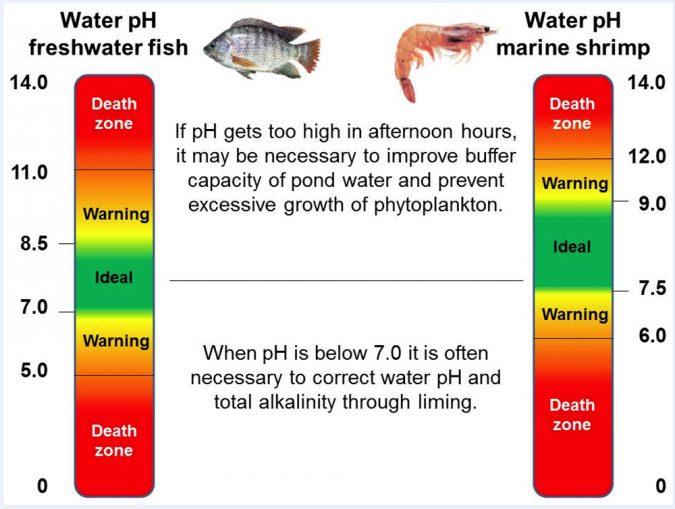 The oft-overlooked water quality parameter: pH - Responsible Seafood
Ever heard of a “fish kill”? That’s when a sudden pH shift wipes out an entire population. It’s dramatic, but it happens. Even tiny changes, like a drop from 6.8 to 6.0, can mess with a fish’s ability to reproduce or find food. Imagine trying to survive in a pool that’s slowly turning into vinegar—yeah, they’re not fans.
On the other end, super basic water (like from some natural springs) can be just as rough. It can burn their fins or make the water too cloudy for them to see. So, the next time you skip a rock at the lake, remember: that water’s pH is a lifeline for every creature in it.
Your Taste Buds Are pH Detectives
Believe it or not, your tongue is a decent pH meter. Water that’s too acidic often tastes sharp or sour, like a weak lemonade gone wrong. Too basic, and it might feel slippery or taste soapy—ever accidentally gotten dish soap in your mouth? That’s the vibe.
This matters for more than just fancy bottled water. If your tap water suddenly tastes funky, your pH could be off. For instance, well water in areas with lots of decaying vegetation (like peat bogs) can be naturally acidic—think pH 4.0. That’s the same as apple juice! It won’t hurt you in small sips, but it’s not exactly refreshing, is it?
 What Causes Low Ph In Well Water at Howard Crystal blog
Testing your water’s pH is super easy. You can grab a cheap test strip at a hardware store, dip it in a glass, and watch the color change. It’s like a mini science experiment on your countertop. And honestly, it’s kind of addictive—you’ll start testing everything: your fish tank, your rain barrel, maybe even your morning coffee.
The Big Picture: Why It’s Worth Knowing
So, pH isn’t just a number—it’s a storyteller. It tells you if your water is aggressive or gentle, safe or risky. A change in pH can hint at bigger problems, like pollution from farms, factories, or even a broken septic tank. Low pH in a lake? Might be acid rain. High pH in a river? Could be algae blooms from fertilizer runoff.
Here’s a fun comparison: think of your body’s pH as a careful dance. Your blood likes to stay right around 7.35 to 7.45—super narrow range. When you drink water that’s way out of whack, your body has to work harder to balance things out. It’s like trying to cool down a hot room by opening only one tiny window—your body handles it, but it’s not ideal.
Ultimately, understanding pH makes you a smarter water drinker. You’ll know why that mountain spring tastes so crisp (pH around 6.5–7.5, often with minerals) or why bottled “alkaline water” costs three bucks (it’s usually just pH 8.0–10.0, with a marketing twist). The next time someone says “pH is boring,” just hand them a glass of noticeably sour water and ask, “Still boring?”
Water is alive in a way—it changes, reacts, and responds to the world around it. And pH is just one simple, fascinating way to listen to what it’s saying. So grab a test strip, make a guess, and see if your water is as chill as you think.
