How Much Is It To Get A Well Dug

So, you’ve decided to become the proud owner of a hole in the ground that spits out water. Welcome to the world of well digging, where your backyard suddenly becomes a geologi...
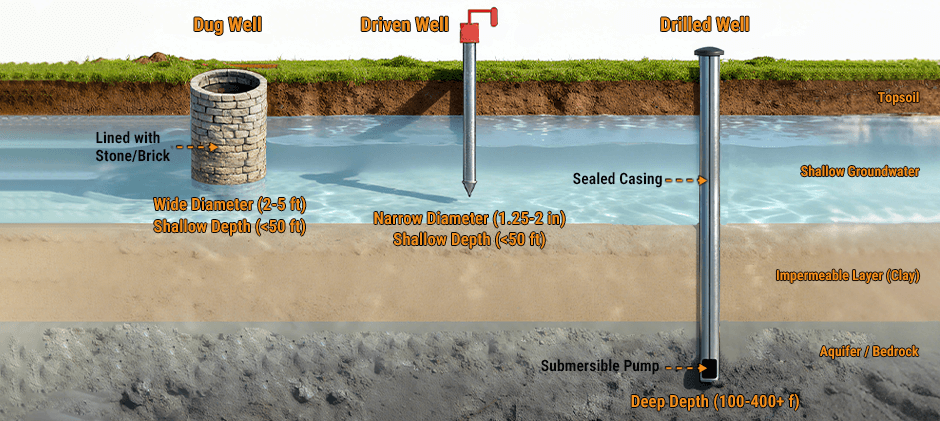
So, you’ve decided to become the proud owner of a hole in the ground that spits out water. Welcome to the world of well digging, where your backyard suddenly becomes a geological lottery ticket. The first question everyone asks is: “How much is this going to cost me?” And the answer, my friend, is roughly somewhere between “a used Honda Civic” and “a brand new Honda Civic with heated seats.”
The Ballpark: Your Wallet’s First Punch
Nationally, you’re looking at anywhere from $3,500 to $15,000 for a standard residential well. But let’s be real: unless you live on a magical desert island of shallow aquifers, you’ll probably land in the $8,000 to $12,000 sweet spot. That’s enough money to make you wonder if you should just buy a really expensive Brita filter and a very long hose.
But wait! That’s just the base price for drilling. Think of it like buying a cake: the cake is the hole, but the pump, pressure tank, piping, and permit are the frosting, the sprinkles, and the three-dollar delivery fee. Those extras can easily add another $2,000 to $5,000.
Must Read
Why Is It So Darn Expensive? (A Tale of Dirt and Punishment)
Because you’re paying a professional to bully the earth with a giant, vibrating twist drill. These rigs are not your grandpa’s post-hole digger; they’re mobile monsters that burn diesel like a frat house burns pizza money. The biggest cost driver: depth. Every foot you go down is another $15 to $50 added to the tab.
And here’s the kicker: nobody knows how deep you have to go until you start drilling. You might hit water at 50 feet (party!), or you might be 400 feet down, crying into your wallet while the drill hits nothing but ancient granite. It’s like ordering a pizza blindfolded and hoping you don’t pay for a mansion-sized pie.
A surprising fact: the type of ground you’re drilling through matters more than your location. Soft sand? Cheap. Solid limestone or boulders the size of a VW Beetle? You might need a second mortgage. In some places, drillers charge per hour for the joy of chipping through rock, at rates around $150 to $300 an hour. That’s more than my therapist charges, and the drill doesn’t even listen to my problems.
The Hidden Costs No One Warns You About
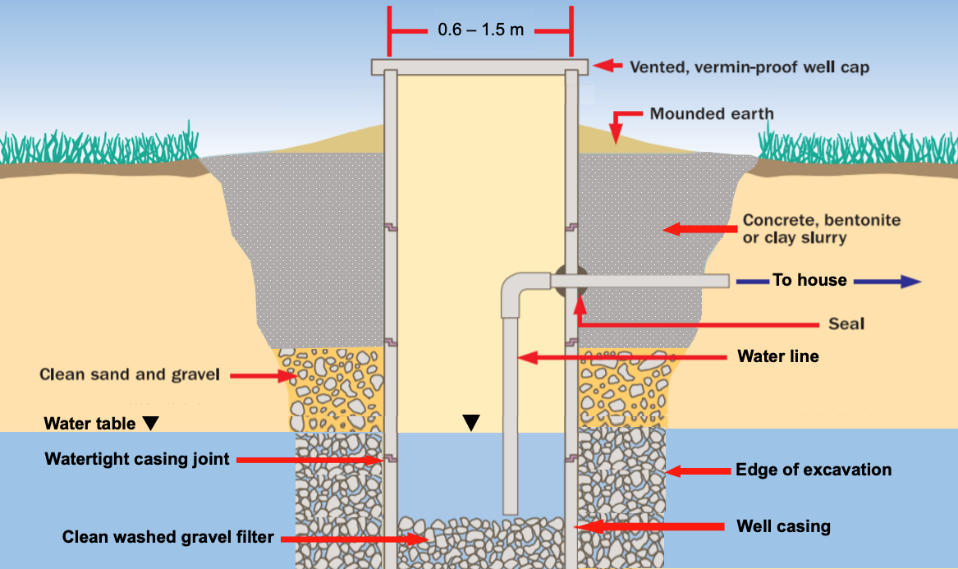
First up: the permit. Your local government wants to make sure you’re not drinking toxic sludge, so they’ll charge you $50 to $500 for the privilege of paperwork. Then there’s the well casing—a steel or PVC pipe that lines the hole so it doesn’t collapse into a muddy regret. That’s extra, usually $20 to $40 per foot.
 Domestic Water Well Diagram
Oh, and the grout? That’s the cement they pump around the casing to seal out surface bacteria. Yes, you pay extra for cement. I’m not making this up. And you’ll also need a water test (another $100 to $200) to see if your prize liquid has too much iron, sulfur, or radioactive radon. Nothing says “fun investment” like testing for invisible gas that might give you superpowers or cancer.
If your luck is tragically average, you’ll also need a cistern or storage tank. Some aquifers produce water at a trickle, so you need a tank to hold a day’s worth of supply. That’s an easy $1,000 to $3,000 extra. You are now the proud owner of a high-tech rainwater collection system that also costs money.
The Brutal Geography Lottery
Location, location, location—except here, it’s about aquifer depth. In the Florida Panhandle, you can often hit clean water at 20 feet for about $2,000. In the Rocky Mountains, you might hit water at 600 feet and pay $18,000, plus a bottle of whiskey for the driller. In parts of Nevada, drillers have gone 1,000 feet deep and found nothing but dry dust. Imagine paying $40,000 for a very expensive nature sculpture.
One shocking statistic: the deepest residential well in the U.S. is over 2,000 feet deep. That hole cost more than my college education, and it just sits there, being wet and judgmental. The average well depth in the U.S. is about 100 to 300 feet, but your neighbor’s experience is about as useful as a fortune cookie for predicting your own results.
 Dug Wells - Inspection Gallery - InterNACHI®
But Wait—Is It Worth It? (The Magical Math of No Water Bills)
Here’s where it gets good. Once you pay the big upfront cost, your water is free (minus the electricity to run the pump, which is about $10 a month). A municipal water bill easily runs $40 to $80 a month. Do the math: a $10,000 well pays for itself in about 10 to 15 years. That’s a decade of free showers and guilt-free lawn watering.
Plus, well water often tastes better. Seriously. No chlorine, no fluoride, no government-issued taste of “swimming pool.” You get untreated, earthy water that makes you feel like a pioneer, if pioneers had credit card debt and waterproof iPhones. Just be prepared to buy a water softener (another $1,500 to break the wallet) if you have “hard water” that leaves your hair feeling like straw.
The Final Verdict: Dig It or Don’t?
If you live in the suburbs with perfect city water, avoid this article. Run. But if you’re building a house off-grid, or your current water tastes like a rusty tin can, a well is a solid investment. Just get three quotes from local drillers, ask about “dry hole clauses” (where they charge you less if they hit nothing), and never, ever sign a contract that says “we’ll keep drilling until our pride is satisfied.”
And remember: when the driller calls you to say, “We hit water at 150 feet,” you’ll feel a rush of joy that only a person who just spent nine grand on a hole can understand. Go ahead, high-five the drill rig. It deserves it. Your wallet might be lighter, but your lawn will be greener—and that’s a trade-off even a comedian can get behind.
