How Much Do Water Softeners Cost

So, you’ve noticed your dishes are looking a little cloudy, your skin feels like a desert after a shower, and that white, chalky buildup on your faucet has become a permanent...

So, you’ve noticed your dishes are looking a little cloudy, your skin feels like a desert after a shower, and that white, chalky buildup on your faucet has become a permanent fixture. Welcome to the world of hard water. Before you dive headfirst into the rabbit hole of water softeners, let’s talk about the one question that’s really on your mind: how much does this all actually cost?
The short answer is that you’re looking at a range roughly from $500 to $6,000 total, but that’s like saying a coffee can cost you $2 or $12—it all depends on where you sip. Most homeowners settle somewhere in the $1,500 to $3,500 sweet spot, including installation. That number covers everything from a basic salt-based system to a slightly more sophisticated setup with pre-filters and digital controls.
The Big Three: Breaking Down the Price Tag
Think of your water softener purchase like buying a new phone. You have the device itself, the installation, and then the ongoing subscription (but in this case, it’s salt and maintenance). Let’s dissect each one, shall we?
Must Read
1. The Unit: Your Main Character
Entry-level models (around $400 to $800) are like that reliable hatchback—they get the job done with manual controls and basic timers. They’re perfect for a small apartment or a couple in a bungalow. Mid-range units ($800 to $2,500) are the sedans of the water world; they offer digital meters that regenerate based on actual water usage, which saves you salt and money. High-end systems ($2,500 to $6,000) are the luxury SUVs—often include salt-free options, whole-house filtration, sleek smart features that alert your phone, and, yes, a hefty price tag.
2. Installation: The Unseen Hired Help
Installation is where the fairy tale meets reality. Expect to pay $300 to $1,500 for a professional plumber. If your home is a modern, well-piped wonderland, you’ll be on the lower end. If you live in a charming but chaotic 1920s house with copper pipes that look like a modern art installation? Brace yourself. Pro tip: Always get three quotes. It’s the universal life hack for avoiding sticker shock.
3. The Monthly Subscription: Salt and Maintenance
Here’s the part nobody talks about at dinner parties. You will need to buy salt pellets (about $5 to $15 per 40-pound bag). A typical household goes through one bag every month or two, so budget $5 to $10 a month. That’s less than your streaming service, and it keeps your pipes singing. Plus, factor in an annual maintenance check or a resin replacement every ten years (around $200).
 2024 Water Softener Cost | System & Installation Prices
Salt vs. Salt-Free: The Great Debate
You’ve probably heard the buzz. Salt-based water softeners (the classic ion-exchange method) are the gold standard for removing hardness, costing $500 to $3,000 for the unit. They work like magic, swapping calcium and magnesium for sodium. Salt-free conditioners (template-assisted crystallization) don’t actually remove minerals—they crystallize them so they don’t stick. They cost $800 to $4,000 and are great if you’re worried about sodium intake or don’t want to haul heavy bags of salt. Fun fact: salt-free systems are easier on the environment, but they won’t give you that ‘squeaky clean’ feeling like a salt system will.
Hidden Costs and Fun Facts
Did you know that the first water softener was invented in 1903 by a guy named Emmett Culligan? He basically saved us all from scratchy towels. But here’s a practical tip: don’t forget the drain line and the bypass valve. Some plumbers charge extra for these simple add-ons. Also, check your local water hardness level (you can buy a test strip for $10 or ask your municipality). The harder your water, the bigger (and pricier) the unit you’ll need.
Another sneaky cost? Permits. Yes, some towns require a permit for plumbing work, which can run $50 to $200. Skip it, and you might face a fine later. It’s the boring adult version of not getting a ticket for jaywalking—just pay it.
DIY vs. Professional: The Modern Dillema
If you’re handy with a wrench and a YouTube tutorial, you can buy a unit for $300 and install it yourself. Many people do, and they save 50% of the total cost. But be warned: one wrong connection and you might flood your basement, turning your investment into a swimming pool. The average person is better off hiring a pro for peace of mind. Think of it as paying for a haircut rather than doing it yourself with a mirror—sometimes, the result is worth the extra cost.
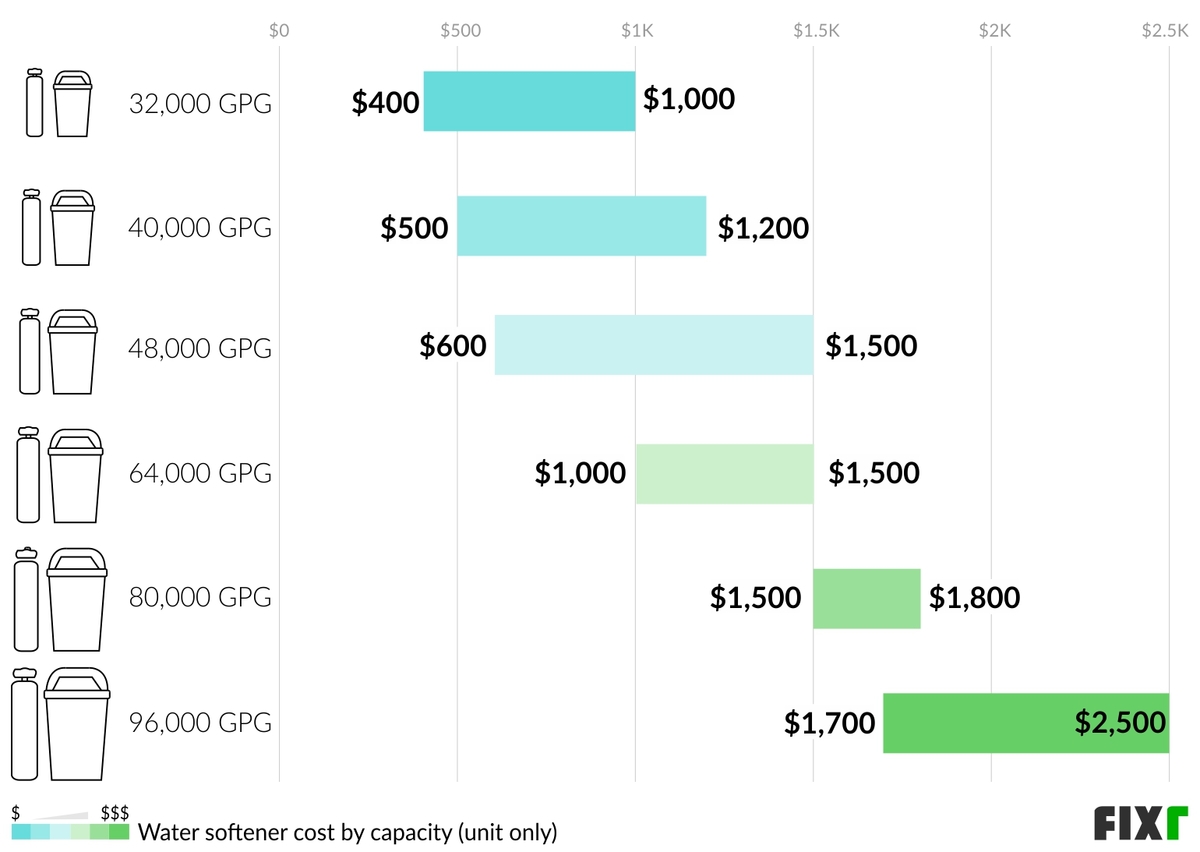 Fixr.com | Water Softener Installation Cost | Water Softener System Cost
A Quick Cultural Refrence
Remember that iconic scene in The Big Lebowski where The Dude’s rug gets ruined? In a home with a water softener, that rug would have lasted longer because hard water residue was never eating away at the fibers. Seriously. Soft water prolongs the life of fabrics, appliances, and even your plumbing. It’s like a secret life-hack for homeowners who want their stuff to last as long as a cult classic film.
The Bottom Line: What Should You Budget?
For an average 3-bedroom home, budget $2,000 to $3,500 for a quality salt-based system installed. Add in another $120 a year for salt. That’s it. You’ll save on soap, detergent, and appliance repairs, which often offsets the cost within two years. Think of it as an investment in your daily luxury—like upgrading from a budget hotel to a nice Airbnb for the rest of your life in your own home.
Here’s a final, easy-living tip: ask for a rental option. Some companies offer water softeners on a monthly lease ($30 to $50) that includes maintenance and salt. It’s like leasing a car—no big upfront cost, but you’ll pay more in the long run. Perfect if you’re renting or testing the waters (pun absolutely intended).
At the end of the day, the cost of a water softener isn’t just a number on a receipt. It’s a quiet upgrade to your daily rituals—from the way your morning coffee tastes to the way your skin feels after a long shower. It’s spending a little to feel a lot more comfortable in the place you spend most of your time. And honestly, isn’t that worth a few hundred bucks a year?
