What Is A Sewage Treatment Plant

Let’s be honest: sewage treatment plants aren’t exactly dinner-party conversation. They sound like the grimy, forgotten underbelly of city life, the place where your least-fav...

Let’s be honest: sewage treatment plants aren’t exactly dinner-party conversation. They sound like the grimy, forgotten underbelly of city life, the place where your least-favorite leftovers go to retire. But here’s the kicker—without them, your morning coffee, that long shower, and even that crisp white shirt would be impossible memories. These unsung heroes work 24/7 to take the mess we make and turn it into something the environment can actually handle.
So, what exactly happens inside one? It’s less “gross science experiment” and more “high-stakes spa day for water.” Think of a sewage treatment plant as a giant, biological purification system. It uses natural processes—like bacteria munching on waste—combined with clever engineering to separate solids from liquids, clean the water, and return it to rivers or the sea.
The Journey of Your Flush
Picture the moment you flush the toilet. That water, now called influent, takes a wild ride through a maze of pipes to the plant. The first stop is a screening room where everything from rags to plastic toys gets caught. Fun fact: plants regularly find cell phones, jewelry, and even dentures in this initial filter—proof that we lose more than just keys down the drain.
Must Read
After the big stuff is removed, the water flows into massive tanks where gravity does the heavy lifting. Heavier solids sink to the bottom as primary sludge, while lighter materials (like grease and oil) float to the top and get skimmed off. This stage feels like a slow, industrial ballet—calm, steady, and oddly satisfying to watch.
Now the real magic begins: the biological treatment phase. Here, the water enters aeration tanks where billions of bacteria—tiny, hungry workers—are pumped with oxygen. These microorganisms feast on the dissolved waste, breaking it down into harmless byproducts. It’s like a microscopic dinner party where the guest list is all bacteria, and the menu is everything you’ve flushed.
Where Does All That Sludge Go?
You might be wondering about the icky stuff that gets left behind. The sludge isn’t just dumped—it’s processed in digesters that heat, mix, and stabilize it. This process creates biogas (mostly methane), which many plants use as fuel to power their own operations. That’s right: your waste literally helps run the plant. Talk about a full-circle moment.
After digestion, the sludge is dewatered and often turned into fertilizer or soil conditioner. Some plants even send it to farms or golf courses. So the next time you see a lush green fairway, remember: that grass might owe its color to yesterday’s dinner scraps. Suddenly, that “organic” label hits differently.
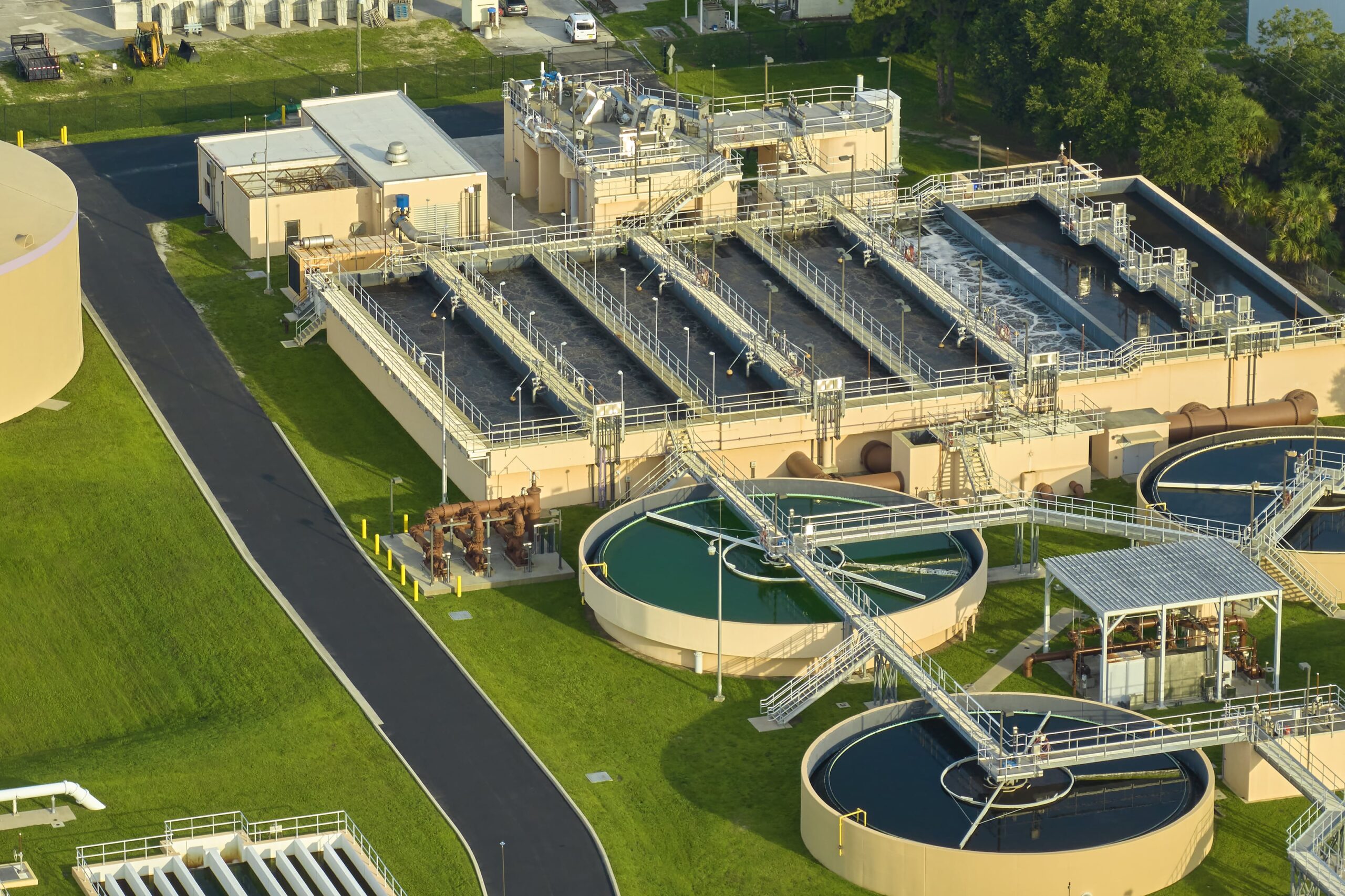 Wastewater Treatment Plant
Why Should You Care?
Because the water you drink today might have been someone else’s bath water three days ago—after passing through a treatment plant, of course. Modern plants achieve incredible purity, removing over 95% of pollutants before releasing water back into nature. This isn’t just about sanitation; it’s about keeping rivers, lakes, and oceans healthy enough for fish to thrive and for you to swim in.
And here’s a cultural wink: every time you watch a movie where a character flees through a sewer tunnel, know that real sewers are mostly about preventing scenes like that. Sewage treatment plants are the reason those tunnels aren’t overflowing with raw waste—they’re the silent guardians of public health, wearing concrete and pipes instead of capes.
Practical Tips for A Happier Plant
You can help your local plant do its job better. First, never flush wipes (even “flushable” ones). They don’t break down and clog pumps, costing millions in repairs. Stick to toilet paper. Second, avoid pouring grease or oil down the sink—it congeals and creates “fatbergs,” massive, rock-hard blobs that can choke a system. Think of a fatberg as the Jaws of the plumbing world.
Third, limit harsh chemicals like bleach and paint thinner. They kill the beneficial bacteria that digest your waste. Use eco-friendly cleaners when you can. Your plant’s microscopic workforce will thank you with better performance and fewer breakdowns. Small habits, big impact.
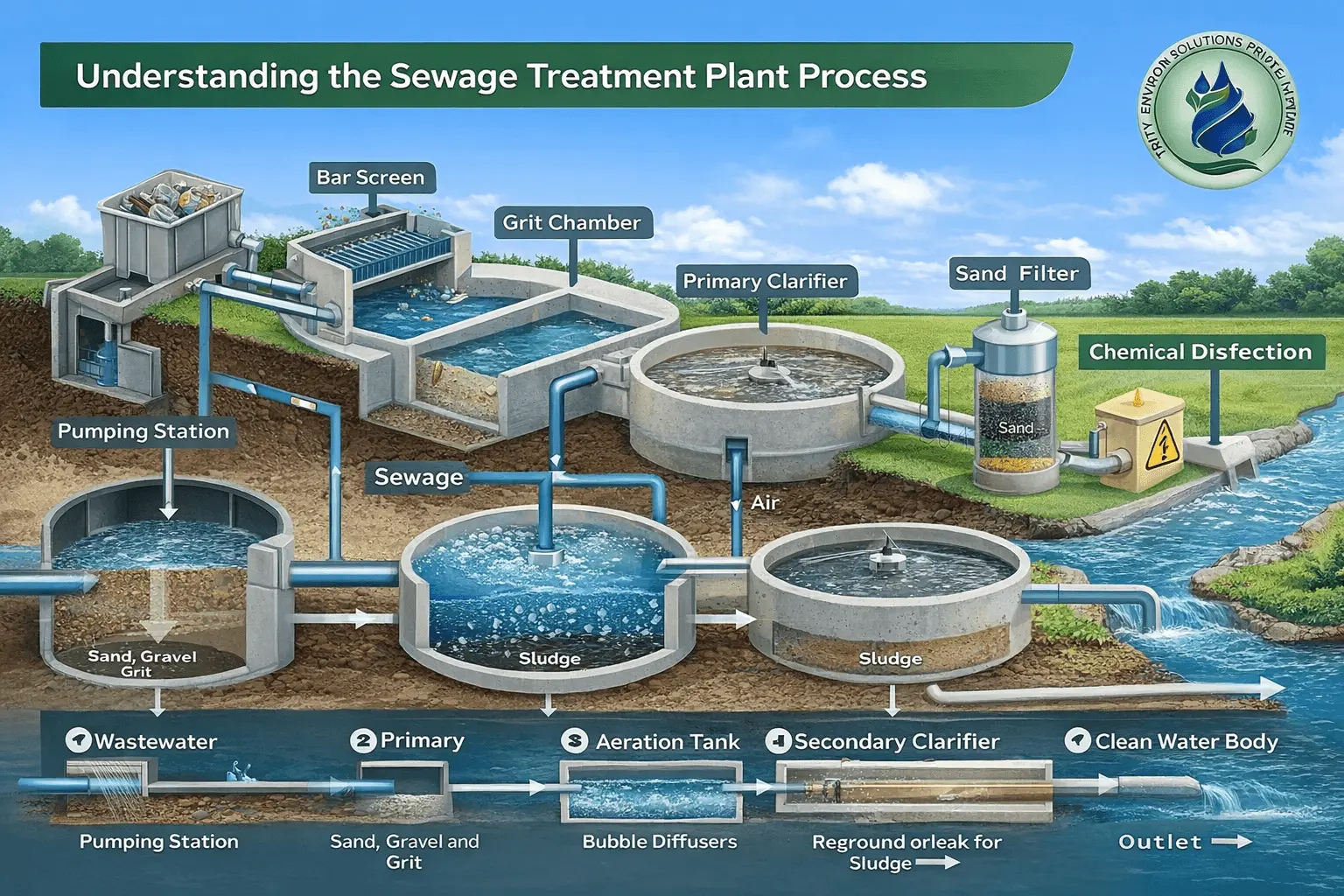 How Sewage Treatment Plants Work | Sewage Treatment Process Explained
Fun Facts to Drop at Parties
Did you know that the largest sewage treatment plant in the world (as of 2024) is in Chicago, USA? It processes over 1.4 billion gallons of wastewater daily—enough to fill 2,000 Olympic swimming pools. Another fun one: the city of Tokyo uses treated sewage to cool its downtown skyscrapers. Yes, your flushed water is now air-conditioning the Ginza district. That’s innovation you can feel.
And here’s a twist: some plants are now tourist attractions. The Ørestad Wastewater Treatment Plant in Copenhagen has a public viewing platform and even hosts concerts. It’s a party where the guest of honor is your own waste—talk about a conversation starter.
Reflection: The Quiet Cycle
At the end of the day, a sewage treatment plant is a reminder that nothing in nature truly goes to waste. It’s a system that takes the messiness of human life and transforms it into something clean, useful, even beautiful. The next time you brush your teeth or run the dishwasher, imagine the billions of bacteria working their tiny hearts out for you. It makes those mundane moments feel a little more connected—a tiny, invisible hug from the infrastructure that keeps your world running.
So, raise a glass of tap water to the plant down the road. It’s not glamorous, but it’s essential. And isn’t that the best kind of magic? The kind that works so well, you never have to think about it.
