How To Turn Off A Water Softener

Last Tuesday, I woke up to the sound of my water softener having what I can only describe as a tiny, mechanical meltdown. It was making a grinding noise, like a coffee grinder...

Last Tuesday, I woke up to the sound of my water softener having what I can only describe as a tiny, mechanical meltdown. It was making a grinding noise, like a coffee grinder that had swallowed a marble. I stood there in my bathrobe, coffee in hand, staring at this giant beige appliance as if it might suddenly explain itself. It did not. That’s when I realized: I had no earthly idea how to turn the thing off.
Sound familiar? You probably never think about your water softener until it starts acting like a grumpy robot. And let’s be honest, the last thing you want is to call a plumber for something as simple as a shutdown. So, let’s fix that. I’m going to walk you through exactly how to turn off a water softener, step by step, so you can feel like a minor appliance wizard.
The Big Question: Why Even Turn It Off?
You might be wondering, “Why would I ever need to kill the power on this thing?” Great question. Maybe you’re going on vacation for two weeks and don’t want it regenerating salt water while you’re sipping cocktails on a beach. Or perhaps you’re switching salt brands (a thrilling home improvement adventure).
Must Read
More often, though, the reason is emergency maintenance, like a leak or a loud noise. Whatever the cause, knowing the off switch is like owning a fire extinguisher: you hope you never need it, but you’re very glad when you do.
Step 1: The Power Cord (A.K.A. The “Unplug It” Method)
This is the easiest way to turn off your water softener. It’s also the most obvious, but you’d be surprised how many people forget it. Look behind the unit—there’s usually a standard three-prong power cord plugged into a nearby wall outlet.
Just unplug it. Yes, it’s that simple. The machine will stop its cycle immediately. I’m talking about the motor, the timer, the whole shebang. It’s like unplugging a toaster, except this toaster is full of resin beads and salt.
Wait—did you just unplug it and the screen went dark? Perfect. You’re done with the electrical part. But here’s the ironic twist: turning off the power doesn’t stop the water flow. Your water softener might be dead to electricity, but water can still pass through it. That leads us to the second, slightly trickier step.
Step 2: The Bypass Valve (Because Water Doesn’t Care About Electricity)
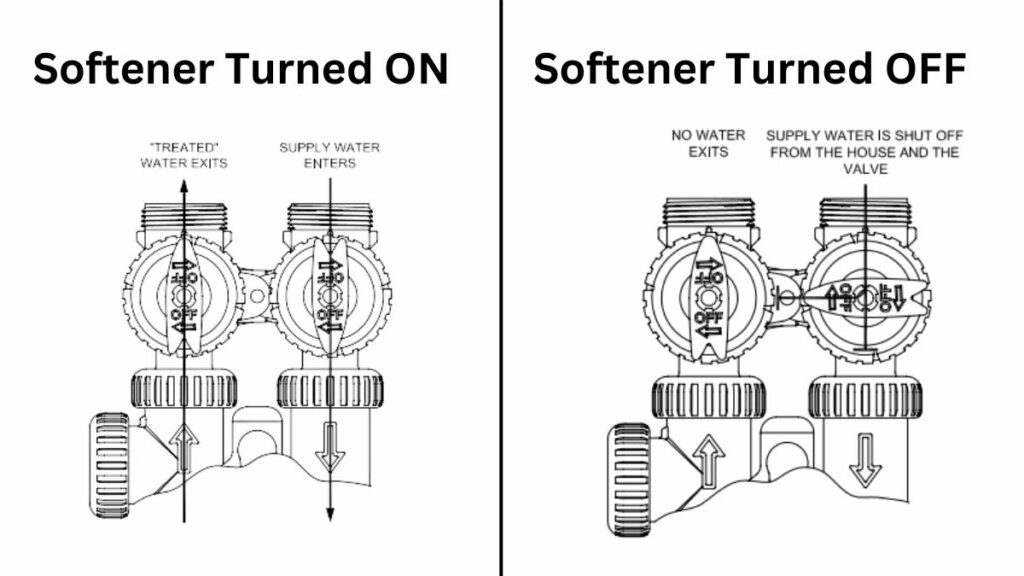
To actually stop water from running through your softener, you need to engage the bypass valve. This is usually a little lever, knob, or sliding mechanism on the valve head (the top part of the unit where the pipes connect).
 How to Remove a Water Softener | Angi
Look for a handle that can be turned perpendicular to the pipes. On many models, turning it 90 degrees (like closing a faucet) will bypass the softener entirely. This means your house gets hard water straight from the supply—so don’t panic if your soap feels a little slimy for a bit.
If you see a twin-headed bypass (often a big red or blue plastic knob), just turn it clockwise until it stops. Pro tip: Check your owner’s manual if you’re unsure. But who keeps those? I’ll wait while you dig through that pile of random paperwork from 2017.
What If There’s No Bypass Valve?
Some older or cheaper softeners skip the bypass valve completely. In that case, you’ll need to shut off the main water supply to your house. That valve is usually near your water meter, often in the basement or a utility closet.
Turn it clockwise (righty-tighty) until it stops. This will cut water to your entire home, so make sure you’re not in the middle of a shower. Trust me on that one. I once shut off my water while my partner was shampooing her hair. The screaming was legendary.
Step 3: The Emergency Drain (If You’re Feeling Extra)
Sometimes, after you shut off power and water, you’ll want to drain the softener to prevent stagnant water or freezing (if you’re in a cold climate). Most units have a small drain line at the back. Unclip it and let it drip into a bucket.
 How To Turn Off Water Softener? (& When) - Aqua Professor
You’ll see a little bit of salt water and maybe a few resin beads. That’s normal. It’s like the softener is saying, “Okay, I give up. You win this round.” Don’t worry about the beads; they’re just tiny plastic pellets that help with ion exchange.
Common Mistakes (And How to Laugh at Them)
The biggest mistake people make? Unplugging the unit but forgetting the bypass valve. You’ll feel so proud of yourself for “turning it off,” only to hear water still trickling inside. Don’t be that person. I was that person. It’s not a good look.
Another classic: Twisting the wrong valve and flooding your floor. If you hear a hissing sound or see water pooling, stop immediately and turn everything back to its original position. Water softeners are tough, but they’re not magic—they respond to physics, not frustration.
Wrapping Up (Or, How to Feel Smug After Success)
Once you’ve done all this, your water softener is officially off. You’ve mastered a small but mighty piece of home maintenance. Pat yourself on the back. Then go wash your hands with some hard water—it’ll feel a little weird, but you’ll survive.
If you ever need to turn it back on, just reverse the steps: open the bypass valve, plug it back in, and let it run a regeneration cycle (usually pressing the “Regen” button on the control panel). It’s like rebooting a computer, but more satisfying because, you know, water.
And hey, if you still feel lost, call a plumber. No shame in that. But now you can tell the plumber, “I already tried turning it off,” and you’ll sound like a pro. Curious, a little ironic, but absolutely ready. You’ve got this.
