How To Bypass The Water Softener

Let’s be real for a second. Your water softener is that quiet overachiever in the basement, working 24/7 to give you silky hair and spotless dishes. But sometimes, you just ne...
Let’s be real for a second. Your water softener is that quiet overachiever in the basement, working 24/7 to give you silky hair and spotless dishes. But sometimes, you just need to give it a break.
Think of it like this: you love your treadmill, but you don’t run on it when you want a gentle stroll in the park. Bypassing the softener lets your tap water flow raw and un-softened.
Why would you even want to do that?
Picture this: you’re watering your prize-winning petunias, and they look sad. Soft water is high in sodium, which plants absolutely hate. Bypassing gives them a drink of real, mineral-rich water they’ll love.
Must Read
Or maybe you’re filling up the kiddie pool for a hot summer day. Soft water can leave a slippery, soapy film. That’s not great for splashing fun.
And here’s the big one: you just bought a fancy new refrigerator water line. Have you read the manual? Some ice makers and fridges actually prefer hard water to prevent weird scale issues inside the machine. Bypassing respects the appliance’s feelings.
Meet your bypass valve (your new best friend)
Most water softeners have a little gadget called a bypass valve. It looks like a plastic lever or a set of knobs near the top of the unit. It’s not scary, I promise.
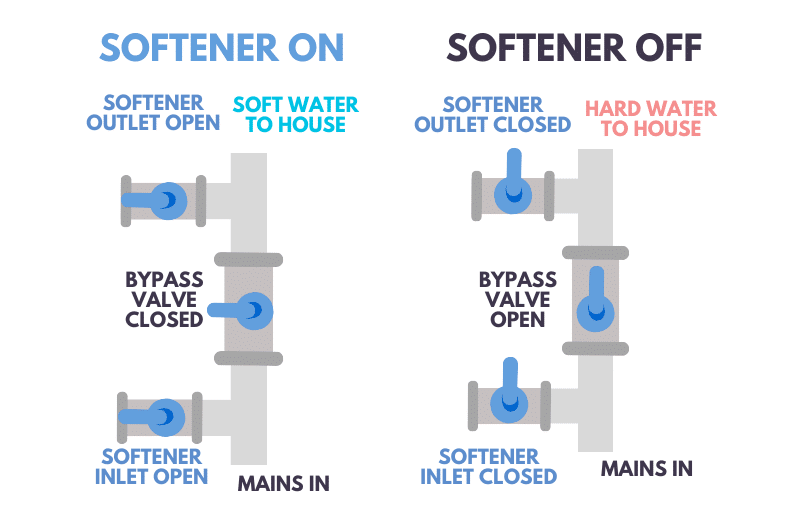
Imagine the softener is a roundabout for your water. When the valve is open, all water takes a spin through the salt tank. When you flip the lever, you create a secret shortcut that sends water zooming straight past it.
You’re not disconnecting anything. You’re just giving the water a new, faster route. No tools, no mess, no guilt.
Step one: Find the lever and the “service” position
Look at your softener’s control head. You’ll see a big, chunky handle or two smaller knobs. Usually, a sticker or arrow shows you which way is “Service” (soft water) and which is “Bypass.”
If you have a single lever, just pull it or turn it 90 degrees. If you have three knobs, turn the middle one sideways. Your unit’s manual is your best friend here, but a quick YouTube search for your model number works miracles.
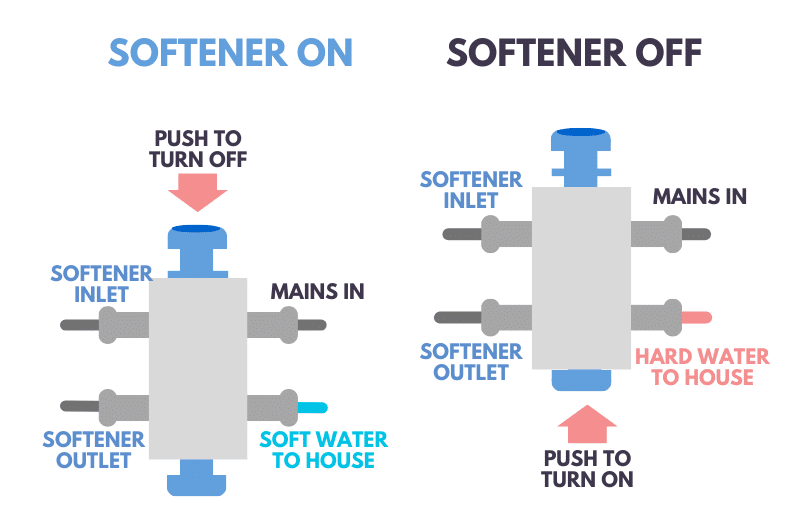 How to Bypass a Water Softener (Diagram Included)
I promise, you’ve done harder things than this. Remember assembling that IKEA bookshelf? This is way easier.
Step two: Test the water
After you flip the lever, open your kitchen faucet. Let it run for a minute. Fill a glass of water and take a sip.
Does it taste a little more… mineral-y? That’s the hard water. You’ll also notice suds don’t lather as much when you wash your hands. That’s totally normal.
If you’re not sure, check your water pressure. Bypassed water often feels heavier and less silky. Your skin will feel the difference too—less slippery, more clean.
Step three: Don’t forget to switch it back
This is the part where I sound like your mom: don’t leave it on bypass forever. I did that once for a “quick week” and ended up with white scale on my coffee mugs for three months.
Set a reminder on your phone. Say, “Hey Siri, remind me to love my softener again in two hours.” Or stick a Post-it note on the valve that says “Fix me!”
The only truly bad move is forgetting and wondering why your shower feels like you’re washing with chalk.
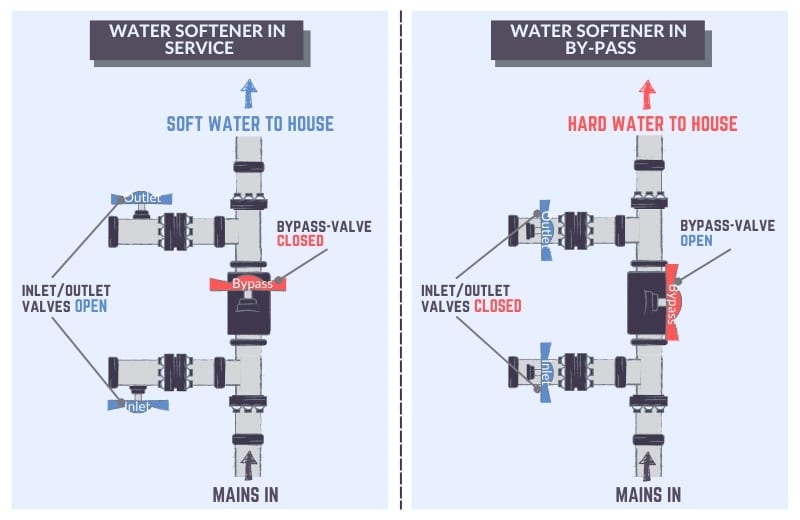 How to Bypass a Water Softener (Diagram Included)
When should you never bypass?
Listen to me closely here: never bypass your softener when you’re about to regenerate it. That’s like trying to bake a cake while the oven is cleaning itself.
Also, if you have a whole-house water filter, check that it’s still working. Bypassing the softener doesn’t bypass the filter, but double-check never hurts.
And for the love of bathroom mirrors, don’t bypass if you’re about to take a long shower. You’ll step out feeling clean, but your hair will feel like straw. Save that for the garden hose.
A tiny story to make you smile
My friend Karen once bypassed her softener to water her orchids. She felt so proud of her little plant parenting move. Then she accidentally left the bypass on for a month.
Her husband asked, “Why does my morning coffee taste like a gravel pit?” They laughed, flipped the lever back, and the coffee was perfect again. Moral of the story: bypass for a purpose, not out of laziness.
You’ve got this. Your plants, your ice maker, and your summer pool will thank you. And your softener? It’ll take a little nap and be ready to fight the good fight tomorrow.
Now go forth and bypass with confidence. Just don’t forget to return to the soft side of life.
