What Is Total Hardness In Water

The other day, my friend Sarah called me, absolutely livid. She claimed her fancy new espresso machine was broken, spitting out weak, cloudy water. I drove over, and there it...

The other day, my friend Sarah called me, absolutely livid. She claimed her fancy new espresso machine was broken, spitting out weak, cloudy water. I drove over, and there it was: a vicious white crust coating the heating element like a geological disaster. I took one look and said, “Sarah, your water is hard, not your machine.” She looked at me like I’d just blamed the plumbing for her divorce.
That crusty nightmare is the perfect introduction to total hardness. In simple terms, it’s the measure of dissolved calcium and magnesium minerals in your water. Think of it as your H2O’s skeleton—and sometimes, that skeleton is just too big for its own good.
Now, before you start panicking, let’s be clear: hard water isn’t dangerous to drink. In fact, those minerals are good for you—they contribute to your daily intake of calcium and magnesium. (Take that, expensive mineral water!) The trouble starts when that water decides to leave its mineral luggage behind on your surfaces.
Must Read
Where Does This “Hardness” Even Come From?
Water is nature’s best solvent. As rain falls and travels underground, it passes through soil and rock, picking up minerals along the way. It’s like a cosmic souvenir collector, grabbing calcium carbonate from limestone or magnesium from dolomite. The more rock it touches, the harder it gets.
If you live in a region with lots of limestone—like big chunks of the Midwest or the Southwest in the U.S.—you’re basically drinking liquid rock. Don’t worry, your geology degree isn't required; just know that your water is packing some serious mineral muscle.
The Technical Side (Without the Boring Lab Coat)
Total hardness is usually reported in milligrams per liter (mg/L) or grains per gallon (gpg). Here’s the cheat sheet: anything below 60 mg/L is soft, 60–120 is moderately hard, and above 180? You’ve got water you could almost chew. If your water leaves white spots on your dark dishes, you’re likely in the “hard” zone—and your appliances are crying.
 What Scale Is Used To Mere Hardness Of Water In Water - Infoupdate.org
That espresso machine of Sarah’s? It was experiencing scale buildup. Those calcium and magnesium particles can’t stay dissolved when heated, so they solidify into a nasty crust. The same thing happens in your water heater, dishwasher, and even your pipes. (Spoiler: Your appliances don’t like fossilizing from the inside.)
How Do You Know If You Have It?
You don’t need a science lab. If your soap refuses to lather into a nice foam (instead turning into that weird, slimy “soap scum”), that’s hardness. If your hair feels sticky or straw-like after a shower, blame the minerals clinging to your strands. Hard water basically attacks your shampoo’s ability to do its job—rude, right?
Another dead giveaway: those chalky rings in your toilet bowl or tub. That’s not poor cleaning; that’s your water waging a mineral war on your bathroom. You can fight it with vinegar or citric acid, but it’s a constant battle—like trying to sweep sand out of a beach.
The Softening Solution (Don’t Get Excited)
Enter the water softener. This magical box uses ion exchange (fancy talk for swapping calcium and magnesium for sodium or potassium) to produce soft water. Your soap will lather like a dream, your hair will feel silky, and your espresso machine will purr. But there’s a catch: the water now has a tiny bit more sodium. If you’re on a low-sodium diet, you can use potassium chloride instead—just don’t expect your taste buds to throw a party.
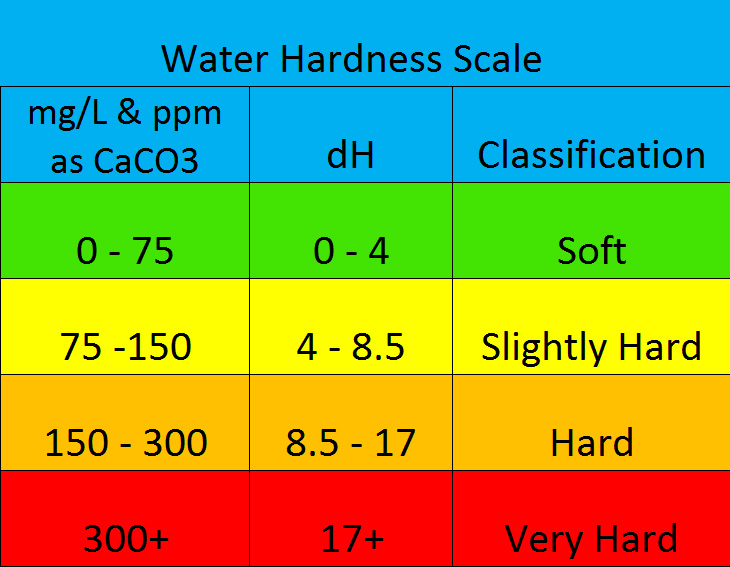 Water Hardness Scale Commercial Water Hardness Water City Of
Is softening always great? Not for your plants. Most plants actually prefer a little hardness because they need those minerals. If you water your prized rosebush with soft water, you might end up with a very sad, yellowed garden. (Note: Your succulent won’t send you a thank-you card either.)
Testing Your Own Water (You Can Do This)
You can buy a simple test strip or a liquid drop kit from any hardware store. Alternatively, just fill a clear bottle halfway with tap water, add a few drops of pure liquid soap, close the lid, and shake. If there’s plenty of foam, you’re good. If it looks like a murky soup with no bubbles, you’ve got hard water. (Science in your kitchen—you’re basically a mad scientist now.)
Remember: total hardness is not the enemy, but a stubborn houseguest that doesn’t know when to leave. It’s in your water, it’s in your pipes, and if you don’t manage it, it’s in your wallet—because replacing a scale-destroyed water heater is really expensive.
So, next time you spot that white crust, just smile and mutter, “Ah, total hardness.” Then decide if you want to live with it, fight it with vinegar, or call the softener cavalry. Sarah now has a softener and a fully functional espresso machine. She also has a new appreciation for the phrase: “It’s the water, not the machine.”
