How To Remove Combined Chlorine

Alright, let’s talk about something that sounds like a chemistry experiment gone wrong but is actually just your pool or hot tub acting up: combined chlorine. You know that aw...

Alright, let’s talk about something that sounds like a chemistry experiment gone wrong but is actually just your pool or hot tub acting up: combined chlorine. You know that awful, eye-stinging, “I just walked into a bleach factory” smell? That’s not fresh chlorine—that’s combined chlorine, the nasty byproduct of chlorine doing its job and getting tired. Think of it as the “used” sponge of the pool world, and we need to get rid of it.
First, a quick science snack (don’t worry, it’s tiny). Chlorine has two flavors: free chlorine, the superhero that zaps germs, and combined chlorine, the tired sidekick that causes all the drama. When combined chlorine levels get above 0.5 parts per million, your water starts smelling like a locker room and your eyes feel like you’ve been chopping onions for an hour. We’re going to kick that grumpy sidekick out.
The most popular way to nuke combined chlorine is something called shock treatment. No, not with a taser, but with a big dose of oxidizer. You’re basically giving your water a “thanks for your service, now please leave” party. The goal is to hit that combined chlorine molecule so hard it breaks apart and floats away as gas. Fun, right?
Must Read
Option 1: The Classic Chlorine Shock
Grab a bucket of calcium hypochlorite (granular shock) or lithium hypochlorite (gentle but pricey). This is the old-school method, like using a sledgehammer to open a coconut. You’ll want to raise your free chlorine level to 10 times the combined chlorine level. So if your combined chlorine is 0.5 ppm, you need to hit 5 ppm free chlorine.
Wait for dusk—always at night! Sunlight eats chlorine like candy, so shocking at night gives it time to work its magic. Broadcast the granules around the deep end, run the pump, and let it marinate. In 12 to 24 hours, test again. If it’s gone, you’ve won. If not, repeat and try not to cry.
Pro tip: Don’t swim immediately unless you want to turn into a human chlorine test strip. You’ll glow in the dark (kidding, but seriously, wait until free chlorine is under 5 ppm).
Option 2: Non-Chlorine Shock (The Gentle Warrior)
If the idea of adding more chlorine to your chlorine problem gives you a headache, try potassium monopersulfate, or “non-chlorine shock.” It’s like the polite guest who cleans up after the party without breaking anything. This stuff oxidizes combined chlorine directly without hiking up chlorine levels.
Follow the package dosage, usually one scoop per 100 gallons or something similar. Add it to a bucket of water first (never add water to the bucket—it’s chemistry, not a baking show). Pour it around the perimeter of the pool or spa, and within 15 to 30 minutes, you can usually swim again. It’s fast, it’s friendly, and it won’t make your swimsuit smell like a science fair.
 What Chemical Removes Chlorine From Water at Diane Rearick blog
Downside? It can mess with test results, especially if you use test strips. So test your water before adding shock, not after, or you’ll confuse yourself into buying a new pool.
Option 3: UV or Ozone (The Fancy Gadgets)
If you’ve got a spa or a high-end pool, you might have a UV light or ozone generator. These gadgets basically bully combined chlorine into submission using light or gas. They’re the bouncers of the water world. Once installed, they keep working 24/7 to prevent combined chlorine from even showing up.
But here’s the kicker: They don’t completely replace shocking. Think of them as your regular gym sessions—you still need to do the occasional heavy lift. Use them to reduce your shock frequency, not to skip it entirely. And if your spa smells like a photocopier, that’s ozone, not chlorine. Good news: it’s harmless and it means the system is working!
The Quick Fix: Just Drain and Refill
Okay, this is the “I give up” option, and there’s no shame in it. If combined chlorine is over 3 ppm and you’ve shocked three times with zero change, drain it and start fresh. For small hot tubs, this takes an afternoon. For a pool, it’s a weekend project. But honestly? Sometimes you need to admit defeat and outsource the problem to your garden hose.
Just remember to neutralize the water before dumping—fish and grass don’t deserve to get chlorinated. A little dechlorinator goes a long way in saving the local ecosystem.
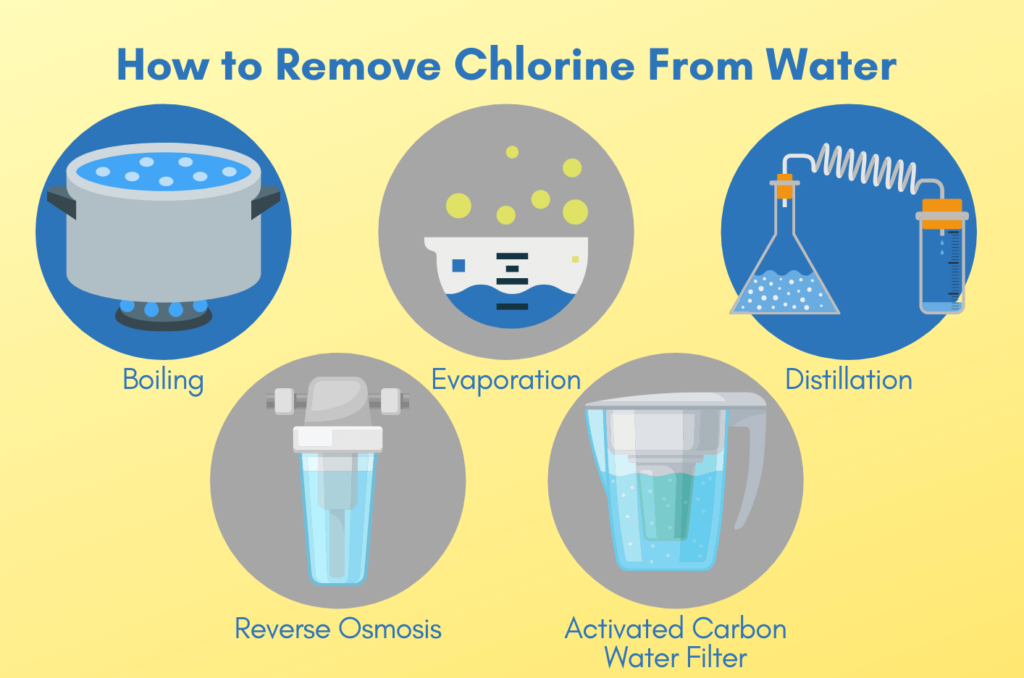 How-to-Remove-Chlorine-From-Water | Plumbers in Henderson, Las Vegas
Don’t Forget the Filter!
Shocking is great, but if your filter is full of slime, you’re just stirring a dirty pot. Clean or backwash your filter after a shock treatment. All those dead combined chlorine particles need a ride out of the water, and your filter is the taxi. A dirty filter is like a clogged toilet—nothing good happens.
Also, check your stabilizer levels. Too much cyanuric acid (stabilizer) can lock down your chlorine so it can’t work. If your CYA is over 100 ppm, you’re basically running a chlorinated museum exhibit. Drain some water, add fresh, and try again.
One Last Trick: The Overnight Free Chlorine Loss Test
Before you declare victory, do the Overnight FC Loss Test. Test your free chlorine at night after shocking, then again at dawn. If it dropped by more than 1 ppm, something is still eating your chlorine—maybe algae or really stubborn combined chlorine. If it stayed the same, give yourself a high-five. You did it.
When to Call a Pro
If your water still smells like a wet dog after trying all this, and you’ve tested everything twice, it might be time to call a pool store. Sometimes combined chlorine can hide in biofilms, under ladders, or in the filter itself. A professional can test with liquid reagents that don’t lie. No shade to test strips, but they’re like astrology—fun, but not always accurate.
And there you have it! Removing combined chlorine doesn’t have to be a horror story. It’s just a little water chemistry, a little patience, and a lot of “I’m the boss of this pool” energy. You’ve got this. Whether you choose the brute force of chlorine shock, the gentle nudge of non-chlorine shock, or the high-tech wizardry of UV, your water will soon be sparkling, clear, and smelling like nothing but victory. So go ahead, jump in, and remember: that chlorine smell is a thing of the past. Now your only problem is deciding who gets the first cannonball. 🏊♂️✨
