How To Test Home Water For Lead

So there I was, glass of water in hand, ready to quench that 2 p.m. thirst. I took a sip and immediately spat it out. It tasted like I’d licked a rusty penny wrapped in a wet...

So there I was, glass of water in hand, ready to quench that 2 p.m. thirst. I took a sip and immediately spat it out. It tasted like I’d licked a rusty penny wrapped in a wet sock. I panicked, poured the rest down the sink, and suddenly became a full-blown water quality detective. That, my friend, is how my journey into home water testing began.
You might not have a “penny sock” moment, but the truth is scarier: lead is a silent guest in many old pipes. It’s colorless, odorless, and tasteless—until it’s too late. And if you live in a house built before 1986 (like mine), your plumbing might be rolling out the red carpet for this toxic metal.
Fun fact: lead pipes were the “premium” choice back in the day. (Thanks a lot, Grandpa Plumber.) So yeah, you need to test your water. Not tomorrow. Today. Because “a little bit of lead” is like “a little bit of a rattlesnake bite.”
Must Read
Step 1: The “I’m Cheap and Impatient” Method (DIY Test Kits)
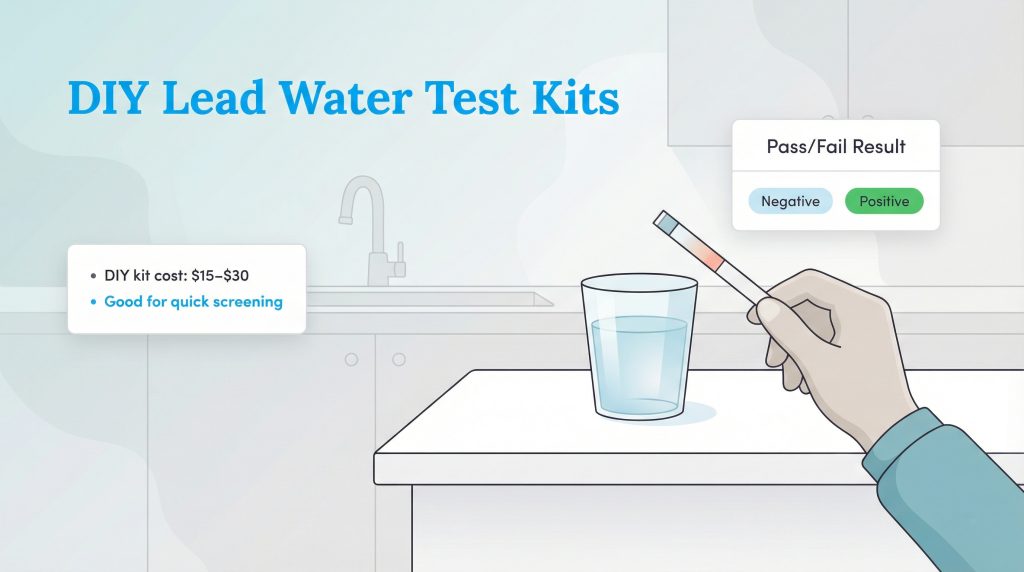
Let’s start with the easiest, most accessible option: home test kits. You can grab one at your local hardware store for about $10–$20. They look like little science experiments—vials, droppers, and a color chart that screams “high school chemistry.”
Follow the instructions like your brain depends on it. Usually, you’ll let cold water run for a minute (yes, let it run—stagnant water is lead soup), then collect a sample in the provided vial. Add the magic reagent, shake it, and wait approximately 10 minutes. If the water turns pink or red? Bingo. You’ve got lead.
But here’s the kicker: these kits are semi-accurate. They’ll give you a “yes or no” answer, but not the exact concentration. Still, for a quick peek, they’re better than guessing. Just don’t trust them blindly—false negatives happen more often than your phone’s autocorrect fails.
Step 2: The “I Have Friends in High Places” Route (Mail-in Lab Kits)
Up your game with a mail-in lab test. Companies like Tap Score or My Water Lab will send you a sterile collection kit, you fill it up (with specific instructions, please), and ship it back to a certified lab. Total cost: $30–$150. Worth every penny if you’re a hypochondriac like me.
 How to Test Lead in Water: A Complete Homeowner’s Guide - LeadFree NYC
The best part? You get a detailed report with exact lead levels in parts per billion (PPB). The EPA’s “action level” is 15 PPB—but let’s be honest, zero is the only safe number. Your kid’s brain development doesn’t do “maybe safe.” These labs also check for other nasties like copper, chlorine, and bacteria, so it’s a two-for-one deal.
Spoiler alert: my test came back at 12 PPB. Not quite the red alert, but closer than I’d like. That’s when I started shopping for water filters like a man possessed.
Step 3: The “I’m a Professional, Karen” Move (Hire a Licensed Tester)
If you’re ready to burn some cash and get the absolute gold standard, call a certified lead inspector. Yes, those people exist. They’ll show up with fancy gear (like XRF analyzers that scan pipes with X-ray vision), take multiple samples, and give you a full court report. Cost: $200–$500.
This is overkill for most apartments. But if you own a house with suspect plumbing, or you’re pregnant and paranoid (valid, by the way), do it. Think of it as an insurance policy against accidentally turning your tap into a neurotoxin dispenser.
 How to Test Your Water for Lead: DIY Kits, Free Options, and Lab
What to Do If You Find Lead (Don’t Freak Out, Seriously)
So your test turned red, or the lab report showed a number. First, do not drink the water from the cold tap that failed. Run your cold water for 1–2 minutes before using it—this flushes out lead that leached overnight. (Yes, that morning coffee ritual just got a new step.)
Next, buy a certified lead-removing filter. Look for NSF/ANSI Standard 53 on the box. Pitcher filters like Brita or PUR are okay, but under-sink systems (like a reverse osmosis unit) are the heavy artillery. I personally installed an undersink filter and now whisper sweet nothings to it every morning.
Finally, call your city’s water department. Yes, they’re a bureaucracy, but they often offer free testing or discount vouchers. Plus, if the lead is coming from municipal pipes (not your house), they’re legally obligated to fix it. (Imagine that: the government actually helping. Wild, right?)
The Bottom Line: Your Water, Your Rules
Testing your water for lead is cheaper than a panic attack, and easier than assembling IKEA furniture. You can go the DIY route, the lab route, or the “full detective” route. Just do it. Because that “rusty penny” taste? It shouldn’t be a thing. Your water should taste like… water. Crisp, clean, and lead-free.
Now go forth, grab a test kit, and become the hero your plumbing never knew it needed. And if you taste pennies? Spit it out. Then test. Then thank me later.
