Why Does My Faucet Water Smell

Last Tuesday, I poured myself a glass of water from the kitchen faucet, took a big gulp, and nearly spit it out across the counter. It tasted—and smelled—like I’d just licked...

Last Tuesday, I poured myself a glass of water from the kitchen faucet, took a big gulp, and nearly spit it out across the counter. It tasted—and smelled—like I’d just licked a damp basement floor. You know that smell: a mix of old socks, wet dirt, and something vaguely chemical. I stared at the glass, wondering if my pipes were plotting against me.
Turns out, I’m not alone in this bizarre little crisis. Almost every homeowner or renter has, at some point, sniffed their tap water and thought, “Am I about to poison myself?” The good news? Most smells are harmless. The bad news? They’re annoying, and they make you question your life choices. Let’s break down why your faucet is suddenly channeling a swamp.
The classic “rotten egg” surprise
If your water smells like sulfur—that classic egg fart aroma—it’s usually sulfur bacteria. These little guys live in your water heater or in the well (if you’re on well water). They feast on decaying organic matter and produce hydrogen sulfide gas. Charming, right?
Must Read
The fix is often simple: flush your water heater or replace the anode rod inside it. But if you only notice the smell from the hot water, it’s almost certainly the heater. Cold water reeking of eggs? Call a plumber—you might have a bacterial colony in your pipes.
That “earthy, musty” pond vibe
You know when you walk past a lake in August? That heavy, green, algae-in-your-face smell? That’s geosmin, a natural compound produced by algae and bacteria in surface water. If your water comes from a reservoir or river, the treatment plant might not filter it out completely.
Fun fact: your nose is insanely sensitive to geosmin—you can detect it at parts per trillion. We evolved that way to avoid stagnant water, which is smart, but now it just makes you hate your kitchen. Let the water run for a minute; sometimes the smell fades as fresh water pushes through. If not, a carbon filter on your faucet works wonders.
Bleach or pool water? That’s chlorine.
If your water smells like a swimming pool or a freshly cleaned restroom, congratulations—your municipal treatment plant is working. Chlorine kills bacteria, but it can linger in the pipes, especially if you live far from the plant or if the water has been sitting in your home’s plumbing for hours.
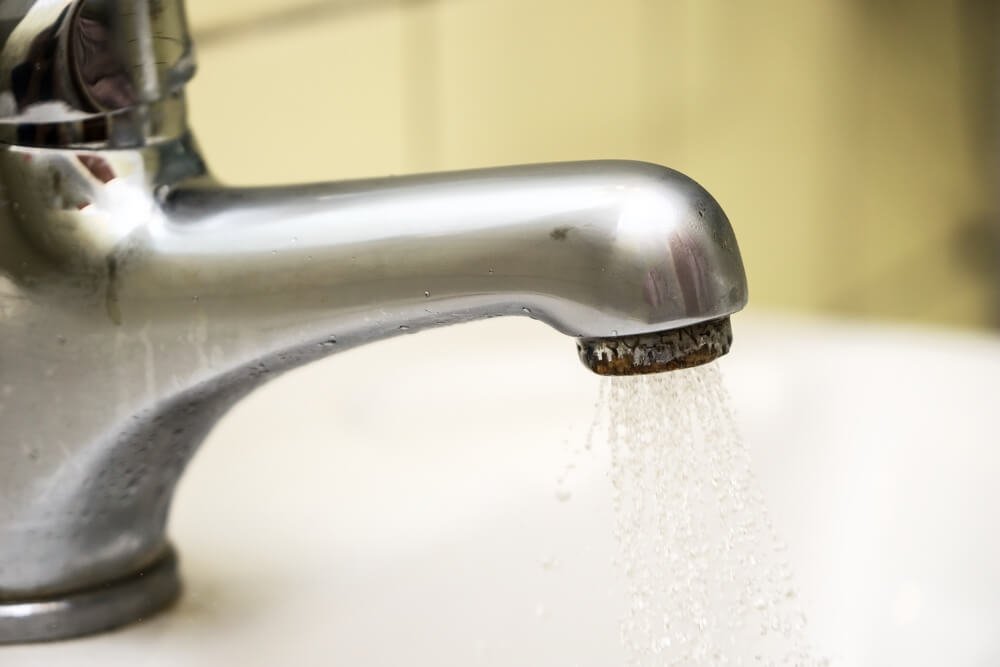 Why Does The Water From My Bathroom Faucet Smell – Bathroom Guide by
Fill a pitcher and let it sit uncovered in the fridge for an hour. The chlorine will evaporate, and your water will taste neutral. Pro tip: use this to impress guests with “crisp” ice cubes. If the smell is overpowering, your water utility might have over-chlorinated due to a maintenance event—call them.
The “metal coin” or “blood” smell
This one is alarming because it can feel metallic or even like you’re smelling pennies. That’s usually iron or manganese in the water, especially from old pipes or well systems. The smell gets worse when the water sits, because the metals oxidize.
In extreme cases, it can mean your pipes are corroding, which might drip lead or copper into your water. Test your water if you see orange or brown stains on your sinks. For minor cases, a whole-house water softener or filter system will fix it. Don’t ignore this one—iron is gross, but heavy metals are a health risk.
The “sewer” or “drain” smell
If the smell isn’t from the stream of water, but from the sink itself, your drain might be the culprit. Food scraps, grease, and soap buildup create a bacterial slime in the P-trap that smells like a zoo cage. Run hot water and baking soda down the drain, then vinegar—it’ll fizz and clean it out.
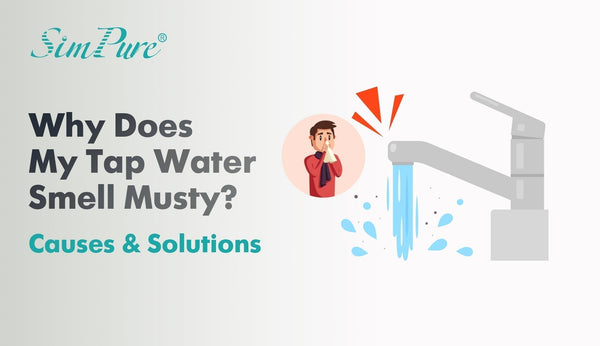 Why Does My Tap Water Smell Musty? (Causes & Easy Fixes)
If that doesn’t work, you might have a dry P-trap (common in guest bathrooms). Pour water down the drain every week to keep the trap sealed. Yes, you now have a plumbing chore. Welcome to adulthood.
Gasoline, chemicals, or sweet smells
This one is not a joke. If your water smells like gasoline, paint thinner, or maple syrup, stop drinking it immediately. Gasoline indicates a leak from a nearby tank or runoff; sweet smells can mean methamphetamine contamination from illegal labs (yes, really). Call your water utility and a plumber—this is a health emergency.
Most of the time, though, it’s just a weird case of biology or chemistry in your pipes. Happens to the best of us. Last week I caught myself sniffing the glass like a wine critic before a sip.
Bottom line: trust your nose. If the smell is temporary and faint, flush the lines or change the filter. If it’s strong, persistent, or metallic, get it tested. Your home isn’t haunted—it’s just a little ripe.
